Egypt is heading to export the largest amount of gas since 2009 and Europe devours 71% of it

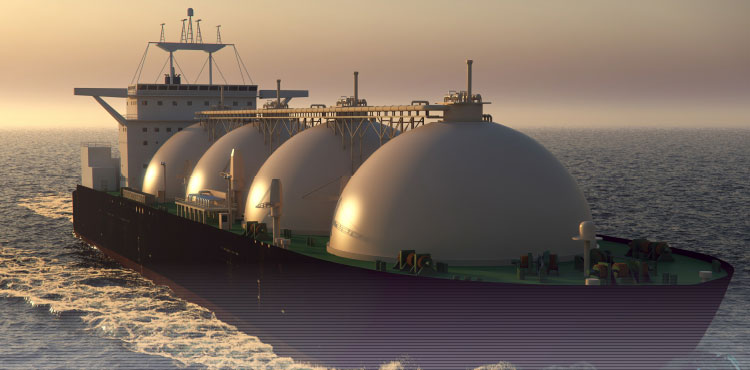
For our top talks today, Egypt is heading to export the largest amount of gas since 2009 and Europe devours 71% of it. Egypt is heading to export the largest amount of gas since 2009 in an attempt to take advantage of the significant rise in gas prices, especially on the part of European buyers. Egypt is on track to export 8.2 million tons of liquefied natural gas this year, which represents the highest level of export to Egypt since 2009, based on data from the BP Global Energy Statistical Review. It is worth noting that the high gas prices in Europe have turned it into a dominant importer of Egyptian gas. Noting that as of last April – shortly after the Russian invasion of Ukraine – Europe obtained 71% of liquefied natural gas exports. At the forefront of the European importers of Egyptian gas were Turkey, Spain and France. Historically, Egyptian gas exports were dominated by Asian markets. The old continent is expanding its exports of Egyptian and Algerian gas as part of accelerated efforts to reduce its dependence on Russian gas. Egypt plans to boost gas supplies through a framework agreement between Italy’s Eni and EGAS to maximize gas production in the country. (Al Mal News)
- Secondly, Lebanon is set to finalize an agreement with the Egyptian government for gas supplies in the coming period.
The Lebanese Ministry of Energy and Water is set to coordinate with the Egyptian Ministry of Petroleum this week before resorting to the World Bank for financing. The Lebanese government commended Egypt’s support and approval to supply 650 million cubic meters of gas to Deir Aamar plant, which is the maximum amount required by Lebanon. Furthermore, Egypt will also supply Syria with the required gas quota as charges for transmitting gas to Lebanon. (Arab Finance)
- Moreover, Egypt expects the Suez Canal's revenues to reach about 7 billion USD by the end of the current fiscal year, according to the finance minister Mohamed Maait.
Tourism revenues are expected to reach between 10 billion USD and 12 billion USD by then, despite the Ukrainian crisis, he added. Egypt's fiscal year runs from July 1 to June 30. The canal is the fastest shipping route between Europe and Asia and one of the Egyptian government's main sources of foreign currency. (Reuters)
- In addition, Ukraine has offered to ship contracted amounts of wheat to Egypt through Poland, according to the Egyptian Minister of Supply and Internal Trade Ali Moselhi.
Egypt has sealed agreements with Ukraine for four shipments, Moselhi added on the sidelines of the 22nd International Exhibition for Grain industries Technology Mills (Grain Tech Egypt). The minister announced that the Egyptian Cabinet approved direct agreements with suppliers. As for the increase in prices of cooking oil, Moselhi said that the ministry is observing international prices and will control any increase in case prices stabilized, adding that prices will be raised following a hike in global prices. It is worth noting that Reuters previously reported that shipments of a total of 300,000 tons of Ukrainian wheat booked by the Egyptian General Authority for Supply Commodities (GASC) are stranded in Ukraine. The shipments were bought by the GASC before the Russian invasion of Ukraine. (Arab Finance)
- Most importantly, the Egyptian President Abdel Fattah El-Sisi has urged the government to speed up the execution of the remaining of Egypt’s Future Project for agricultural production before the end of 2023, instead of its scheduled date in 2024, to boost the country's corps production amid a global food crisis.
The project is located along Cairo’s Dabaa Axis Highway, which is part of the New Delta Development Project. Egypt’s Future Project targets reclaiming more than 1 million feddans over four phases. The first and second phases of the project have been completed over 34,000-feddan and a 300,000-feddan area, respectively, Project Director Bahaa El-Ghannam revealed. (Ahram Online)
- The Saudi Food and Drug Authority (SFDA) has approved Egypt’s modern export system.
The modern export system is applied on Egyptian exports to the European Union (EU) and major countries such as Japan, Australia, Canada, and the US. The new system is based on coding and tracking Egypt’s fresh agricultural exports including oranges, lemons, grapefruits, strawberries, grapes, guavas, pomegranates, and onions, under the supervision of the Central Administration of Plant Quarantine at the agriculture ministry. Egypt’s new export system controls all steps relevant to exports starting from planting to last-mile delivery. It is worth highlighting that Egypt was the world's top exporter of oranges and strawberries for the third year in a row in 2021, with the country's total agricultural exports exceeding 5.6 million tons. (Arab Finance)
- Moving to our EGX and companies talks, Ibnsina Pharma (ISPH) has acquired El Shorouk Hospital, a brownfield hospital in El Shorouk city, for 430 million EGP, with only 200 million EGP in cash and the rest as debt settlement.
The value of the acquisition contract covers the hospital’s real estate and operational assets, as well as the operating company. El Shorouk Hospital is set to see further renovations and the addition of new equipment to be ready for operation by the end of 2022. This takeover comes as part of the company’s investment strategy targeting related investment opportunities in the healthcare sector. (EGX).
- EGX-listed e-payments giant Fawry’s board of directors has decided to delay its US listing due to the current unfavorable environment for US tech stocks.
The company had been exploring an SEC-registered secondary offering, with plans to create an American depositary shares program (ADS) to allow it to list. The source did not disclose where Fawry currently stands in its preparation process for the IPO. (Enterprise)
- Saudi Arabian food conglomerate Savola Group is close to acquiring the Egyptian Belgian Company — famous for its Ole-branded baked goods — in a transaction valued near 600 million EGP.
The acquisition would see the company acquire the manufacturer’s assets and brand name. The sources did not disclose the exact timeline for the acquisition. (Hapi Journal)
- Egyptian Chemical Industries (KIMA) (EGCH) has sold 49 residential units in Al Rehab Kima Complex in a public auction.
The units have been sold in two auctions; the first auction took place on May 19th, while the second occurred on May 20th. KIMA is an Egypt-based nitrogen-based fertilizers manufacturing leader and is engaged in the agricultural chemicals industry sector. The company produces and distributes various products, including urea, ammonium nitrate, ferrosilicon alloy, liquid ammonium nitrate fertilizer, prill ammonium nitrate fertilizer, liquid ammonia, aqua-ammonia, nitric acid, hydrochloric acid, and silica fume. (Arab Finance)
- The US-based consumer goods manufacturer Procter and Gamble (P&G) will open a new line for the production of liquid detergents in Egypt soon.
The new line is set to be opened to meet the local demand for detergents and export them abroad, trade minister Nevine Gamea said during her meeting with the President and General Manager of Procter and Gamble for North Africa Samir Lebbar. P&G is committed to boosting local manufacturing and Egyptian exports globally, especially to African markets, Lebbar said. (Arab Finance)
Stay up to date
More Newsletter to Check


SUBSCRIBE TO NEWSLETTER
Subscribe to download our daily economics and business roundup


×
![]()