Egypt’s fintech industry is on the rise after the government passes a new legislation

-
- For our top news, we need to mention that Egypt’s fintech industry is on the rise after the government passes new legislation and regulatory changes in new fintech investments. This could help MNT to become Egypt’s second fintech “unicorn”, or company with a market value exceeding USD 1 bn, after e-payments giant Fawry, now worth about USD 2 bn. We believe that there will be several unicorns in the fintech space in Egypt soon.
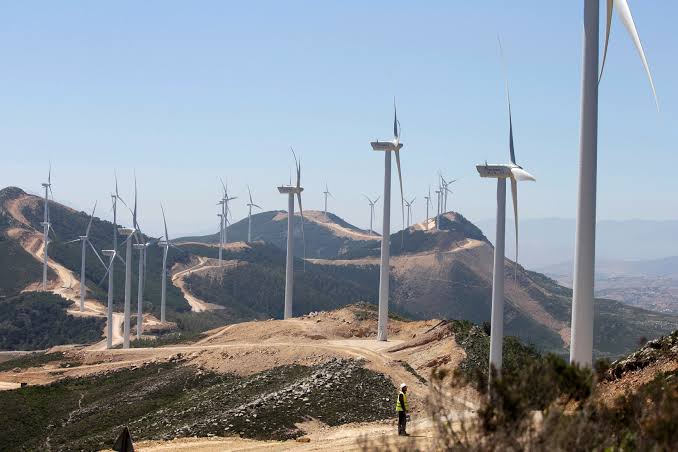
- First of all, regards our macro talks, Egypt has advanced from 26th place in 2020 to the 20th among the world’s top 40 markets in the Renewable Energy Country Attractiveness Index (RECAI) for 2021. The country plans to increase the supply of electricity generated from renewable sources to 20% by 2022 and up to 42% by 2035. We believe that the private sector is set to play a major role in delivering most of this capacity. Noting that smaller-sized renewable energy projects can be bundled to achieve the required scale, reduce transaction costs and bolster local financial institutions’ confidence in projects.
- This will lead us to our next macro talks, Egypt Ministry of Electricity revealed the new increases in electricity prices, effective July 1st, ahead with the country’s plan to gradually phase out electricity subsidies by 2025. The price hike is categorized into sectors depending on consumption. Residential electricity bills are going up by around 26% at the beginning of 2021/2022. The question of energy subsidies continues to be an issue of contention in Egypt, with millions depending on low-cost energy products while the state in turn loses millions per year by selling fuel at below-market prices. Although business figures have praised austerity measures, Egypt’s poor and middle-class citizens generally struggle to adapt to the new prices. Cutting subsidies comes with the risk of sparking renewed social unrest.
- Equally important, it is worthy to mention that Egypt retained the leading position in terms of being the largest recipient of foreign direct investments (FDIs) in the African continent in 2020, with a total net foreign investment flows of about USD 5.9 bn, according to the World Investment Report for 2021. It is worthy to highlight that Egypt is doing tangible efforts to promote FDI in various economic sectors, especially in light of the agreement to activate the Egyptian-Saudi Investment Fund. Which gives priority to economic sectors including tourism, health, pharmaceuticals, infrastructure, technology, financial services, education, and food.
- Jumping to the trade talks, the Suez Canal Authority will lower the transit fees for car carriers traveling between Northern Europe and Southeast Asia by 5% starting 1 July as it looks to boost traffic through the critical shipping route. The Suez Canal revenues are an important source of hard currency for Egypt, bringing in more than USD 550 mn in April which is the highest month on record.
- Also, regards Egypt’s green economy efforts, the Ministry of Industry and Trade decides to allow the import of glass waste. The industry of expanding mass recycling industries shows promising opportunities for Egypt. Asian countries in the past years including China and the Philippines have shown dropped out of the international recycling industry. Egypt is already on the path for sustainable growth where there is a waste-to-energy factory in Fayoum.
- Moving to the COVID talks, Egypt so far has used 80% of the shots sent by Covax and million more remain unvaccinated. Since the pandemic Covax program, Egypt has faced shortages and delays globally. On the other hand, China has already vaccinated approximately 1 billion, because they produce locally. Leaving us to ask, should we adopt China’s strategy and produce locally rather than relying on international suppliers?
- Finally, one global news need not be missed out, the Bitcoin recovers above USD 30K dollars after its worst loss earlier in the day. Bitcoin’s currency on Tuesday reached below 29K but it bounced back above 32.4K. Bitcoin so far has lost 50% of its highest value of USD 65,000 and now nearly down 25% from its levels a week ago. This is partly due to the Chinese government’s crackdown on bitcoin mining.
Stay up to date
More Newsletter to Check


SUBSCRIBE TO NEWSLETTER
Subscribe to download our daily economics and business roundup


×
![]()