In the world of geopolitics and financial markets, the sequence has traditionally been predictable: a political shock occurs, and markets respond accordingly. Headlines lead, asset prices follow. But over the past few weeks, this well-known rhythm has been turned on its head. This time, markets moved first — and the headlines came later.
In the days leading up to the high-stakes escalation between Israel and Iran — and before former U.S. President Donald Trump’s abrupt departure from the G7 summit citing “urgent developments” in the Middle East — something unusual had already begun to unfold. Oil markets were stirring, risk assets were repositioning, and hedging activity was intensifying, all before any public confirmation of the looming crisis. This sequence reversal raises a critical question: Were the markets anticipating the conflict, or were they already reacting to something others hadn’t seen yet?
Price Action That Preceded the Crisis
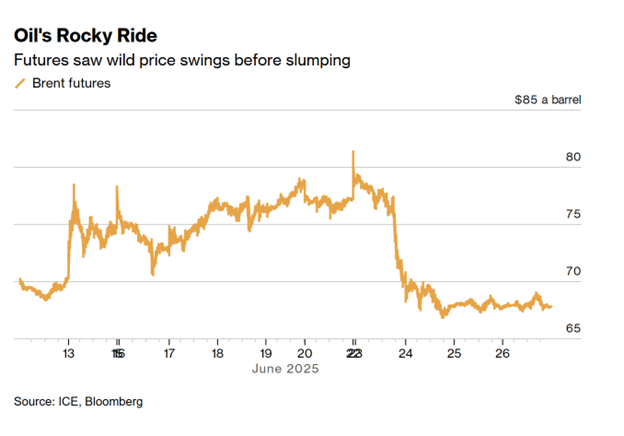
One of the earliest and clearest signals came from the oil market. Brent crude jumped from USD 65 to test the USD 76 resistance — a level we previously referred to as the “War Indicator Line”, based on its historical role as a ceiling during major geopolitical tensions. Notably, this spike occurred before Trump’s warning to Tehran, before the evacuation calls, and before the world’s media caught on. Looking back, this was not merely a reactionary move. It now appears to have been a strategic repositioning. The timing suggests that informed capital — whether through geopolitical intelligence, backchannel whispers, or pattern recognition — was already bracing for an escalation.
When Oil Ignores Fundamentals, Watch The Signals
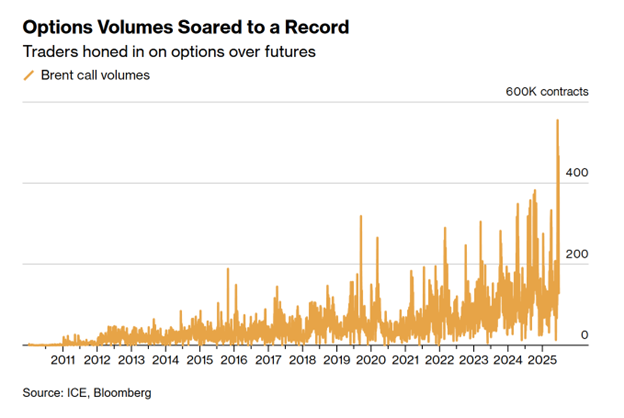
The second, perhaps even more telling, signal was what oil prices did not do. According to Morgan Stanley’s latest commentary, the market barely flinched at OPEC+’s decision to raise production quotas. In theory, more supply should have pressured prices downward. Yet, oil not only held steady — it climbed. This disconnect between traditional supply-demand logic and actual price movement is telling. It reveals a critical truth: Markets weren’t responding to fundamentals — they were responding to fear. The rally in oil, under normal circumstances, should have been capped by the expected increase in output. But the fact that prices surged despite this bearish signal underscores the strength of geopolitical risk sentiment — which clearly overrode fundamentals in shaping investor behavior.
Beyond Headlines: Markets as the New Narrative Setters
Together, these two signals suggest that we may be entering a new market phase — one where price action leads the news cycle, not the other way around. In this new paradigm, markets are no longer passive recipients of information. Instead, they are becoming pre-emptive actors — digesting early cues, discounting political noise, and repositioning ahead of time. Oil, in particular, has evolved from being just a commodity into what we describe as a “geopolitical vote meter” — a highly sensitive instrument that reflects investor expectations before official events are confirmed. This begs the question: Are markets operating on leaks? Or have they simply become better at forecasting geopolitics than politicians themselves?
What Should Investors Take Away from This?
This wasn’t just a strange market moment — it was a signal that something bigger is changing. More and more voices in the market are now saying what many have long suspected: Relying on fundamentals alone no longer works. Today, markets are driven less by data and more by perception, positioning, and emotion. This shift means we need a new way of thinking — one that focuses not just on what should happen, but on how investors feel about what might happen. Here’s what this new mindset looks like:
- Don’t wait for the news — follow the signals.
If oil starts pushing toward or above the USD 76 mark, that’s not random. It’s a warning sign. Markets are often ahead of the story, and such moves suggest that big players are already bracing for something. - Forget the textbook — sentiment is in charge now.
Normally, more oil supply should mean lower prices. But when prices stay strong anyway, it means investors are more worried about conflict than barrels. In times like these, emotions and expectations matter more than logic. - Get ready for markets that move before the headlines.
We’re seeing a shift where “smart money” acts early — well before events hit the front page. That means investors need to be faster, sharper, and pay more attention to real-time market signals — especially in oil and other geopolitically sensitive assets.
Final Reflection: This Is Not the Usual Market Playbook
What we’ve just witnessed is far from ordinary. Oil didn’t react to the news — it anticipated it. Markets didn’t follow the story — they got ahead of it. That’s not how things usually unfold. And that’s exactly what makes this moment worth paying attention to. In a week marked by rapid escalation, mixed signals, and fast-moving markets, one thing became clear: sentiment, perception, and positioning are increasingly in the driver’s seat. But does that mean fundamentals no longer matter?
Not necessarily. We may not be seeing the end of fundamentals — but rather the beginning of a new phase, where logic and instinct must work side by side. In this evolving environment, the edge belongs to those who can balance both: grounded in analysis, yet tuned in to the mood of the market.
Because in today’s world of noise and narrative...
Price moves first. Headlines follow.


