The global AI story took a sharp turn in early 2025. Big tech companies and GPU makers are earning record profits. But many AI startups are struggling — their projects aren’t working, their revenues are weak, and their valuations became unrealistic. So when Sam Altman said parts of the AI world are in a “bubble,” markets reacted quickly. Peter Thiel sold his Nvidia stake, and Michael Burry made new million-dollar short bets. For many traders, it was a sign that the hype is finally catching up with reality.
But the real issue runs deeper. This isn’t just one bubble — it’s three overlapping shifts that are reshaping where money goes, who stays competitive, and what long-term value really looks like.
Three Cycles, One Moment
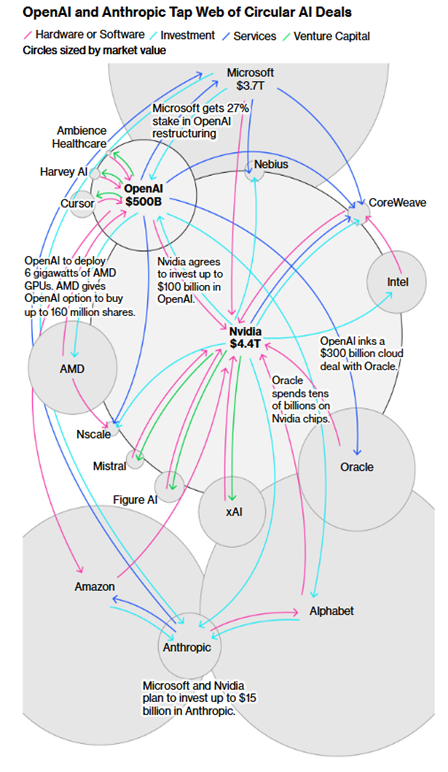
1- The Financial Bubble: Real Excess, Real Technology
Capital flooded AI at a pace that felt like the dot-com boom: billion-dollar valuations for pre-revenue startups, business models still searching for product-market fit, and 95% of enterprise AI pilots failing to scale beyond proof-of-concept. A correction is inevitable. Most companies won't survive, and most shouldn't.
But unlike previous hype cycles, the underlying technology is already transformative. Automation, multimodal systems, agentic workflows, and productivity tools are reshaping sectors from finance to healthcare. The financialization is excessive. The structural shift is underpriced.
2- The Capability Bubble: Overestimating Today, Underestimating Tomorrow
Public imagination is running faster than science. Predictions of fully autonomous corporations, near-term AGI, and mass labor displacement reflect psychological overshoot. Current models still struggle with reasoning, reliability, context windows, and domain precision.
Yet the deeper risk is strategic blindness for the next decade:
- AI embedded across all enterprise workflows
- Agentic systems handling entire operational layers
- New business models built on scalable cognitive labor
- Intensifying geopolitical competition over compute, data, and talent
The paradox: Markets are overhyping the next two years while catastrophically underestimating the next decade!
3-The Infrastructure Boom: The Part That Isn't a Bubble at All
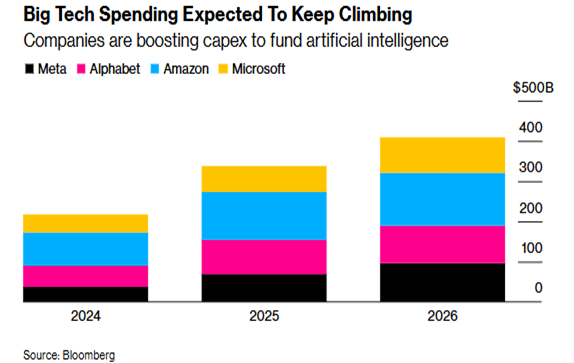
Behind the noise sits the real story — a once-in-a-generation infrastructure buildout. Hyperscalers have committed over USD 200 bn in capex through 2026 for data centers, GPU clusters, and foundational model ecosystems. Sovereign AI frameworks are emerging across the Gulf, EU, and Asia-Pacific. Compute alliances are hardening into geopolitical architecture.
Even if equity valuations compress, this infrastructure does not disappear. This is not crypto. This is the early-internet moment all over again — mispriced in the short run, transformative in the long run.
The equity bubble is concentrated mainly in U.S. tech markets, especially in AI-linked segments of the Nasdaq. The excess is not across all equities — it is focused in companies whose valuations rely more on expectations than real revenue or proven demand. Some semiconductor suppliers, AI software startups, and model-centric firms fall into this category.
Leaders like Nvidia trade at high valuations, but they are supported by strong, visible demand and multi-year infrastructure investment. They may face corrections, but they are not in the same risk group as early-stage, hype-driven players. In short: the bubble affects parts of the market — not the entire AI ecosystem
Why Capital Is Flooding In: The Structural View
AI has become the latest outlet for a global economy struggling with surplus capital and narrowing reinvestment opportunities. Geopolitical fragmentation, tariffs, and supply-chain protectionism have closed traditional expansion routes. Excess liquidity is being absorbed into speculative AI equities and long-dated infrastructure bets.
In this sense, the AI boom operates as both a temporal fix (fictitious capital promising future returns) and a spatial fix (physical expansion of data and compute infrastructure). But these fixes have limits. As trade barriers rise and credit conditions shift, the system risks sliding into another cycle of asset inflation, correction, and intervention.
The question is no longer whether parts of AI are in a bubble — they clearly are. The real question is where in the stack value will consolidate. Infrastructure providers remain resilient. App-layer startups will face reckoning. Capital will migrate toward models demonstrating real productivity gains, not narrative momentum.
So, Is AI a Bubble?
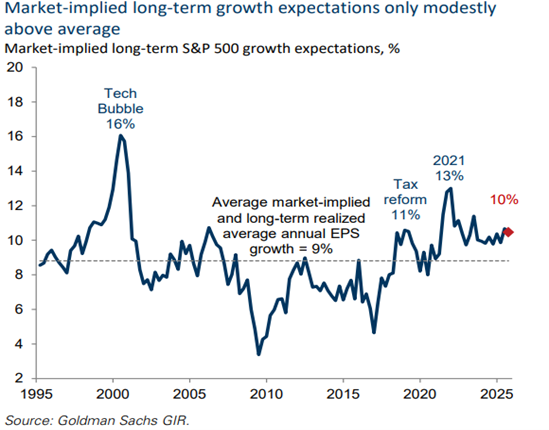
Yes — in parts of the equity market.
Yes — in capability expectations for 2025–26.
No — not in the underlying technological trajectory.
Absolutely not — in the infrastructure layer.
The larger strategic risk is not overinvesting. It's underbuilding. Industries will not face a single AI moment — they will experience a cascade of irreversible shifts across operations, talent models, and competitive structure.
The Strategic Question for 2025–2026
Decision-makers should stop asking if AI is a bubble and start asking: What capabilities must we build now so we don't wake up on the wrong side of the next disruption?
History rewards those who prepare for structural change — not those who try to make corrections. AI is entering its first major correction, but not its decline. The technology is structurally transformative. The bubble is in the valuation layer, not the capability or infrastructure layers. The risk is not overbuilding — it's assuming the hype will fade and act accordingly.
As always, capital rewards those who position early for transformation, not those who wait for consensus clarity!


