The US-Iran Truce Is Over… Markets Are Entering a New Phase
What Happened?
The fragile US-Iran ceasefire has effectively collapsed. The US has resumed airstrikes and reimposed its naval blockade, while Iran has intensified attacks on commercial shipping in the Strait of Hormuz, targeting multiple oil tankers and expanding its retaliation across the Gulf.
The dispute is no longer centered on Iran's nuclear program—it has shifted to who controls the world's most strategic energy chokepoint.
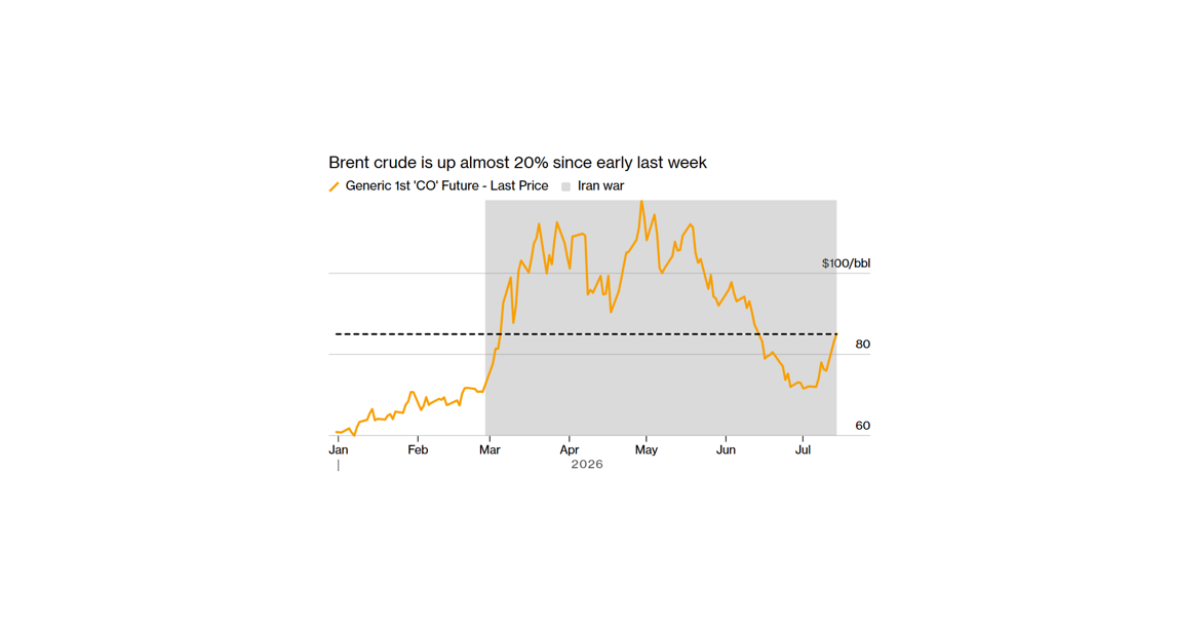
As a result, traffic through Hormuz has dropped sharply, while Brent crude has climbed nearly 20% to around $86 per barrel, reflecting growing fears of prolonged supply disruptions.
The Real Battle Is Hormuz, Not Nuclear Talks
The June agreement failed because it never clearly defined control over the Strait of Hormuz.
- Washington insists the agreement guaranteed free navigation.
- Tehran argues it retained the authority to regulate and approve maritime traffic.
With both sides interpreting the deal differently, the ceasefire was always built on fragile foundations. The current escalation is therefore not a surprise—it is the consequence of unresolved strategic disagreements.
Trump Raises the Stakes
In a major escalation, President Trump proposed imposing a 20% security fee on cargo passing through Hormuz, arguing that the US should be compensated for protecting global shipping.
If implemented, the proposal would dramatically increase transportation costs, face strong legal and diplomatic challenges, and likely be rejected by Gulf exporters and Asian energy importers alike.
More importantly, it transforms the conflict from a military confrontation into an economic battle over the cost of global trade.
Why Markets Should Pay Attention
The latest escalation extends well beyond oil prices.
Lower shipping activity through Hormuz increases freight costs, insurance premiums, and delivery times, while raising the risk of broader energy supply disruptions. At the same time, renewed tensions between Saudi Arabia and the Houthis around the Bab Al-Mandab Strait raise the possibility that pressure could spread to another critical global shipping route.
Markets are increasingly pricing in persistent geopolitical risk rather than a temporary shock.
The Conflict Has Entered a New Stage
The breakdown of the truce suggests that both Washington and Tehran are seeking leverage without crossing into full-scale war. This creates the most challenging environment for financial markets: a prolonged period of controlled escalation. Our base case is for:
- Elevated oil prices with continued volatility.
- Higher shipping and insurance costs.
- Increased pressure on inflation expectations globally.
- Greater uncertainty for emerging markets dependent on imported energy.
The key variable to watch is no longer whether fighting continues—but whether commercial shipping through Hormuz can normalize. Until that happens, geopolitical risk will remain firmly embedded in global asset prices.
________________________________________


