
Why is the Bank of England’s monetary policy relevant?

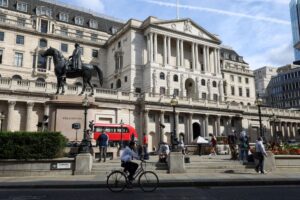
Why is the Bank of England’s monetary policy relevant?
Governor Bailey has arguably been the most honest G10 Central Banker in the latest MPC yet
Bank of England Gives a Lesson in Honest Central Banking. Analytical directness and intellectual honesty from monetary policy makers are inspiring.
The debate around monetary tightening was not the key focal point. Expectations were largely set on 50bp, which made for an unpleasant headline in that it is the largest rate rise since 1995. However, the focus was more on inflation rising from 9.4% to 13% and remaining at that elevated level through to the end of 2023, with five quarters of negative GDP growth beginning from 4Q this year.
The Bank of England are also expected to hike another 50bp in September, before a final 25bp in November as the recession gloom sets in. The central bank did leave some optionality around quantitative tightening, insofar as delaying sales until after the September meeting, rather than bringing the process forward (similar to the ECB but in contrast to the Fed).
Meanwhile, the U.S. seems in better shape. A sizzling jobs market with 528,000 new jobs in July moved unemployment to a 50-year low (3.5%), but naturally increases the odds of another 75bp hike in September. This leaves EM in an odd place. Brazil’s tightening cycle is seemingly coming to an end after the recent 50bp hike, which came with a dovish tweak in the statement and means the central bank could soon pause policy. Brazil’s pivot is fair after a front-loaded tightening cycle that began in 2021, but less can be said for the Czech Republic which surprisingly held rates unchanged when inflation is already above 17% (Poland’s inflation isn’t far behind). The trend is more polarized with red-hot CEEMEA and Asian inflation relative to a moderating path in LATAM. A second example is Peru, with inflation that eased from 8.8% to 8.7%. The chants of “peak inflation” were steadied by the trend in G10 countries though.
Crude oil is down some 14% this week at 95 USD/bbl, with WTI trading below 90 USD/bbl. The production increase of 100k bpd by OPEC+ was merely a rounding error, while the recessionary fears are dominating the agenda. The next question is whether a U.S. nuclear agreement with Iran in Vienna can cause further weakness. Implications around Nancy Pelosi’s visit to Taiwan and China’s reaction thus far have had limited market impact.
The Federal Reserve’s 75-basis-point interest-rate hike last week drew a cheerful response from markets
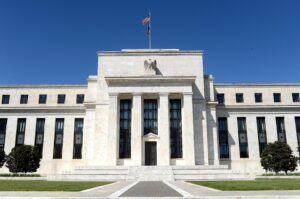 The Federal Reserve’s 75-basis-point interest-rate hike last week drew a cheerful response from markets" />
 Stocks rallied, especially the tech-heavy Nasdaq index, while short-term Treasury yields fell, reflecting an expectation that monetary policy could soon ease.
Such a reaction is curious, given that the Fed did not appear particularly dovish with its latest decision, nor did it signal a coming pivot from its aggressive tightening path. This may be a case of markets seeing only what they want to see. Yes, data is accumulating that might give the Fed a reason to ease off on policy:
- Inflation seems to be slowing. Most commodities are in bear markets—down at least 20% from their peaks—and gasoline prices have dropped, likely contributing to a decline in inflation expectations to 2.8% in July in the University of Michigan’s closely watched consumer surveys.
- Gross domestic product fell 0.9% in the second quarter—a second consecutive quarterly contraction that meets the technical definition of a recession.
- Policy operates with a lag, and we have yet to feel its full economic impact. Remember, we are in the midst of the most aggressive Fed tightening cycle in more than 40 years, with rates having risen more than 2 percentage points in the past four months and on track to rise more before the program is over. The Fed has to manage rate hikes at the same time as reducing the size of its balance sheet, something the central bank has never navigated before. This remains a challenge, and the implications of higher rates and tighter financial conditions are still in front of us.
- The economy still faces unique headwinds and a host of unknowns. The Russia-Ukraine conflict and China’s economic recovery, not to mention the lingering impact of COVID itself, remain outside the control of the Fed. Labor markets also remain strong, which lends support to the idea that the U.S. is not quite in a recession and that the Fed will continue on its tightening path. The job market’s strength also could keep wage pressures elevated—which, among other factors, is likely to hinder corporate profitability.
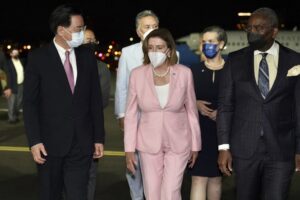
U.S. visit to Taiwan prompts largely expected Beijing response
This week, U.S. House Speaker Nancy Pelosi visited Taiwan, marking the highest-level U.S. visit in 25 years. The visit prompted Beijing to announce People’s Military Army (PLA) exercises from August 4th to the 7th surrounding Taiwan and crossing Taiwan’s Air Defense Identification Zone (ADIZ) and the median line.
We view the move as incrementally escalatory but largely in line with anticipated responses to the U.S.’s provocation. While the exercises are moderately more aggressive than those during the 1995-96 Taiwan Strait Crisis, with the firing of missiles over Taiwan for the first time, the duration appears to be shorter and incentives, at least in the near-term, remain to prevent significant further escalation. Brief supply chain disruptions are possible as a result of the exercises. On the constructive side, Beijing characterized the response as a deterrent to Taiwanese independence and still referred to peaceful unification. With that being said, while not our base case, odds of a more prolonged security crisis have increased with room for further attacks of tension, particularly as the Party Congress nears in the fall.
Argentina announces new measures in aim to stabilize the macroeconomic backdrop
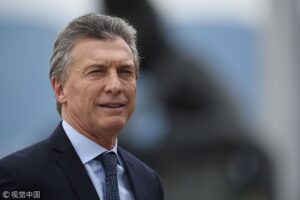
Newly appointed ‘super’ Minister Sergio Massa gave a speech detailing actions to restore sentiment, improve the macroeconomic backdrop, and meet current IMF fiscal and net FX reserve targets.
Fiscal measures announced included subsidy reduction for the highest income segments of the population as well as consumption limits on the remainder of the population, wage freezes, amendments to social programs, and a voluntary local debt exchange to better manage maturities. External efforts entail incentives to boost FX reserves from exporters including sales at a more attractive exchange rate, controls to reduce under-invoicing of exports, and ongoing discussions regarding repo facilities with banks or a sovereign wealth fund.
We see the plan as constructive with the right intentions. Massa is able to successfully execute on the consolidation needed in 2H22 to avoid debts with the IMF largely through real capital expenditure, wage and pension adjustments, and/or a combination of further amendments from the Fund. Incentives for exporters should marginally improve the net FX reserve picture along with some seasonality on energy imports while the government continues to work on additional efforts in this area. The gap between the parallel and official rate has stabilized for now at around 125%, down from its peak of 165%. Going forward, evolution of net FX reserves and fiscal data will be monitored closely in the context of the next IMF program review and the chunk of local maturities beginning in September.
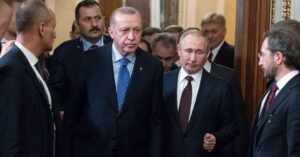
Alarm mounts in western capitals over Turkey’s deepening ties with Russia
Officials warn of retaliation if Ankara helps Moscow evade sanctions after Erdoğan and Putin agree to increase co-operation.
Western capitals are increasingly alarmed about the deepening economic co-operation between Turkey’s president Recep Tayyip Erdoğan and Vladimir Putin, warning of the mounting risk that the Nato member state could be hit by punitive retaliation if it helps Russia avoid sanctions. The Turkish and Russian leaders are expanding their co-operation on trade and energy after a four-hour meeting in Sochi. We believe that Turkey is increasingly becoming a platform for trade with Russia. We could even describe that Turkey’s behaviour towards Russia is “very opportunistic”!
Washington has warned repeatedly that it will hit countries that help Russia to evade sanctions with “secondary sanctions” that target violations beyond the US legal jurisdiction, however the EU has been more reticent about doing this. US deputy Treasury secretary Wally Adeyemo met Turkish officials and Istanbul bankers in June to warn them not to become a conduit for illicit Russian money. It is worth noting that Turkey is deeply integrated into the western financial system and brands from Coca-Cola and Ford to Bosch and BP have longstanding and often highly profitable operations in the country.
Diplomatic relations between Turkey and the west are already strained. Washington hit Ankara with sanctions in 2020 in retaliation for the purchase of an S-400 air defence system from Moscow, although the measures targeted the country’s defence industry rather than the broader economy.
Erdoğan, who has repeatedly threatened to veto Sweden’s and Finland’s admission into Nato, is viewed in many western capitals as an increasingly unreliable ally. Yet Turkey is a vital partner for Europe on counter terrorism and refugees. The country hosts around 3.7mn Syrians as part of a deal struck with the EU in 2016 that helped to stem the flow of migrants to Europe. The conflict between Russia and Ukraine has underlined Turkey’s strategically important location, controlling access to the straits that link the Black Sea to the Mediterranean. Erdoğan also played a key role in securing the grain deal signed by Russia and Ukraine last month that aimed to avert a global food crisis.
Stay up to date
More Newsletter to Check



SUBSCRIBE TO NEWSLETTER
Subscribe to download our daily economics and business roundup


×
![]()