
What does Silicon Valley Bank’s collapse mean for the financial system? A big lender to American startups goes under!

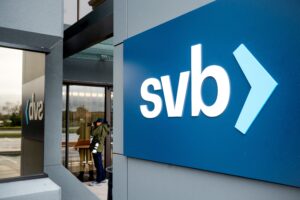
What does Silicon Valley Bank’s collapse mean for the financial system? A big lender to American startups goes under!
Shareholders envisioning the imminent peak of petroleum demand want executives to focus on short-term returns rather than long-term projects that risk becoming stranded assets.
Gradually, then suddenly. That is how Silicon Valley Bank (SVB), the 16th-largest lender in America, with about 200 billion USD in assets, went bust. Its financial position deteriorated over several years. But just two days elapsed between the San Francisco-based bank’s announcement on March 8th that it was seeking to raise 2.5 billion USD to plug a hole in its balance-sheet, and the declaration by the Federal Deposit Insurance Corporation, which regulates American bank deposits, that SVB had failed.
SVB’s share price plunged by 60% after the capital raise was revealed. Greg Becker, its chief executive, urged clients to “support us as we have supported you”. Unpersuaded, some venture capitalists told portfolio companies to run. Bill Ackman, a hedge-fund manager, suggested that the government should bail out the bank. By the morning of March 10th its shares had slid another 70% or so in pre-market trading, before a halt was called. CNBC, a television network, reported that SVB’s capital-raising efforts had failed and that the bank was seeking to sell itself to a larger institution. Then came the announcement from the regulators.
These events raise two questions. The first is how SVB got into this position. The second is whether its troubles are simply an anomaly, or an indication of doom for financial institutions writ large. Start with the first. SVB is a bank for startups. It opened accounts for them, often before larger lenders would bother. It also lent to them, which other banks are reluctant to do because few startups have assets for collateral. As Silicon Valley boomed over the past five years, so did SVB. Its clients were flush with cash. They needed to store money more than to borrow.
Thus, SVB’s deposits more than quadrupled—from 44 billion USD at the end of 2017 to 189 billion USD at the end of 2021—while its loan book grew only from 23 billion USD to 66 billion USD. Since banks make money on the spread between the interest rate they pay on deposits (often nothing) and the rate they are paid by borrowers, having a far larger deposit base than loan book is a problem. SVB needed to acquire other interest-bearing assets. By the end of 2021, the bank had made 128 billion USD of investments, mostly into mortgage bonds and Treasuries.
Then the world changed. Interest rates soared as inflation became entrenched. This killed off the bonanza in venture capital and caused bond prices to plummet, leaving SVB uniquely exposed. Its deposits had swollen when interest rates were low and its clients were flush with cash. Since the bank made investments during this time, it purchased bonds at their peak price. As venture-capital fundraising dried up, SVB’s clients ran down their deposits: they fell from 189 billion USD at the end of 2021 to 173 billion USD at the end of 2022. SVB was forced to sell off its entire liquid bond portfolio at lower prices than it paid. The losses it took on these sales, some 1.8 billion USD, left a hole it tried to plug with the capital raise. When it went under the bank held some 91 billion USD of investments, valued at their cost at the end of last year.
Were SVB’s troubles an anomaly? The bank appears to have been uniquely susceptible to a run. Federal insurance, put in place after a series of panics that felled the American economy in the 1930s, covers deposits up to 250,000 USD. This protects all the cash that most individuals would stash in a bank account. But it is unlikely to cover the funds a company would keep. SVB is a bank not just for companies, but a narrow subsection of them that have suffered tougher times than most. Some 93% of its deposits were uninsured. Its customers, unlike those at most banks, had a real incentive to run—and they responded to it.
That said, nearly all banks are sitting on unrealised losses in their bond portfolios. If SVB is the bank most likely to have been put in the position of having to stock up on bonds at their peak price, it is probably not the only one struggling with the whiplash in prices. Signs of the stress at SVB are spilling over into other parts of the financial world. USDC, a stablecoin, lost its peg to the dollar and hit an all-time low on Saturday. Circle, the payments company which manages USDC, confirmed that around 3.3 billion of its 40 billion USD in reserves was deposited with SVB. USDC rebounded after Circle said it would recover any shortfall in reserves.
Powel changed everything on market’s view of interest rates.
In his testimonies in front of the Senate Banking Committee on Tuesday and the House Financial Services Committee on Wednesday, Fed Chair Powell provided remarks that sounded hawkish relative to market expectations, signaling that the FOMC could recalibrate the pace of rate tightening and that the U.S. terminal rate may be higher than expected.
Markets now strongly expect a half point increase in March and the peak, or terminal rate, to hit close to 5.75% before the Fed is finished. with this coming on the back of the Federal Reserve having already mismanaged the battle against inflation, we now have more worries about yet another policy mistake, an economic recession, and/or market accidents.
In reaction to Powell’s hawkish tone mid-week, the 2-year UST yield rose above 5.0% for the first time since June 2007 and the DXY Index hit a new year-to-date high of 105.88. However, on Friday, UST yields and the USD reversed course and turned sharply lower despite February’s strong U.S. jobs report (NFPs +311K vs 225K expected) as the market interpreted a slowdown in average hourly earnings as a sign that the Fed might be pushed in the direction of maintaining a 25bps pace as opposed to upshifting to a 50bps rate hike at the March 21-22 FOMC meeting. The next critical signpost will come from the U.S. February CPI print due on March 14.
Meanwhile, the ECB also demonstrated a hawkish bias, supporting the EUR and triggering market repricing of the terminal rate to 4%, which implies approximately 150bps of further tightening. In China, the National People’s Congress (NPC) produced no surprises in terms of policymaker appointments and outlined a conservative growth target that decreases the pressure on the PBoC to deliver forceful easing measures in the near-term. In EM, the news flow was dominated by the intra-coalition political drama in Turkey’s opposition alliance ahead of critically important presidential and parliamentary elections now officially scheduled by President Erdogan for May 14. After intense negotiations, Kemal Kilicdaroglu, the leader of largest opposition party (CHP) was confirmed as the joint candidate of the six party anti-Erdogan block to run in the first round of presidential elections.
Powell’s comments unleash unsettling volatility
The reaction by stocks and bonds to his remarks is more than just noise. Undue tumult increases the risk of economic and market accidents.
It really shouldn’t be this way, and it doesn’t need to be. Yet once again remarks by Federal Reserve Chair Jerome Powell fueled considerable volatility in markets that could risk both economic well-being and financial stability. It’s a phenomenon that not only highlights repeated policy slippages but also the lack of important structural and strategic underpinnings at the Fed. Several times in the last few years, comments at the press conference that traditionally follows the conclusion of the two-day FOMC meetings have caused significantly more volatility than the prior publication of the central bank’s policy decision and Powell’s written remarks. On Tuesday, the initial market volatility caused by the release of Powell’s opening statement before the beginning of his semiannual congressional testimony was significantly amplified by his subsequent answers to senators’ questions.
The market reactions included a yield spike at the front end of the bond market, with the two-year breaking 5% for the first time since 2007, an across-the-board selloff in stocks, with the S&P 500 Index dropping 1.5%, and an intensification of the inversion of the 2s-10s yield curve, whose spread breached minus 100 basis points. Something is not right in all this. The whole point of the increased transparency adopted by the Fed in the last couple of decades is to allow for smooth economic and financial adjustments to policy regimes. Indeed, this is the very essence of forward policy guidance. It is not to undermine the credibility of the world’s most powerful central bank.
Three factors help explain this unfortunate situation.
First, the Fed should not downshift from 50 to 25 basis points on Feb. 1 (as it subsequently did), the central bank seems to lack a comprehensive assessment of policy risks in today’s inherently fluid domestic and global economy.
Second, the absence of a strategic medium-term anchoring means that the Fed has become overly data dependent, leading to overshoots.
Third, the August 2020 “new monetary framework” is more appropriate for the pre-2020 world and not that of today and tomorrow — that is, it is designed for the previous paradigm of insufficient aggregate demand and not the reality of insufficient aggregate supply.
The worse thing for policymakers to do is to dismiss Tuesday’s market volatility as noise. There is something more sinister in play. The more this undue volatility occurs, the greater the risk of economic and market accidents — that is a recession caused by what is now three Fed policy mistakes in the past two year and strain to orderly financial market functioning.
Optimism around increased chances of Turkey’s reconstituted opposition alliance winning the Presidency seem premature

There have been some dramatic events within Turkey’s six party anti-Erdogan alliance when the second largest opposition party, the iYi (Good) party, left the alliance and openly attacked Kemal Kilicdaroglu, the leader of the largest opposition party, CHP, labeling him “unelectable”.
The iYi party represents approximately 14-15% of the polls and their support would be crucial for de-throning Erdogan. Following 72 hours of hectic, behind closed doors negotiations to avert a political disaster for the opposition before the Presidential and Parliamentary elections on May 14, it was announced that the coalition is back together under a “new formula”. Under the “new formula”, the popular Mayors of Istanbul and Ankara (Ekrem Imamoglu and Mansur Yavas) would run as VP candidates and Kemal Kilicdaroglu would be the joint Presidential candidate of the restored opposition alliance.
The unexpected U-turn in the iYi party and its leader Meral Aksener’s position on supporting Mr. Kilicdaroglu’s candidacy for President shifted market sentiment, especially among the local financial community in Turkey. Local mood changed abruptly from desperation to euphoria under the narrative that the political momentum will now favor an invigorated opposition block under the “new formula” with Mayors Imamoglu and Yavas as VP candidates. At this stage, we are not big believers in this thesis and deem optimism about the opposition’s chances to win both the Presidency and a majority in the National Assembly to be premature. We are of the view that the Presidential and Parliamentary elections gravitate around being a coin toss and will be decided by small details in the coming weeks.
Turkish domestic politics will be extremely dynamic in the months that lead up to elections. Developments might trigger a reassessment at any point but as things stand, we believe President Erdogan has a slightly better chance of winning re-election against the now formally announced opposition candidate, Kilicdaroglu. For Mr. Kilicdaroglu to win, many pieces need to fall into place for the opposition and major mistakes need to stop. Based on the alliance’s track record until now, this seems like a tall order.
Meanwhile, President Erdogan signed a decree on Friday to bring the Presidential and Parliamentary elections forward to May 14 from the originally scheduled date of June 18. We tend to think it is unlikely that a savvy political operator, like President Erdogan, is eagerly willing to go to elections early unless he expects to be able to make up the lost approval ratings after the recent tragic earthquakes by aggressive government spending while capitalizing on the opposition coalition’s difficulties to run a harmonized campaign.
Stay up to date
More Newsletter to Check



SUBSCRIBE TO NEWSLETTER
Subscribe to download our daily economics and business roundup


×
![]()