
Warren Buffett’s Berkshire Hathaway dumps billions of dollars of US stocks

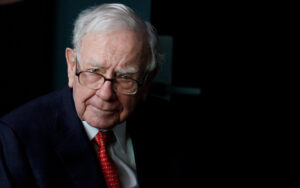
Warren Buffett’s Berkshire Hathaway dumps billions of dollars of US stocks
Cash pile rises by 2 billion USD to 130.6 billion USD as sprawling conglomerate finds little to spend on
Warren Buffett’s Berkshire Hathaway sold billions of dollars’ worth of stock and invested little money in the US equity market in the first three months of the year, a signal the famed investor saw little appeal in a volatile market. Berkshire disclosed on Saturday that it had sold shares worth 13.3 billion USD in the first quarter and bought stocks for a fraction of that figure. Instead, it put 4.4 billion USD towards repurchasing its own stock, as well as 2.9 billion USD on the shares of other publicly traded businesses.
The figures underscore the struggle Berkshire faces in putting its mountain of cash to work at a time when Buffett and his longtime right-hand man Charlie Munger regard valuations as unappetizing. The company’s cash pile has risen by 2 billion USD since the start of this year to 130.6 billion USD, its highest level since the end of 2021. Munger last month told the Financial Times that investors should reduce their expectations for stock market returns as the Federal Reserve raises interest rates and the economy slows.
Tens of thousands of shareholders descended on the Midwest city to hear from Buffett and the Berkshire team this weekend, where they discussed artificial intelligence and its effects on the investment world, their views on Tesla chief executive Elon Musk — Musk overestimated himself, Buffett said — as well as succession at the company. Buffett noted that the effects of the slowing economy were only just beginning to be felt by Berkshire, although he did not paint a dour picture of the economy. Buffett said he expected earnings to decline at the majority of its businesses this year. “It isn’t that employment has fallen off a cliff or anything, but it is a different climate than it was six months ago,” he said. “A number of our managers were surprised. Some had too much inventory on order.”
Higher interest rates, however, have also been a boon to Berkshire. The company invests the vast majority of its 130.6 billion USD of cash in short-term Treasury bills and bank deposits. Income on those short-term bills and cash-like deposits surged to 1.1 billion USD, up from 164 million USD a year prior. Buffett was pressed for his thoughts on the health of the US banking system, which is in the midst of crisis, given the investor’s long tenure and history backstopping the industry. The billionaire investor said Berkshire had grown more cautious about investing in the industry given the rapid deposit flight some banks have suffered. It is a change from previous crises, when Berkshire’s capital helped shore up both Goldman Sachs and Bank of America. The latter is now a core holding in the company’s stock portfolio.
The coronation of Charles III: an irresistible spectacle

Seven decades in the making, the ceremony at Westminster Abbey was a splendid and strange ritual
Charles III was crowned king of the United Kingdom and other realms and territories at Westminster Abbey in London. The service, which contained elements that were one thousand years old, was attended by world leaders and assorted dignitaries. Festivities afterwards included a military parade featuring 4,000 troops. Some people were less enthusiastic. Anti-monarchists from Republic, a campaign group, were arrested at a morning protest in central London. It would be wrong to say that the British public had been gripped by the prospect of the coronation. Two-fifths thought it was a waste of taxpayer money, according to one poll. Two-thirds didn’t care about it very much or at all, according to another. After all, there had been a glut of royal pageantry in the past year: Elizabeth II’s platinum jubilee weekend last June, followed by her funeral in September.
Yet, as so often, royal ceremony proved almost irresistible. Foremost was the music, guided, we are told, by the king himself. Westminster Abbey is a fragmented building, where few seats have a direct view of the central space. It has been hosting coronations since 1066, which means that for many centuries, most attendees must have been craning their necks. Because of that, and because most of the congregation had to be seated for two hours before the main service began, the music mattered.
In truth, Charles III has already offered much service and undergone many initiations: a spell in the armed forces, mockery by the media, endless public engagements. The coronation is just one more ritual. You might even argue it was superfluous: he has been king since September. But this ceremony helped to draw the line between the fallible, opinionated prince that he was and the unimpeachable, neutral monarch that he is supposed to be today. Beforehand, there had been some grumbling about a new oath of allegiance — introduced to enable the public to express their loyalty to the king. It did not seem very British; it seemed almost — gasp — American.
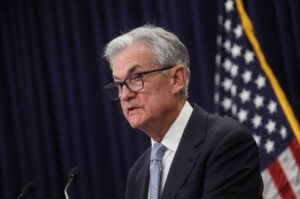
S. regional bank woes continue but strength in NFP creates more challenges for Chair Powell
Regional banks sold off just after the FOMC press conference, where Powell had said that conditions in the banking sector had broadly improved since March. The stock market disagreed.
Jamie Dimon reiterated that he did not see a banking crisis unfolding, although that was after JPM had acquired First Republic Bank for 10.6 billion USD, which also saw the FDIC agreeing to 50 billion USD as a 5-year fixed-rate term facility aimed at plugging the gap in lost deposits. The transaction ultimately allowed JPM to book a one-time gain of 2.6 billion USD, courtesy of the 13 billion USD loss directly to the FDIC. The next headache was around PacWest, which came as little surprise given it was down 77% since the beginning of March. Western Alliance was rumored to be looking at strategic options, just as Toronto Dominion called off its acquisition of First Horizon and paid a 200 million USD penalty for doing so. Markets appeared calm but the VIX did begin to break noticeably above 20pts on Thursday. U.S. Treasury yields also fell as interest rate cuts were priced in over the summer, although this was partially reversed as unemployment fell to 3.4% on Friday.
The next brewing crisis is over the debt ceiling where Treasury Secretary Yellen suggested the “X date” was early June, whereas the market had previously been working under the assumption that it was in late July. This caused T-Bill yields to sharply rise and the latest auction pushed yields to 5.84%, the highest level since 2000. The opposite is true for the ECB, who instead are focusing on inflation with “more ground to cover” in terms of tightening policy. Lagarde was explicit in stating that the ECB are “not pausing, that is extremely clear” but did cede that policy was in “restrictive territory”. Separately, crude oil was under pressure on recessionary risks and lower gasoline demand in the U.S., with the commodity down over 5-6% over the past week.
Within EM, China’s contraction in the Caixin Manufacturing PMI highlights an uneven recovery and led to 5-year NDIRS rallying to a YTD low of 2.70%. Brazil held policy rates unchanged at 13.75% with a possible cut penciled in for September. A similar theme is developing in Central and Eastern Europe as Hungary had tweaked policy and the Czech Republic held policy rates unchanged. The second theme after monetary policy was with the IMF. Argentina gained U.S. support for early disbursement of 10.6 billion USD, Kenya received 300 million USD and Tunisia is ever closer to securing a program. Needless to say, Pakistan remains in an information vacuum without any IMF developments, which had been expected after recent comments from the Minister of Finance.
Fed is about to find out if it can afford to pause rates
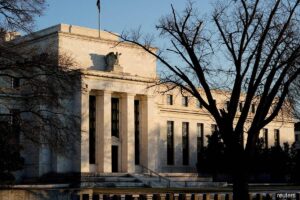
Annual US core inflation seen rising at still-concerning pace
US inflation data in the coming week will provide clues about whether the Federal Reserve can pause its series of interest-rate hikes at next month’s meeting. The core consumer price index, which excludes food and energy, probably increased by 5.5% in April from a year ago after a 5.6% increase a month earlier. The annual advance would suggest just a slight moderation in the pace of underlying price pressures, and that inflation is proving persistent. The core rate has hovered in a 5.5% to 5.7% range for the past four months, underscoring the sticky nature of inflation. Wednesday’s report will be the first of two CPI releases Fed policymakers will have in hand before their June rate decision.
Finally, with respect to the future for rates, the Fed should keep open the possibility, though not emphasize the probability, of further increases. It should resist validating market expectations of cuts in the next few months. It should also signal that its approach to this rate cycle will increasingly shift away from the current approach of heavy data dependence to a more strategic approach underpinned by the expected longer-term secular evolution of the economy. This would include the revamping of its outdated monetary policy framework. Such communication by the Fed would not enable the pressured central bank to fully get out of the hole it has dug for itself and for the economy because of earlier failures in analysis, forecasts, actions and communication. It would, however, start a much-needed recovery and rehabilitation process, including to its credibility, that is central to the well-being of Americans and beyond.
Elsewhere, he Bank of England is expected to follow the Fed, ECB and Norges with a 25bps hike next week. Most of EM is holding interest rates unchanged as they are much further ahead of DM central banks. It is likely that the National Bank of Poland and National Bank of Romania hold rates unchanged at 6.75% and 7.0%, respectively. Meanwhile, China’s credit growth, trade and inflation data is due out next week. The recovery profile is expected to be weak with slow credit expansion, soft inflation and some fragility in exports. A softer inflation picture is expected out of the U.S. too. Key CEE inflation releases are due out of Hungary, with consensus pointing to 23%, followed by Czech Republic and Romania, which could move asset markets. We can expect Turkey’s current account release, where the deficit is expected to narrow. However, more emphasis will be on Turkey’s final, impartial poll from Konda on May 11. Finally, after an impressive PMI reading out of India, industrial production is expected to fall markedly from 5.6% in February to 3.6% in March.
Stay up to date
More Newsletter to Check



SUBSCRIBE TO NEWSLETTER
Subscribe to download our daily economics and business roundup


×
![]()