
The Siemens-built combined-cycle power plant in Beni Suef is reportedly going to be the first of the three plants

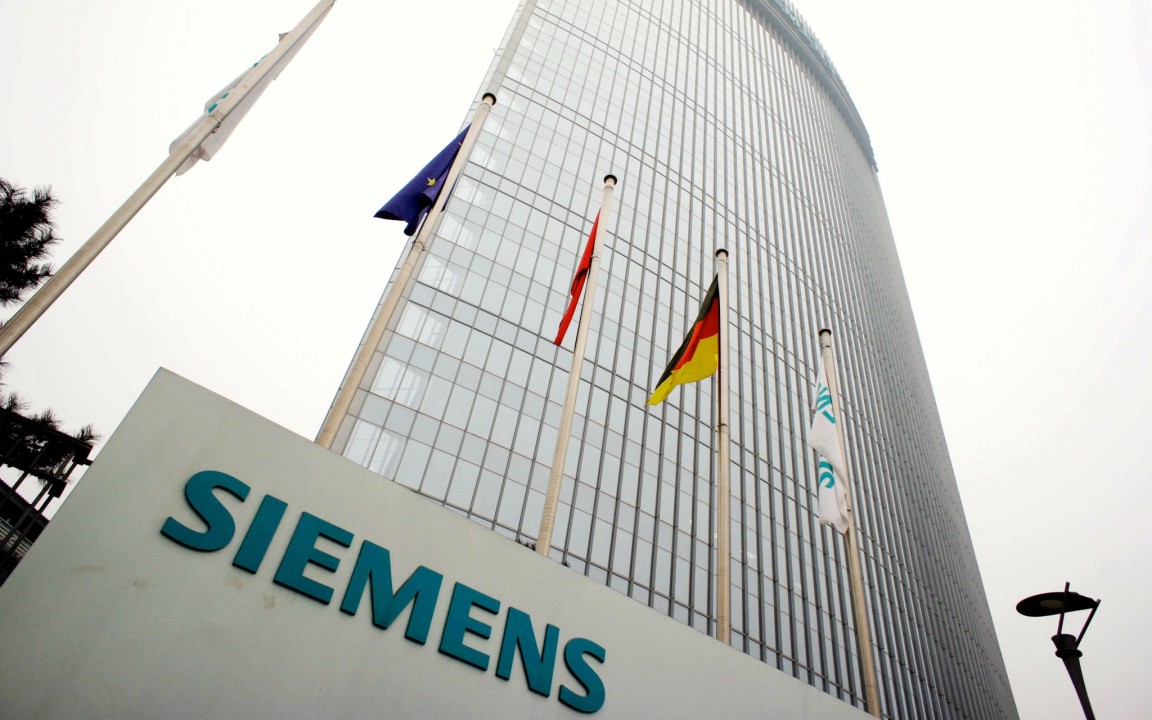
The Siemens-built combined-cycle power plant in Beni Suef is reportedly going to be the first of the three plants that will be transferred to the Sovereign Fund of Egypt’s (SFE) pre-IPO fund before the end of the year. The fund is meant to prepare the state-owned assets and companies for stake sales. The SFE will offer stakes in the plant to strategic investors at a later time. Planning Minister Hala El Said had said last month that one of the three plants will be among the first batch of assets that will be transferred to the pre-IPO fund, which plans to raise 6 billion USD from selling stakes in state-owned assets by mid-2023. (Bloomberg Asharq)
- The Arc targets 5 billion USD from East Cairo project.
The Arc Development is targeting sales of more than 100 billion EGP from the project, whose development contract was signed with the owner of the land, the “OYA Libya” company, and the volume of its investments is estimated at about 30 billion EGP. The Ark project is being built on an area of 92 acres east of Cairo, and it is an integrated urban project, which will take 10 years to complete, and the first phase of it will be launched within a month, and the units will be delivered within 3 years. (Bloomberg Asharq)
- EGAS, Germany’s Wintershall team up to reduce emission at Disouq concession.
Egyptian Natural Gas Holding Company (EGAS) has signed a letter of intent (LoI) with Germany’s largest crude oil and natural gas producer Wintershall Dea to cut the latter's carbon footprint in Egypt. Under the signed LoI, the two companies will cooperate to reduce carbon emissions in the concession of Disouq, where Wintershall Dea operates. This comes in line with the petroleum ministry’s efforts to improve production and reduce carbon emissions, in cooperation with its global partners. (Arab Finance)
- The Central Bank of Egypt (CBE) stated that the country’s external debt decreased by 1.3% in the last quarter of the 2021-2022 fiscal year at the end of last June on a quarterly basis to record 155.708 billion USD, in the first decline in external debt since September 2021
On an annual basis, the external debt has increased for Egypt 13%. Last March, the country floated "samurai" bonds worth up to 500 million USD. In the current budget 2022-2023, Egypt plans to obtain external financing by about 146.4 billion EGP, compared to about 78.4 billion EGP expected in the budget of the last fiscal year, which means an increase in the volume of external funds by about 87%. (Bloomberg Asharq)
- It is worth noting there are two reasons for the decline in the external debt.
The first is that the Egyptian government repaid some foreign debts during the last period in light of not borrowing during that period, in addition to evaluating some foreign debts denominated in euros, as a result of the decline of the euro against dollar. Egypt paid off some debts in the first half of this year, and most of Egypt's external debt is long-term debt belonging to the government and the central bank. The e 2022-2023 budget aims to issue international bonds equivalent to 91.5 billion EGP, up from 66 billion EGP in the previous budget, in addition to borrowing 54.9 billion EGP from international financial institutions (other than the International Monetary Fund) compared to 12.4 billion EGP in the current budget. (Bloomberg Asharq)
- A new government decree issued earlier this week enforced price increases on natural gas supplied to cement producers and brick kilns, in a move that will likely limit their use of gas.
The move essentially makes it impossible for cement producers to start heavily depending on natural gas instead of other energy alternatives. But because natural gas already accounts for only 10-20% of cement producers’ energy mix and only half of the sector has access to gas infrastructure. It’s unlikely that retail cement prices will rise significantly. (Zilla Capital)
- Egypt’s ENR secures 40 million EUR sovereign loan from EBRD.
The Egyptian National Railways (ENR) will receive a sovereign loan of up to 40 million EUR from the European Bank for Reconstruction and Development (EBRD). The loan will partially finance the supply and installation, as well as the signaling and telecommunication systems of the Robeiky-10th of Ramadan-Belbeis Railway Line project. On the other hand, the project’s civil works will be financed by the Egyptian government, with the remaining part of the project’s cost to be financed by another financial institution through a sovereign loan. (Arab Finance)
- The reasons behind delaying Qatari investments with 5 billion USD in Egypt.
Qatar's delay in direct investments in the Egyptian market is probably due to the desire of Qatar Investment Authority in acquiring majority stakes in a number of Egyptian companies, which the Egyptian sovereign fund rejects. As well as waiting for some stability in the Egyptian pound to reach the fair value against the dollar in the market. Qatar agreed with the Egyptian government last March on investments and partnerships with a total value of 5 billion USD during the coming period. While the two sides did not disclose at the time about the areas in which these investments would be injected or when the deals would be concluded. (Bloomberg Asharq)
- Moving to our talks abroad, the IMF expects more than a third of the global economy to contract “this year or next”.
The Fund maintained its global GDP forecast of 3.2% for this year but is less optimistic about next year, when it expects growth to slow to 2.7%, 0.2 percentage points lower than in its last forecast in July. In short, the worst is yet to come, and for many people 2023 will feel like a recession. The world’s three largest economies — the US, China, and the EU — will continue to stall” in 2022 and 2023. The Fund sees inflation as the biggest risk to global growth. But monetary tightening by central banks to bring prices back in line also poses a threat, leaving many economies caught between a rock and a hard place. (IMF)
- Alhsn for Consulting sells 7.9 million EGP stake in Panda.
Alhsn for Consulting sold a stake in Arab Dairy Products Co. Arab Dairy (Panda) (ADPC) for 7.877 million EGP. The transaction was executed on 3.89 million shares at an average price of 2.025 EGP per share. Accordingly, Alhsn’s stake in Panda decreased to 0.37% from 1.71%. The company exports its products to Middle Eastern countries, such as Lebanon, Jordan, Libya, the United Arab Emirates, Saudi Arabia, Palestine, Bahrain, Oman, and Kuwait. (Arab Finance)
- Vezeeta closes new funding round to fortify position in MEA.
Egypt-based health-tech platform Vezeeta has secured a new funding round to elevate its growth plans and finance anticipated merger and acquisition deals in the Middle East and Africa (MEA) region. The funding round has been led by Abu Dhabi-based Gulf Capital and Sweden-based VNV Global. The amount of the new funding has not been disclosed yet. (Arab Finance)
Stay up to date
More Newsletter to Check



SUBSCRIBE TO NEWSLETTER
Subscribe to download our daily economics and business roundup


×
![]()