
The Madbouly government wants to bring Egypt’s debt-to-GDP ratio down to 84% in fiscal year 2022-2023.

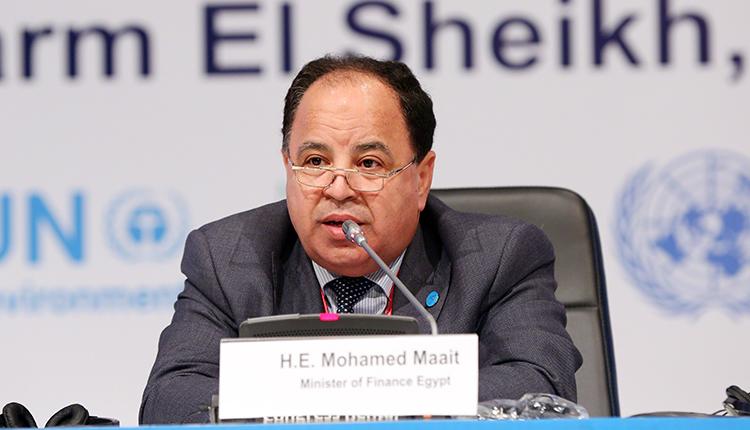
For our top talks today, the Madbouly government wants to bring Egypt’s debt-to-GDP ratio down to 84% in FY 2022-2023. This is the first time the debt target for next fiscal year has been revised since the Finance Ministry in January said it hoped to bring the public debt down to below 90% of GDP. Egypt’s debt-to-GDP ratio is expected to come in at around 85% this year. Revenue forecasts have also been revised upwards: The state is now expecting to bring in 1.52 trillion EGP in FY 2022-2023, up from a previously expected 1.45 trillion EGP and more than 10% above projected revenues for the current fiscal year. This ties in with state plans to bring down the debt: In a speech before the Eid break, President Abdel Fattah El Sisi said his administration would announce a plan to reduce public debt and the budget deficit over the next four years, without specifying when to expect the announcement.
- The government is still targeting a 6.1% budget deficit next year, down from a projected 6.2% by the end of this fiscal year, and a primary surplus of 1.5%, up from an expected 1.3% by the end of this fiscal year.
Government spending is also still set to rise 12% next year to reach EGP 2.07 tn. Growth for next year is penciled in at 5.5% of GDP. The Finance Ministry has shown that Egypt generated a 0.4% primary surplus in the first nine months of the fiscal year, remaining more or less unchanged from the same period last year. Egypt hopes to achieve a 1.3% surplus by the end of the fiscal year in June, down slightly from its original 1.5% target in the state budget. (Bloomberg Asharq and Ministry of Finance)
- The international reserve at the Central Bank of Egypt (CBE) has risen by around 41 million USD month-on-month (MoM) at the end of April.
Egypt’s international reserve grew to 37.1 billion USD in April from 37.08 billion USD in March. It is worth mentioning that the CBE used a portion of its international reserve in March to cover the basic needs of the domestic market and make up for the outflows of foreign investments and international portfolios. The current reserve is sufficient to cover more than five months of merchandize imports. (CBE)
- Minister of Public Business Sector Hisham Tawfik stated that around 18,000 products by 1,100 small- and medium-sized enterprises (SMEs) were registered in the e-catalog platform "Gosoor" to promote Egyptian products in global markets, the Middle East News Agency (MENA) recently reported.
This move comes as part of the government's goal to bring the value of Egyptian exports to 100 billion USD, in cooperation with relevant ministries, the minister said. Agreements were sealed with global logistics companies, as well as with Misr Insurance Company to provide insurance services for goods that will be offered, promoted, and transported by Gosoor, Tawfik added. (Arab Finance)
- All Egyptian companies and factories were encouraged to register their products and inputs at the e-platform for free,
which will give them access to markets abroad through an integrated system offered by Gosoor (El Nasr for Export and Import) including all transport and logistic services, Tawfik noted. The minister highlighted the restructuring of Gosoor and the remapping of its international presence through 16 centers across the globe, covering more than 40 countries including seven in Africa. By the end of June 2022, another six centers are set to be opened abroad, including 3 in Africa, Tawfik unveiled. (Arab Finance)
- Egypt’s non-oil private sector continued to contract in April, knocked by inflation that has been affected by the war in Ukraine as well as by falling demand, according to the S&P Global purchasing managers’ index survey (pdf).
Business activity contracted at a slightly slower pace during the month, with the index inching up to 46.9 from 46.5 in March but remaining below the 50.0 mark that separates expansion from contraction. The index reflected “a solid deterioration in business conditions” that was the second-fastest in almost two years. November 2020 seems a long time ago: This is the 17th consecutive month Egypt’s non-oil private sector has been in contraction since mounting a brief recovery from the shock of COVID in 2020. (Enterprise)
- Moving to the EGX and companies talks, Egyptian fintech Paymob, which enables merchants to accept digital payments online and in-store, announced today it has raised 50 million USD in Series B funding.
PayPal Ventures, the global corporate venture arm of PayPal, New-York-based venture capital Kora Capital, and London-based Clay Point led the round. New participating investors include Helios Digital Ventures, British International Investment (formerly the CDC Group), and Nclude, the venture fund launched by Global Ventures and three Egyptian banks. Existing investors from its 18.5 million USD Series A last April — A15, FMO, and Global Ventures — doubled down. The round, which is one of the largest at this stage in Egypt and MENA, brings Paymob’s total funding to over 68.5 million USD.
- Egyptian pasta-maker Egyptian Swiss Group — the maker of pasta brands Zeina and Rawaa is “experimenting” with rice, corn, and lentil flours as a substitute for wheat, as the war in Ukraine continues to drive price inflation for the grain.
“The price is the name of the game,” Egyptian Swiss Group General Manager Ahmed El Sebaie was quoted as saying. The food manufacturer joins firms across Africa exploring local alternatives to imported wheat, which has become around 40% more expensive so far this year. State grain buyer GASC has purchased around 13% less wheat so far this year compared with the same point in 2021. Egypt usually sources some 80% of its wheat imports from Russia and Ukraine, but the government has pivoted to focus on the local harvest amid the price spike. (Bloomberg)
- EFG Hermes Holding (HRHO) was ranked 55th on the Financial Times and Statista’s list of the fastest-growing companies in Africa during 2022.
Moreover, the leading investment bank franchise in Frontier Emerging Markets (FEM) was ranked the fourth fastest-growing company in Egypt. EFG Hermes was the only Egyptian financial services institution to make it to the list. In 2021, the group has been named the Best Debt Bank in Africa by Global Finance, Best Brokerage Services by Africa Global Funds, and Best Broker in Egypt and Kenya by the EMEA Finance African Banking Awards. It was awarded Best Investment Bank in Egypt by EMEA Finance and ‘Best Corporate and Investment Bank in Egypt’ by Asia money. (Arab Finance)
- The European Bank for Reconstruction and Development (EBRD) is expected to provide a senior unsecured debt facility of 20 million USD to the Commercial International Bank Egypt (CIB) (COMI).
The loan will be dedicated for on-lending to private small- and medium-sized enterprises (SMEs) led by women in Egypt. The facility has passed a final review and is now subject to the approval of EBRD on June 9th. CIB is Egypt’s largest private bank, with total consolidated assets of 32 billion USD as of December 2021. The EGX-listed bank provides banking services across the country through more than 200 branches and units. The bank's segments include corporate banking, investment banking, retail banking, treasury and capital market services, and others. (Arab Finance)
- Kahira Pharmaceuticals and Chemical Industries Company (CPCI) reported a 46.73% year-on-year (YoY) growth in net profit after tax for the first nine months of fiscal year (FY) 2021/2022.
The company recorded a net profit after tax of 151.036 million EGP in the nine-month period ended March 31st, compared to a profit of 102.932 million EGP in the same period of FY 2020/2021. Sales increased by 7.12% YoY to 863.24 million EGP in at the end of March 31st from 805.872 million EGP. Kahira Pharmaceuticals is an Egypt-based company involved in the manufacture and trade of pharmaceutical products for human and veterinary use. (EGX)
- And for the startups talks, Manara, EdTech startup, raised 3 million USD in a pre-seed funding from Silicon Valley investors to launch world-class careers for female software engineers in the Middle East.
The funding round was led by Stripe and includes Reid Hoffman, Founder of LinkedIn, Paul Graham, Founder of Y Combinator, Eric Ries, Founder of Lean Startup, and Mudassir Sheikha, Founder & CEO of Careem. Manara’s solution enables cohort-based learning for software engineers and computer scientists via a digital platform. The platform brings together a community of world-class tech professionals who provide mentorship and networks to help MENA engineers land a top tech job. Manara plans to use this investment to scale its existing cohort-based solution to go from 60 engineers per year to 6,000 engineers per year. (WAYA)
- The social media platform, Instagram, is planning non-fungible token integrations for Ethereum, Polygon, Solana and Flow.
A pilot was also announced on Monday, featuring a small group of NFT aficionados in the US to increase cultural visibility for NFTs to its over one billion monthly active users. The pilot comes almost two months after Mark Zuckerberg first announced that Instagram would add NFTs. At the South by Southwest conference in Austin, Texas, Zuckerberg told Daymon John of Shark Tank that Meta is “working on bringing NFTs to Instagram in the near term.” Unlike Twitter’s hexagonal NFT profile pictures in January, Instagram will not charge users any fees for posting and sharing NFTs. Instagram also plans to support crypto wallets such as MetaMask so users are able to prove NFT ownership, showcase them on their profiles and tag the creators who made them. It is unclear whether Instagram will support NFTs from all four blockchains at launch time. (WAYA)
- Mashreq Bank invested up to 10 million USD in Cashew, a FinTech startup offering buy now pay later (BNPL) services to consumers in the United Arab Emirates and Saudi Arabia.
As part of the strategic investment, Mashreq will integrate Cashew Payment as an option of the acquiring network of Neopay as well as provide support for the launch of Cashew in Egypt. Cashew and Mashreq will also collaborate and offer new products to the market including longer tenure, higher ticket size BNPL options for consumers and Point of Sales lending options later this year. Mashreq would offer Cashew services and products to its merchants and business banking customers. Through the partnership, Cashew and Mashreq will expand to sectors such as education, travel and healthcare and give consumers numerous payment options. (WAYA)
Stay up to date
More Newsletter to Check



SUBSCRIBE TO NEWSLETTER
Subscribe to download our daily economics and business roundup


×
![]()