
The key feature next week is the FOMC decision on Wednesday


The key feature next week is the FOMC decision on Wednesday
The weekend debate as to whether monetary policy is tightened 50bps, 75bps or even 100bps will of course ensue, especially after an out-sized ECB hike of 50bps.
This will fall before European inflation and GDP prints, just as the EU is set to vote on cutting gas by 15%. These events also fall just as the IMF is expected to update its world economic outlook.
EM interest rate decisions are coming up with Colombia (7.5%), Ghana (19.0%), Hungary (9.75%), Kazakhstan (14.0%) and Kenya (7.5%). Inflation is then due out of Poland, although we are already aware that the NBP forecasts core CPI to peak in 4Q22 and headline to peak in 1Q23. Amidst these events, earnings are due from Alphabet, Apple, Amazon, Microsoft and Meta, among others.
The week ended with an aggressive interest rate rally. A collection of weak Eurozone PMIs on Friday saw German bunds rally almost 20bps with peripheral sovereigns some 30bps tighter. German bunds are a fixed-interest, euro-denominated security issued by Germany's federal government to fund its debt. In fact, the 2-year German note tightened 28bps at one stage to 0.36%, which is the largest one-day move since 2008. What is striking is that the 2-year note almost hit 0.80% after the ECB tightened rates by 50bps on Thursday, while keeping the door open to peripheral support via the “Transmission Protection Instrument”. The “TPI” remains a rather vague tool that was introduced into the ECB’s armory, but it ought to cap Italian 10-year “Club Med” yields at 250-275bps over German bunds. The strength in Eurozone rates spread globally and took the 10-year US Treasury to a two-month low of 2.72% on Friday.
Elsewhere, South Africa hiked policy rates by 75bps as inflation is beginning to gyrate through the economy with ZAR rallying on the SARB’s credibility (expectations were only 50bps). However, credibility is waning in Indonesia as the BI kept rates unchanged at 3.5% and remains the only other key Asian central bank to hold rates unchanged, along with Thailand.
Ukraine also announced its intentions to defer interest and principal payments over a two-year period. Ukraine’s Ministry of Finance sought to maintain some optionality with the ability to redeem its Eurobond debt, but cede that their ability to remain current has severely deteriorated amid the five-month conflict. The National Bank of Ukraine subsequently allowed the hryvnia to devalue by 25%, which is the second-largest move in its history since 1996. Ukraine’s quasi-sovereign issuers, such as Ukrainian Railways and the Export-Import Bank of Ukraine, have kept up with coupon payments, but both Ukravtodor (public road agency) and Ukrenergo (utility) have sought to follow the sovereign. Naftogaz is seeking a more aggressive form of standstill agreement without a consent fee or aggregation of unpaid accrued interest on its debt, which seems unlikely to receive creditor approval and therefore is likely to be first Ukrainian entity to enter a more challenging technical default.
The Fed Is Failing in Four Ways
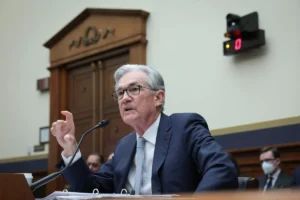
Regardless of what the central banks does next week, it needs to improve its analysis, forecasts, policy responses and communication.
Global economy watchers and market participants will be paying a lot of attention next week to how the Federal Reserve describes the US economic outlook, to the magnitude of its interest rate increase and whether it changes the pace of its balance-sheet contraction. Yet for the well-being of the US and global economy, the answer to these questions is less important than whether the Fed shows seriousness about fixing four failures that continue to fuel one of the worse policy mistakes in decades: Failures of analysis, forecasts, response and communication. Let us first dispose with what seems to interest economists and markets the most right now.
On the economic outlook, the Fed will acknowledge that, once again, inflation has proved to be higher and more stubborn than projected and that, despite some signs of weakness, the US economy remains in a “good place.” With that, it is likely to again lift rates by 75 basis points and leave unchanged its previously announced plans for quantitative tightening. This will come as a relief to those worried that the Fed, playing a desperate game of catch-up, would raise rates by 100 basis points and worsen what is already an uncomfortably high risk of tipping the US economy into recession. Yet such relief will again prove fleeting unless the Fed also regains policy credibility by addressing its four persistent failures.
The first is one of analysis. The Fed has yet to make the comprehensive analytical shift from a world dominated for years by deficient aggregate demand to the current one where deficient aggregate supply plays an important role. Its monetary policy approach is either still formally governed by the “new framework” adopted last year that is no longer suitable and should be publicly discarded or governed by no framework at all, thereby leaving the US and global economy without a much-needed anchor.
The result of this is a central bank that continuously struggles to properly inform and influence economic agents, that consistently lags behind markets rather than leads them, and that could easily fall prey to the even more catastrophic policy mistake of returning to the 1970s trap of “stop-go” policies. For an illustration of the inadequate Fed policy anchor, consider the recent implied market forecast of what it will announce on Wednesday. In just a few days, the probability of the Fed raising by a highly unusual 100 basis points went from insignificant to even odds and then down again to improbable.
The longer the Fed resists the overdue analytical pivot, the more its inflation and growth forecasts will continue to miss the mark, exacerbating the second failure. For the last few quarters, such projections have been quickly and correctly dismissed as unrealistic by a wide range of economists, market analysts and, even more unusual, former Fed officials. This matters even more now that the US economy is showing signs not just of weakening but also of flirting with a recession.
Third, the Fed must be more agile in its policy responses. It is now widely agreed that, after sticking for way too long to its misguided “transitory” inflation call, it should have responded more forcefully when it finally “retired” this faulty characterization. Finally, the Fed must be more straightforward in its communication. It seems to remain the central bank in advanced countries that is most prone to, using a phrase from former Chancellor of the Exchequer Rishi Sunak, “fairy tale economics”; and it is the most systemically important of all these central banks.

Russia and Ukraine have signed a landmark agreement to resume grain exports through the Black Sea, in a move aimed at averting a global food crisis
Russian Defence Minister Sergei Shoigu and Ukrainian Infrastructure Minister Oleksandr Kubrakov inked the agreement in Istanbul on Thursday following weeks of negotiations brokered by the UN and Turkey. The pact will unblock 20 million tons of grain stranded at Ukrainian ports, a development that UN Secretary-General Antonio Guterres hailed as a “beacon of hope” that will alleviate the hunger of millions of people facing record food prices due to the war in Ukraine.
Under the agreement, Russia has pledged not to attack cargo ships carrying wheat or Ukrainian ports involved in the shipping of grain, according to a document obtained by the Associated Press. In return, Ukraine will allow the ships to be inspected to assuage Moscow’s concerns that they’re being used to smuggle weapons and troops into the country. A UN-led joint coordination center will be set up in Istanbul, allowing Turkish, Ukrainian and Russian officials to monitor shipping in the Black Sea. The initiative runs for three months and will be extended automatically. It is worth noting that Ukraine has a lot to sell. Ukraine has around 10 billion USD worth of grain to sell.
Unfortunately, Russia appears to have broken the wheat export pact with Ukraine just hours after signing it. Ukraine has accused Russia of firing missiles at the Ukrainian port city of Odesa, less than 24 hours after signing a landmark accord with Ukraine on Thursday that is hoped to pave the way for Ukraine to resume exporting grain from its Black Sea ports. Under the agreement, Russia committed not to attacking ports involved with grain exports. The airstrikes were described by Ukraine’s Foreign Ministry as a “spit in the face” to the UN and Turkey, which brokered the agreement. Turkey’s defense minister said yesterday that Moscow denied responsibility for the attack.
However, thankfully, Ukraine pledges to resume preparations to export wheat despite Russia’s missile attack. Ukraine’s preparations to resume grain exports from its ports would continue, hours after it accused Russia of firing missiles at Ukrainian port city Odessa in breach of a landmark accord it had just signed with Ukraine, Turkey and the UN to resume grain exports through the Black Sea. On the other side, Russia confirmed that it had hit a Ukrainian military boat in Odessa with missiles, drawing condemnation from the UN, the EU, the US, and other countries. The missiles did not hit the port’s grain storage area.
Sri Lanka’s parliament elects ousted ex-President Rajapaksa’s ally to replace him
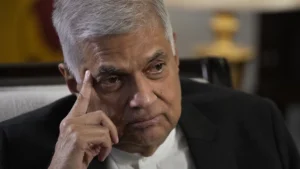
Sri Lanka’s legislature elected Ranil Wickremesinghe, a veteran politician and the Prime Minister in the recently toppled Rajapaksa Administration, as the country’s new President. Mr. Wickremesinghe received support from 134 lawmakers versus 82 who voted for opposition candidate, Dullas Alahapperuma.
Ranil Wickremesinghe was appointed by former President Gotabaya Rajapaksa as Prime Minister back in May and became acting President last week after Mr. Rajapaksa was forced to flee the country amid violent protests and the storming of the Presidential Palace in Colombo. According to the Constitution, the new President will serve until the end of the current presidential term (until 2024) unless he resigns or is impeached, which would require a two-thirds majority in parliament.
With a decades-long career in politics and the last Prime Minister that served under the ousted Rajapaksa political dynasty, Mr. Wickremesinghe epitomizes the political establishment rejected by the majority of Sri Lankans amid the country’s worst economic crisis in its modern history. In that context, Parliament’s selection of Mr. Rajapaksa’s successor risks a renewed wave of social unrest that could jeopardize a prompt return to negotiations with the IMF over a bailout program and sovereign debt restructuring. However, if the new President manages to form a “national unity” government and decrease social tensions, the medium-term economic outlook for Sri Lanka and the sovereign bond complex could improve, given Mr. Wickremesinghe’s strong and clear commitment to reach an agreement with the IMF as soon as possible.

Mexico and Pemex ratings unsurprisingly lowered one notch by Moody’s
The agency lowered its sovereign and Pemex ratings to Baa2 and B1, respectively, following the conclusion of a long-standing negative outlook. The move was led by the expectation that the government’s economic and fiscal trends will continue to deteriorate at a gradual pace over the forecasted horizon. The outlooks were revised to stable given that, absent a more material credit shock, metrics should remain aligned with the Baa2 peers.
We think the move was relatively well anticipated by the market and leaves the sovereign rating aligned with S&P and still a notch higher than Fitch. While the Moody’s Pemex rating is below the other agencies, in large part based on methodology differences, we continue to see government support for Pemex as robust particularly through the remainder of AMLO’s term. We expect the sovereign to provide ad hoc support to the company as necessary through a combination of methods including capital injections, tax amendments, and liability management exercises with intent to avoid explicit guarantees and protect the sovereign’s balance sheet. Although, we would not rule out a more extreme situation.
Stay up to date
More Newsletter to Check



SUBSCRIBE TO NEWSLETTER
Subscribe to download our daily economics and business roundup


×
![]()