
The Fed’s May meeting dominated the week

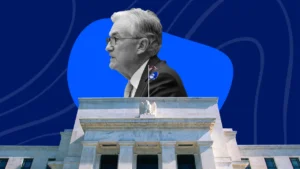
The Fed’s May meeting dominated the week
The FOMC hiked its policy rate by 50bps as expected but Chair Powell also explicitly took the potential for a 75bp pace of hikes at subsequent meetings “off the table”, which provided a temporary boost to market sentiment.
The Fed also signaled the start of gradual Balance Sheet reduction from June onward. Last but not least, Chair Powell suggested the FOMC expects that we will start to see inflation flattening but market participants seem to remain unconvinced that this might be the case in the face of Ukraine and China-related bottlenecks.
In Europe, high frequency data pointed to mounting recession concerns, prompting comments from ECB board members that the Euro area economy is “de facto stagnating”. Against this challenging backdrop, the EU appeared to have reached political agreement over starting to implement a phased oil embargo on Russia, a major development in the effort to curtail European financial flows to Moscow. The plan calls for a complete import ban on crude and refined products, but with a carve-out for Hungary and Slovakia until the end of 2023.
Chinese PMIs produced a shock this week as the NBS and Markit Caixin prints for April dropped further into contractionary territory to 42.7 and 37.2, respectively, amid ongoing strict multi-city lockdowns in response to the latest COVID surge. Most components of both indices reflected deterioration including production, exports orders, input prices, and delivery times and underperformed relative to already weak expectations. Elsewhere, headline inflation (CPI) in Turkey reached 70% year-over-year in April, driven by surging energy and food prices, while Producer prices (PPI) increased by staggering 122% year-over-year, marking the highest level since 1995.
Turkey’s unhinged inflation dynamics likely to be addressed by another round of unconventional policy measures rather than market-friendly monetary tightening

Headline inflation (CPI) in Turkey reached 70% year-over-year in April, driven by surging energy and food prices. Producer prices (PPI) increased by a staggering 122% year-over-year last month, marking the highest level since 1995.
The triple-digit producer price inflation signals further upside pressures on consumer prices in the coming months, from already record-high levels. Despite these concerning dynamics, the Central Bank of the Republic of Turkey remains highly unlikely to adjust its monetary policy approach due to political constraints that are set to only intensify in the run-up to presidential and parliamentary elections scheduled for June 2023.
Turkey’s unprecedented “ultra-loose monetary policy experiment” stands in sharp contrast with most other major EM central banks that are in the midst of aggressive monetary policy tightening cycles against a backdrop of elevated inflation and higher DM rates. This leaves the Turkish lira (TRY) highly exposed to negative external dynamics amid USD strength, and a widening current account (CA) deficit. In this context, we think new rounds of heterodox policy measures by the government are likely in the near-term.
We expect the use of remaining fiscal space to prop up growth and ensure relative FX stability ahead of scheduled (or potential early) elections, at the expense of exacerbating existing macroeconomic imbalances and further depleting external liquidity buffers. Concurrently, as we wrote last week, we expect President Erdogan’s geopolitical “charm offensives” toward regional and global powers to intensify in an attempt to secure fresh external financing and support FX stability amid an increasingly deteriorating macroeconomic and external backdrop.

China’s April PMI data shows significant hit to near-term activity
NBS and Markit Caixin PMI prints for April dropped further into contractionary territory to 42.7 and 37.2, respectively, amid ongoing strict multi-city lockdowns in response to the latest COVID-19 surge.
Most components of both indices underperformed relative to already weak expectations and reflected deterioration in production, exports orders, input prices, and delivery times. We see this as a negative for 2Q growth but expect a portion to be recovered later in the year as the announced policy response associated with boosted infrastructure investment gains momentum along with prospects for some tweaks to virus policy ahead of future waves.
High frequency data suggests that the drop-in activity is bottoming with a recovery likely to begin later this month and deepen as the quarter concludes. Looking at Hong Kong data, where the latest virus wave preceded that of China, hits to activity were also greater than envisaged by the market but data has begun to rebound solidly on reopening, with the April PMI moving back into positive territory. We expect a similar trend in Chinese data although perhaps with a flatter slope on a more cautious approach to loosening.
Europe’s Economy is ‘De Facto Stagnating’

European Central Bank Executive Board member Fabio Panetta said economic expansion has almost ground to a halt in the euro area and faces further “high costs” as policy makers battle record inflation.
We believe that this makes the choices facing the ECB more complicated, as a monetary tightening aimed at containing inflation would end up hampering growth that is already weakening. The Ukraine war -- on the euro area’s border -- is hampering the pandemic rebound, with the International Monetary Fund slashing its 2022 growth forecast for the currency bloc to just 2.8%. Highlighting the malaise, German factory orders plunged in March, falling more than anticipated after Russia’s invasion darkened the prospects for Europe’s top economy.
The ECB’s next rate meetings are on June 8-9 and July 20-21. While second-quarter GDP data aren’t officially published until July 29, indicators on how the economy is doing are available earlier. Speaking later Thursday, Bank of Portugal chief Mario Centeno said second-quarter numbers will be “very important,” calling stagnation a “possible scenario.” In a speech Thursday, ECB Chief Economist Philip Lane called the timeline to normalize monetary policy “intrinsically uncertain.”
European Central Bank Executive Board member Fabio Panetta said economic expansion has almost ground to a halt in the euro area and faces further “high costs” as policy makers battle record inflation. He added that inflation is being fanned by international factors that monetary policy can only address in a limited manner. That means the ECB “cannot tame inflation on our own without causing high costs for the economy.”
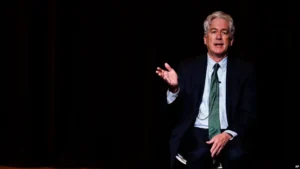
CIA director says China ‘unsettled’ by Ukraine war
The director of the CIA said that Chinese president Xi Jinping has been “unsettled” by the war in Ukraine, which had demonstrated that the friendship between Beijing and Moscow had “limits” at a time when western allies were moving closer together.
He added that China was also dismayed by “the fact that what Putin has done is driving Europeans and Americans closer together” and was looking “carefully at what lessons they should draw” for Taiwan. “I don’t for a minute think that it’s eroded Xi’s determination over time to gain control over Taiwan,” although it was “affecting their calculation”, Burns said.
Burns said Xi’s China was the “biggest geopolitical challenge we face over the long term as a country”, even though the threat from Putin’s Russia could not be underestimated. “[Putin] demonstrates in a very disturbing way that declining powers can be at least as disruptive as rising one,” Burns said. Burns spoke after Biden administration officials sought to play down reports that US intelligence officials had helped Ukraine target and kill Russian generals on the battlefield and sink the Moskva, a Russian ship in the Black Sea.
“It is irresponsible, it’s very risky, it’s dangerous when people talk too much. Whether it’s leaking in private or talking in public about specific intelligence issues,” Burns said. The CIA director, a former senior diplomat in previous US administrations, added that it would be a “big mistake” to underestimate Ukraine’s own intelligence capabilities.
The Week Ahead
Macro data releases set to be released next week are likely to reinforce concerns about Europe’s economic outlook, including Germany’s investor confidence and the Euro area’s industrial production. Investors will be watching those release closely as the war in Ukraine and China’s extended lockdowns are putting renewed pressures on supply chains and energy risks are mounting, while German factory orders are falling in the face of easing global demand. In that context, the widening impact of China’s lockdowns will be a key development to watch in Asia next week. Data on Chinese export growth will give an indication on the level of pressure lockdowns are exerting on supply chains and the People’s Bank of China (PBOC) is likely to trim a key lending rate in a move to offer some relief. In broader EM, the focus will be on inflation prints in Brazil and Mexico and central bank policy rate decisions in Mexico, Malaysia and Peru.
Stay up to date
More Newsletter to Check



SUBSCRIBE TO NEWSLETTER
Subscribe to download our daily economics and business roundup


×
![]()