
The coming food catastrophe

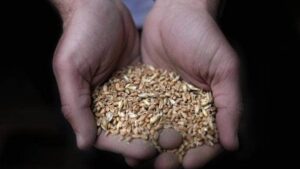
The coming food catastrophe
War is tipping a fragile world towards mass hunger. Fixing that is everyone’s business
By invading ukraine, Vladimir Putin will destroy the lives of people far from the battlefield—and on a scale even he may regret. The war is battering a global food system weakened by covid-19, climate change and an energy shock. Ukraine’s exports of grain and oilseeds have mostly stopped and Russia’s are threatened. Together, the two countries supply 12% of traded calories. Wheat prices, up 53% since the start of the year, jumped a further 6% on May 16th, after India said it would suspend exports because of an alarming heatwave.
The widely accepted idea of a cost-of-living crisis does not begin to capture the gravity of what may lie ahead. António Guterres, the un secretary general, warned on May 18th that the coming months threaten “the spectre of a global food shortage” that could last for years. The high cost of staple foods has already raised the number of people who cannot be sure of getting enough to eat by 440m, to 1.6bn. Nearly 250m are on the brink of famine. If the war drags on and supplies from Russia and Ukraine are limited, hundreds of millions more people could fall into poverty. Political unrest will spread, children will be stunted and people will starve. Mr Putin must not use food as a weapon. Shortages are not the inevitable outcome of war. World leaders should see hunger as a global problem urgently requiring a global solution.
Russia and Ukraine supply 28% of globally traded wheat, 29% of the barley, 15% of the maize and 75% of the sunflower oil. Russia and Ukraine contribute about half the cereals imported by Lebanon and Tunisia; for Libya and Egypt the figure is two-thirds. Ukraine’s food exports provide the calories to feed 400m people. The war is disrupting these supplies because Ukraine has mined its waters to deter an assault, and Russia is blockading the port of Odessa.
Even before the invasion the World Food Program had warned that 2022 would be a terrible year. China, the largest wheat producer, has said that, after rains delayed planting last year, this crop may be its worst-ever. Now, in addition to the extreme temperatures in India, the world’s second-largest producer, a lack of rain threatens to sap yields in other breadbaskets, from America’s wheat belt to the Beauce region of France. The Horn of Africa is being ravaged by its worst drought in four decades. Welcome to the era of climate change.
Danone ramps up U.S. baby formula shipments to address shortage
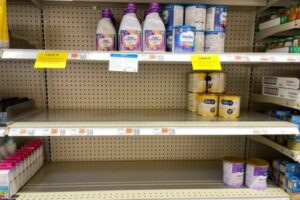
Aptamil maker Danone SA (DANO.PA) has stepped up shipments of infant formula from Europe to address a shortage in the United States, according to U.S customs data and an analysis of ocean cargo data by shipping consultancy Ocean Audit for Reuters.
Danone, the world's second biggest baby milk formula maker but a relatively small player in the United States, shipped much of the product from Britain and the Netherlands by ocean freight through its Nutricia North America arm. This followed a Feb. 17 recall by top manufacturer Abbott Laboratories (ABT.N) which recalled dozens of types of its Similac, Alimentum and EleCare formulas, creating one of the most urgent food shortages in recent history for U.S. families.
Between January and May, Danone's Nutricia division more than tripled its ocean imports to North America, and more than 90% was delivered to the United States, said Steve Ferreira, CEO of Ocean Audit, which analysed the data exclusively for Reuters. On May 10, three days before U.S. President Joe Biden took to the airwaves with his plan for addressing the baby formula shortage, the Independent Quest sailed into the Port of Philadelphia to deliver 42,000 cans of Danone formula.
It was rapidly dispatched to Jeffersonville, Indiana to be distributed to retailers that for weeks had to limit how much infant formula mothers could buy. The deliveries show how the suspension of Abbott's factory and shortages are shaking up the market, giving some players an opportunity to get a share of the lucrative 4.8 billion USD U.S. baby formula industry.
"Abbott looks to have lost around 2000 basis points of share, going from 40% share to 20%," Barclays analyst Warren Ackerman estimated on Friday referring to the U.S. market. Reckitt Benckiser (RKT.L), the long-time No.2 player in the United States, told Reuters on Tuesday that it now accounts for more than 50% of total baby formula supply in the country. The British company said it supplied just over a third of U.S. baby formula prior to Abbott's recall. It has boosted Enfamil production by about 30% and is making more frequent deliveries to stores as it looks to counter a nationwide shortage in U.S. supermarkets.
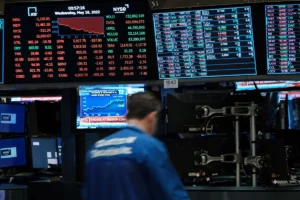
Stock Selloff May Be Entering a New Phase
Worries about growth and earnings are joining concerns about higher interest rates and tightening financial conditions.
This week’s move lower in stocks may not just be a simple continuation of what has already been a painful 2022 selloff for investors. Instead, there are signs that the selloff may have entered a new phase. In addition to deepening the year-to-date losses, this increases the possibility, though still not high probability, of a disruption in market functioning, which would have material spillbacks for the real economy.
The sharp selloff on Wednesday took the year-to-date losses of the S&P 500 Index to 17.7%, and those of the Dow Jones Industrial Average and the Nasdaq Composite Index to 13.3% and 27%, respectively. The initial drivers for these losses came from the financial side of the economy — that is, concerns about higher interest rates and more generally tightening financial conditions. Now there is growing evidence that, while these two influences have mostly played out, a new one is in the driver seat. Wednesday’s selloff had two particular characteristics that distinguished it from the recent market moves. First, consumer-related stocks led by Walmart Inc. and Target Corp. notably underperformed, losing even more value; and bond prices rose rather than fell as they had for the early phases of the selloff.
Both of these are consistent with worries about growth and earnings becoming a bigger driver of market reaction. They come on the heels of another more-hawkish tilt this week by Federal Reserve Chair Jerome Powell and, as important, remarks from Target suggesting that persistent cost pressures are now being accompanied by concerns about the revenue side and, more generally, the ability of consumers to navigate such high inflation.
Also, there is a growing possibility for the one risk factor that has yet to play out — disruptions in market functioning, in which pockets of illiquidity frustrate investors’ ability to reposition. Market-functioning stress does more than erode investor confidence. It also fuels two sources of contagion: generalized spillovers — be it in the form of investors being forced to sell less threatened assets simply to obtain liquidity or by undermining the economy through more cautious corporate behavior — and consumer sentiment. While the hope is that this week’s market action is a continuation of a selloff that is coming to its end, there is a real risk that it may be more than that — a new phase that threatens both more price losses and a higher possibility of market-functioning stress.
Lagarde says crypto is ‘Worth Nothing’ and should be regulated
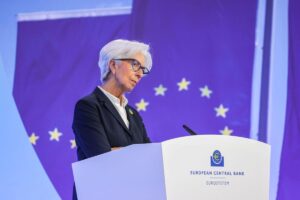
European Central Bank President Christine Lagarde said crypto-currencies are “based on nothing” and should be regulated to steer people away from speculating on them with their life savings.
Lagarde told Dutch television that she’s concerned about people “who have no understanding of the risks, who will lose it all and who will be terribly disappointed, which is why I believe that that should be regulated.” “The day when we have the central bank digital currency out, any digital euro, I will guarantee -- so the central bank will behind it and I think it’s vastly different than many of those things,” Lagarde said.
The comments come amid choppy times for crypto markets, with digital currencies Bitcoin and Ether down 50% from last year’s peak. At the same time, the asset class is facing tougher scrutiny from regulators worried about the dangers it may pose to the broader financial system. Lagarde said she’s skeptical of crypto’s value, contrasting it with the ECB’s digital euro -- a project that may come to fruition in the next four years. “My very humble assessment is that it is worth nothing, it is based on nothing, there is no underlying asset to act as an anchor of safety,” she said.
Other ECB officials have already voiced concerns. One is Executive Board member Fabio Panetta, who said in April that crypto-assets “are creating a new Wild West,” and drew parallels with the 2008 subprime mortgage crisis. Lagarde said she doesn’t hold any crypto assets herself because “I want to practice what I preach.” But she follows them “very carefully” as one of her sons invested -- against her advice. “He’s a free man,” she said.

German finance minister urges EU to rein in public spending
Christian Lindner calls for ‘path towards reducing state debt’ despite economic turmoil
The EU’s decision to suspend its deficit and debt rules for an extra year is not an excuse for member states to persist with loose spending policies, Germany’s finance minister Christian Lindner has said, in a call for more fiscal discipline. “The fact that member states are now able to deviate from the Stability and Growth pact doesn’t mean they actually should do that,” Lindner told the Financial Times.
The Stability and Growth Pact, which enshrines the EU’s fiscal rules, was put on hold early in the Covid-19 pandemic as economic output in Europe crashed. The European Commission was expecting to reimpose the rules at the beginning of next year as a post-pandemic economic recovery took hold. But the war in Ukraine and the consequent surge in energy prices has led Brussels to extend the suspension for another year.
The pact, which aims to keep member states’ borrowing under control, stipulates that public debt should not exceed 60 per cent of gross domestic product and budget deficits should not top 3%. Some member states have been advocating for reform, saying certain kinds of strategic government spending — such as investment in defence or mitigating climate change — should get preferential treatment. But Lindner made it clear he opposed that, and warned against treating the suspension as an opportunity to rethink the whole EU rule book. “The decision to extend the escape clause shouldn’t be seen as a precedent or a prelude to reform of the fiscal rules,” he said.
He acknowledged that there was scope for “more flexibility” in the way they are applied, but insisted the EU needed a “long-term reliable path towards reducing state debt. . . In terms of our ultimate goal we should become tougher, not softer”. With inflation on the rise across the G7 group of leading economies, Lindner argued that swift action was needed to return to macroeconomic stability and what he described as a “neutral fiscal stance”. “There is a real danger of stagflation,” he said. “That’s why we have to act urgently.”
Stay up to date
More Newsletter to Check



SUBSCRIBE TO NEWSLETTER
Subscribe to download our daily economics and business roundup


×
![]()