
The aircraft narrative shifted from “soft landing” to “no landing”, and stronger U.S. economic data had been the pressing theme

The aircraft narrative shifted from “soft landing” to “no landing”, and stronger U.S. economic data had been the pressing theme
The Fed’s measure of inflation stepped up once again. A few hot data prints after the 517k Nonfarm Payrolls, U.S. CPI with the prior month revisions and exceptionally strong PMIs on Wednesday, followed by a hot core Personal Consumption Expenditures price index (PCE) causing U.S. Treasuries to widen by 29-64bps this month.
The weakness in EM fixed income was more apparent via EMB, which is the ETF that tracks EM sovereign bonds. After rallying 6.5% to its peak in early February, the drawdown unwound all the 2023 gains. Some stability over the last three sessions of the week meant EMB was up 1% from the lows but ultimately unchanged in returns this year. As we flagged last week, the aircraft narrative shifted from “soft landing” to “no landing”, and stronger U.S. economic data had been the pressing theme. The Friday release of the Fed’s GDP now showed further improvement in 1Q (growth revised up to 2.7%), just as Core PCE was noticeably hot and contributed with the “higher for longer” mantra that Fed speakers had stated and FOMC minutes had documented. However, it does seem that the second estimate of U.S. 4Q GDP that was weaker than expectations at 2.7%, relative to a prior reading of 2.9%, was ignored.
The trends within EM have begun to show greater signs of divergence after a fairly uniform path in 2022. Israel delivered a larger-than-expected interest rate hike to contain inflation, which is similar to the Reserve Bank of New Zealand, but South Korea had paused. Yet, India signaled another hike in April which was triggered by substantially higher CPI. India’s inflation release was so high that there is an adequate parallel to be drawn with the recent Philippines’ CPI release. Similarly, Mexico’s recent MPC highlighted greater caution on inflation (which is why they surprised with a 50bps hike two weeks ago), which was confirmed by the bi-weekly CPI and Central Bank minutes highlighting that inflation remains elevated and was flat to January and December levels.
In contrast, Brazil mid-month IBGE inflation was marginally higher than expectations but sharply down from 2Q and 3Q levels. Indeed, pressure is rising on Lula to cut policy rates to support growth. Meanwhile, South Africa’s budget was in focus and in particular the debt transfer at Eskom. National Treasury have stated intentions to assume R254bn of Eskom’s government guaranteed debt, which comes just as the utility had announced a record “Stage 7” cycle of load shedding and toward the end of the week, the country was put on the FATF “grey list”. Finally, Goldman’s China Effective Lockdown Index has fallen to near zero with some measures of mobility, such as highway traffic and subway usage, now above pre-COVID levels.
The Fed’s preferred inflation gauge sped back up
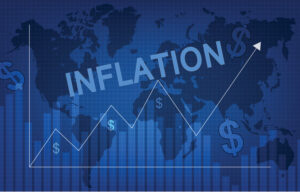
Inflation is down from its peak last summer, but recent readings have shown substantial and surprising staying power.
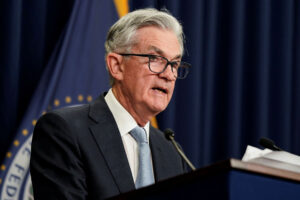
There was a moment, late last year, when everything seemed to be going according to the Federal Reserve’s plan: Inflation was slowing, consumers were pulling back and the overheated economy was gently cooling down. But a spate of fresh data, including worrying figures released Friday, make it clear that the road ahead is likely to be bumpier and more treacherous than expected.
The Personal Consumption Expenditures price index — the Fed’s preferred measure of inflation — climbed 5.4 % in January from a year earlier, the Commerce Department said Friday. That was an unexpected re-acceleration from December’s 5.3 % pace after six months of relatively consistent cooling. Even after stripping out food and fuel prices, both of which jump around a lot, the price index climbed 4.7 % over the year through last month — also a pickup, and more than expected in a Bloomberg survey of economists.
Those readings are well above the Fed’s goal of 2 % annual inflation. And the report’s details offered other reasons to worry. The previously reported slowdown in December, which had given economists hope, looked less pronounced after revisions. While price increases had also been consistently slowing on a month-to-month basis, they, too, are now showing signs of speeding back up. Stocks slumped to their worst week of the year, with the S&P 500 down by 1.1 % at the close of trading on Friday as investors digested the report and what it portends for the Fed, which has been raising rates aggressively since last year. Financial markets have come under sustained pressure in recent weeks as investors have recalibrated their expectations for how long inflation could remain high, and how high interest rates could go as a result.
The figures released Friday are just the latest evidence that neither price increases nor the broader economy is cooling as much as expected as 2023 begins. Employers added half a million jobs in January, wages continue to rise, and figures released Friday showed that Americans continue to spend freely on goods and, especially, on services like vacation travel and restaurant meals. Fed officials in recent months have fended off criticisms, particularly from the left, that their inflation-fighting policies last year had gone too far and were threatening to push the economy into a recession. But the latest data point to a different question: whether the central bank will need to do even more to bring inflation to heel. In particular, many forecasters now expect policymakers to raise interest rates higher than the range of 5 to 5.25 % that they previously anticipated.
“In a nutshell, it means the job is not done — in fact, it is far from done, because inflation is much too high,” said Gennadiy Goldberg, a rates analyst at TD Securities. “The economy is still strong, and consumers are still spending money.”

Supply chains have healed yet their mark on inflation to endure
Bulk of goods transported under contracts set at higher rates. The worst is over, but price pressures remain!
Supply chains across the world are healing up almost as fast as they broke down. That doesn’t mean the pressure they’re exerting on inflation will disappear as quickly. Take the cost of shipping containers. Spot rates from Asia to the US West Coast increased more than 15-fold during the pandemic and have since returned to pre-Covid levels as trade between the world’s two largest economies cools from a frenzied pace. But the relief is uneven. Short-term prices for containers from Europe to the US East Coast are still more than double what they were in late-2019, according to data from Freightos Ltd.
What’s more, an estimated 70% of goods transported in steel boxes on giant ships do so under long-term contracts — not the spot market — and those deals were renegotiated in 2021 and 2022 at much higher rates. Big retailers and manufacturers may not be seeing enough shipping-rate reductions yet to warrant slashing prices further. Most freight moves under contract prices that are still well above pre-Covid levels. Such stickiness may help explain why inflation in some regions remains stubbornly high. US producer prices rebounded in January by more than expected, underscoring persistent inflationary pressures, and another closely watched gauge of consumer costs came in hotter than forecast on Friday. In the euro area, underlying inflation hit a record in January, revised data showed last week.
Another reason the cost of living is slow to fall: It’s easy to underestimate how long it can take for inflationary trends to work through supply chains. That’s partly because companies don’t like to change their pricing more than a couple of times a year. But now many firms are facing enduring increases in one of their biggest costs: labor. Worker shortages are hitting the supply-chain industries hard. There are several parts of the logistics sector that are actually quite labor intensive. Drivers make up a very notable part of this, but warehousing also requires a lot of workers.
In the aftermath of devastating earthquakes, market focuses on timing of Turkey’s elections

Turkey-watchers in global markets have been sifting through various noise and signals in Turkish domestic politics this week for clues on whether pivotal presidential and parliamentary elections could still take place as planned in the time window between mid-May and mid-June or if they might be postponed to later in the year or even to 2024.
Political uncertainty in Turkey was already highly elevated ahead of the critically important elections and has increased further after the tragic natural disasters that hit the country in early February. Prior to the earthquakes, May 14th was seen as the most likely date for the parliamentary and first round of presidential elections, about a month earlier than the constitutionally mandated latest possible date of June 18th. Naturally, there is a question mark as to whether it would be logistically feasible to hold elections in the most affected regions of Turkey so soon after the disasters, given the infrastructural damage and number of displaced people. Ultimately, regardless of logistical considerations and various constitutional interpretations, the timing of the elections will depend on what President Erdogan perceives as most politically expedient for his re-election chances.
According to one narrative, Erdogan would be interested in postponing the elections until later in the year (October/November) or even combining them with the local elections slated for early 2024. Given a perceived hit to his approval ratings in the wake of the devastating earthquakes, he is hoping that aggressive government financial support for the victims will repair his standing with voters. However, an election delay that is widely seen domestically as illegitimate could also backfire against Erdogan.
Moreover, a competing narrative points out that the President might benefit from elections being held as planned in May or June given that the opposition has not agreed on a joint candidate yet and is running short on time if elections were to go ahead as planned. Markets should get some clarity on the timing of elections within the next couple of weeks as elections in mid-May would require President Erdogan to dissolve parliament by mid-March.
Stay up to date
More Newsletter to Check



SUBSCRIBE TO NEWSLETTER
Subscribe to download our daily economics and business roundup


×
![]()