
Since nationalization, the Suez Canal has contributed $143.8B to Egypt’s public funds

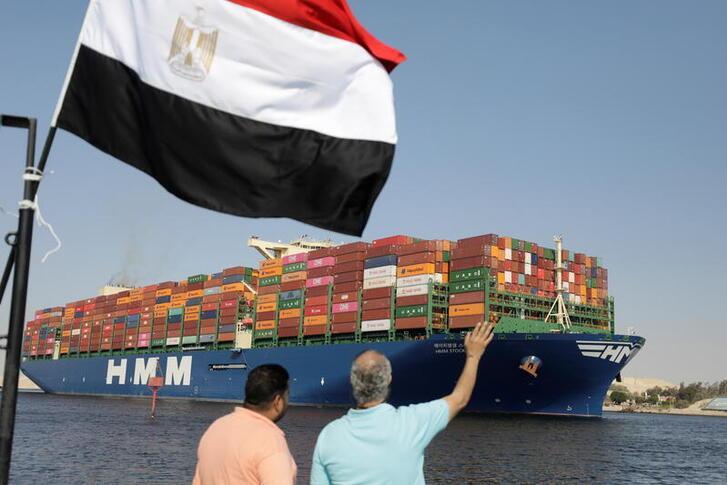
Since nationalization, the Suez Canal has contributed $143.8B to Egypt’s public funds. Since its nationalization 67 years ago, the Suez Canal has injected more than $143.864 billion into Egypt’s public treasury, says Osama Rabie, the Chairman of the Suez Canal Authority (SCA). Approximately 1.71 million vessels have traversed the canal since nationalization, amassing a total net tonnage of nearly 31.599 billion tons. Rabie also noted that the Suez Canal achieved record annual revenues of $9.4 billion in the fiscal year 2022/2023, marking the highest in its history. (Arab Finance)
- Foreign direct investment in the Arab region saw a 358% surge in 2022, report shows.
In 2022, the investment cost of foreign direct investment (FDI) projects in the Arab region surged by 358% to $200 billion, as reported by the Arab Corporation for Investment and Export Credit Guarantee. A 74% annual increase was noted in the number of FDI projects, reaching 1,617. In the first third of 2023, foreign projects rose by 28% in number and 70% in cost, totaling $74 billion. Improvement in the status of Arab countries in international indicators led to more foreign projects and increased investment costs. Intra-Arab investments also grew by 84% to 245 projects with a 623% cost increase to $45.6 billion in 2022. (Economy Plus)
- Orascom Pyramids designates 1B EGP for the enhancement of the Giza pyramids zone.
Orascom Pyramids, an Orascom Investment Holding subsidiary, has committed EGP 1 billion for the development of the Giza pyramid plateau, according to chairman Amr Gazarin. So far, EGP 500 million has been used for the project. The company's profits will be split with the Egyptian government, with a minimum yearly contribution of EGP 20 million. Additionally, the government will continue to retain all entry ticket proceeds. Gazarin revealed a goal to double the number of Giza pyramid visitors to 5 million per year, from the current 2.5 million. (Asharq)
- Egypt reduces natural gas supply to fertilizer plants by 20%.
Amid an energy crisis, Egypt has reduced the natural gas supply for several fertilizer factories by 20% starting next week, according to industry sources. The cut will not impact the total production of these companies. This decision is part of the Ministry of Petroleum's efforts to resolve the recent energy crisis by increasing the supply of natural gas to power stations. Despite promises to resolve the issue this week, energy shortfalls continue. The Ministry of Electricity requires about 135 million cubic meters of natural gas and 10,000 tons of diesel daily to stabilize the power grid. (Asharq)
- The Central Bank of Egypt and Vietnam's central bank sign a memorandum of understanding to enhance collaboration.
The Central Bank of Egypt (CBE) and the State Bank of Vietnam (SBV) have entered into a memorandum of understanding to enhance joint cooperation, according to a recent cabinet statement. The agreement promotes sharing views on international banking supervision principles, discussion on monetary and foreign exchange policies, staff training, and sharing updates on banking laws and regulations. The agreement was signed during the visit of the Vietnamese Deputy Prime Minister, Tran Luu Quang, to Egypt. Both countries aim to boost trade exchange and explore collaboration in sectors like fisheries, ship building, and rice cultivation. (Arab Finance)
- Egyptian agricultural exports witness a surge, reaching 5 million tons in the first seven months of 2023.
Egyptian agricultural exports have surpassed 5 million tons in the first seven months of this year, marking a first-time achievement with an increase of 760,000 tons compared to the same period last year. Key contributions to this growth include record-breaking exports of citrus fruits at 1.9 million tons and potatoes at 896,000 tons. Other significant agricultural exports encompass fresh onions, yams, pomegranates, garlic, strawberries, beans, guavas, tomatoes, grapes, and mangoes. While citrus fruits topped the list, mangoes and pomegranates ranked eleventh and twelfth, respectively. (Economy Plus)
- Foreign Affairs Ministry: Egyptians abroad can resolve conscription status for $5,000.
The Egyptian Ministry of Foreign Affairs has launched an initiative allowing Egyptians living abroad to settle their conscription status for a fee of $5,000 or equivalent in euros. This move aims to ease social circumstances and assuage fears of conscription-related restrictions when returning home. Applications for this initiative, open to residents abroad aged 19-30 and those above 30, will commence on August 14th via the Ministry's website. This initiative follows numerous requests from citizens abroad seeking to regularize their conscription status. (Economy Plus)
- Egyptian banks turn to prepaid interest as a strategy to maintain their deposit market share.
Banks in Egypt are employing strategies to support their dollar and local currency deposit portfolios while curbing inflation. To attract deposits, Arab African International Bank has launched a three-year savings certificate for individuals offering a 40% return, paid in advance. Prior to this, Bank Misr and The National Bank of Egypt offered new dollar investment certificates with a prepaid return of 27% in local currency. According to Alan Sandeep, head of research at Naim Capital, these methods serve as marketing tools for banks to maintain their deposit market share. (Asharq)
- Egypt exported fruits and vegetables worth $509.5 million to Russia in 2022.
In 2022, Russia imported $509.5 million worth of vegetables and fruits from Egypt, a 21.6% increase compared to the previous year, as per a report by the Central Agency for Public Mobilization and Statistics. Overall, Egypt's exports to Russia were valued at around $595.1 million. Apart from fruits ($302.3 million) and vegetables ($207.2 million), notable exports included soap and laundry preparations ($11.8 million), machinery and electrical appliances ($10.7 million), and grains, oil fruits, and medicinal plants ($10.3 million). (Al Mal)
- ITIDA and Huawei partner through a MoU to boost Egypt's AI sector.
The Information Technology Industry Development Agency (ITIDA) has collaborated with Huawei via a memorandum of understanding (MoU) to amplify the application of artificial intelligence (AI) in Egypt. The partnership involves generating a performance analysis report on AI usage in Egypt, enabling the nation to benefit from Huawei's global AI expertise. As part of its commitment to creating a digital society, the Ministry of Communications and Information Technology has also signed a letter of intent (LoI) with Huawei to facilitate the creation of 20 digital training centers across various governorates. (Arab Finance)
Stay up to date
More Newsletter to Check


SUBSCRIBE TO NEWSLETTER
Subscribe to download our daily economics and business roundup


×
![]()