
Renewed price cap for unsubsidized bread

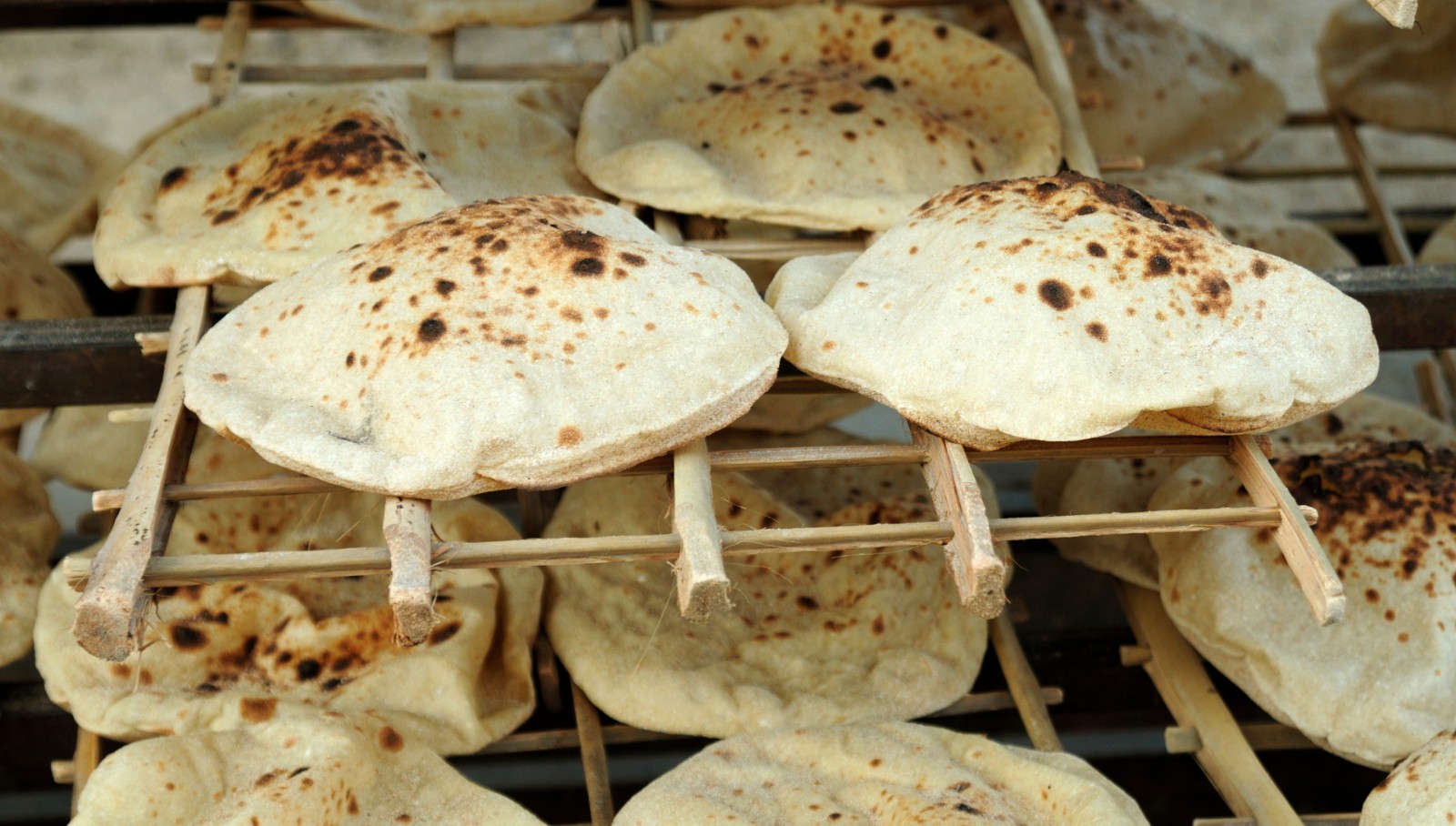
Renewed price cap for unsubsidized bread. The government reintroduced a price cap for unsubsidized bread for a month in a ministerial decree issued yesterday. The decision sets a higher price ceiling than the one first introduced in March. A 75-gram loaf of baladi bread will now sell at 1. EGP Prices for fino bread are now set between 0.75 EGP and 1.00 EGP for loaves weighing 40-60 grams. Egypt first set a price cap for unsubsidized bread in March for three months in a bid to hold down local prices amid surging global inflation on the back of the crisis in Ukraine. (Hapi Journal).
- Some MPs are blaming the government for the poultry feed shortage
The government should have intervened early enough to save the market. The culling of chicken will cause a shortage of poultry and eggs on the local market and lead their prices to skyrocket, MP Hesham El Gahel said. Local media this week reported that some farmers are killing their chicks due to a lack of feed. (Economy Plus).
- The Madbouly government is working to resolve the issue
The government has released some 85 million EGP worth of soybeans since the beginning of the month and some 40 million EGP worth of corn in efforts to calm the poultry market, according to a statement following a meeting on the issue headed by Prime Minister Mousatafa Madbouly, last sunday. The PM said the government would coordinate weekly with the poultry union to decide how much feed to release into the market. (Economy Plus).
- The Central Bank of Egypt (CBE) and Ministry of Finance have reached an agreement with the International Monetary Fund (IMF) on the policies and restructuring of the new Egyptian economic reform program
The program to be backed by the IMF will cover three key factors embodied in the reforms and arrangements related to the fiscal and monetary policies, as well as restricting amendments to the Egyptian economy. Egypt targets maintaining financial discipline efforts to achieve an annual primary surplus to cut government debts to below 80% of gross domestic product (GDP) in the medium term. (Bloomberg Asharq).
- Moreover, the Egyptian government is working on extending the term of government debt, diversifying sources of financing, and improving the efficiency of revenues and spending under the general budget
The government is also expanding in financing the social protection programs, especially the ones targeting raising wages of workers and higher allocations for insurance and pensions, which benefit more than 10 million individuals and households. Furthermore, the government is seeking to continue financing Takaful and Karama program as well as Hayah Karema. The IMF’s staff and the Egyptian team have made “substantial progress” regarding all policies. ((Bloomberg Asharq).
- Domestic liquidity hits 6.7 trillion EGP end-July: CBE
The Central Bank of Egypt (CBE) announced that domestic liquidity grew by 1.5% or 97 billion EGP to reach 6.708 trillion EGP at the end of July 2022. The increase in domestic liquidity was reflected in the growth of quasi-money which rose by 1.3% or 66.6 billion EGP, with the money supply increasing by 2% or 30.4 billion EGP. (Hapi Journal).
- Meanwhile, the growth in quasi-money was due to the growing non-current deposits in local currency by 1% or EGP 4.6 billion
While deposits in foreign currencies rose by 3% or 25 billion EGP. The increase in money supply was attributed to higher current deposits in local currency by 1.1% or 8 billion EGP as well as the increase in the tradable cash outside the banking system by 2.9% or 22.4 billion EGP. (Hapi Journal).
- Egypt pursues cooperation with Siemens Energy on green energy
President Abdel Fattah El-Sisi has followed up on the cooperation with Germany’s Siemens Energy across green energy projects within the framework of Egypt’s plan to become a regional hub for production and exchange of new and renewable energy. During his meeting with Chairman of the Supervisory Board of Siemens Energy Joe Kaeser, El-Sisi expressed gratitude for all the achievements done by Siemens Energy in implementing development projects in Egypt. (Arab Finance).
- Additionally, the president stressed Egypt is looking forward to benefiting from the German group’s expertise in the new and renewable energy field as well as the electricity interconnection projects
Siemens Energy aims to continue business in Egypt and develop the ongoing partnership with the country. The group has a fruitful cooperation history with Egypt, represented in a group of projects, such as the three iconic power stations that mark as main element of the Egyptian electricity grid. (Arab Finance).
- Egyptian public business sector mulls cooperation opportunities with China’s CNBM
Egyptian Ministry of Public Business Sector is considering joint cooperation opportunities with China National Building Material Co. (CNBM). The two parties discussed the available investment opportunities in various sectors, including mineral industries, agricultural production, fertilizers, cars and tires, glass, and porcelain. The ministry is eager to partner with the private sector as well as to attract foreign and local investments within the framework of the state’s ownership policy. Moreover, the Chinese delegation showcased several projects, including the company’s products of solar panels, gypsum panels, glass fibers, and blades of wind turbines. (Arab Finance).
- Orascom Construction adds 670 million USD awards to backlog in Q3
The latest addition brings the company’s total awards in the first nine months of 2022 to 3.1 billion USD. Projects in the Middle East account for 70% of new awards in Q3 and were focused on the infrastructure, logistics, and commercial sectors. New awards signed by the company’s subsidiaries in the US made up 30% of total awards in Q3, and a considerable portion of them was focused on the data center sector. The estimated consolidated backlog amounted to 6.1 billion USD by September 30th 2022. (Hapi Journal).
- Pachin denies withdrawal of Saybad’s non-binding offer
Paints and Chemical Industries (Pachin) (PACH) announced that it has not yet received any communication from Saybad Industrial Investment regarding withdrawing the latter’s non-binding purchase offer (NBO). On July 7th, the Financial Regulatory Authority (FRA) announced it has received a letter of intent from Saybad regarding an NBO for a stake ranging between 51% and 90%. (Economy Plus).
Stay up to date
More Newsletter to Check



SUBSCRIBE TO NEWSLETTER
Subscribe to download our daily economics and business roundup


×
![]()