
Post Erdogan’s Victory Support Despite Tragedy and Economic Challenges

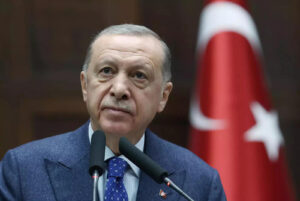
Post Erdogan's Victory
Support Despite Tragedy and Economic Challenges Recep Tayyip Erdogan secured a victory in Turkey's presidential elections despite a botched response to earthquakes and economic challenges. Scenes of celebration in Sekeroba, a village affected by the earthquakes, demonstrated the unwavering support for Erdogan. The opposition's attempts to unseat him fell short, as Erdogan successfully depicted them as a threat to Turkish culture and national security. Economic concerns, such as high inflation and a lack of preparedness exposed by the earthquakes, were not enough to diminish Erdogan's popularity.
Divisions within Turkish society persist, with regional, urban-rural, and secular-religious divides. However, Erdogan's ability to mobilize support across demographics solidified his power. While the opposition promised democratic and economic reforms, Erdogan has shown no inclination to implement such changes. He maintains control over the central bank, using monetary policies that temporarily boost growth but pose long-term risks. The consequences of these policies include negative net foreign reserves and a weakening currency, which may challenge Turkey's economic stability.
In conclusion, Erdogan's victory highlights the resilience of his support base. Despite tragedies and economic difficulties, Erdogan's ability to tap into nationalist sentiments and position himself as a defender of Turkish values and security proved successful. The future direction of Turkey under his continued leadership remains uncertain, with questions about the sustainability of his economic policies and the potential impact on long-term stability.
BRICS+ Evolution
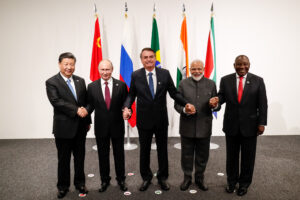
The Expansion of Economic Power and Lessons Learned. The concept of BRICS (Brazil, Russia, India, China, and later South Africa) dominating the global economy by 2050, as coined by economist Jim O'Neill in 2001, is evolving. The BRICS nations have focused on value creation and nation-building rather than pursuing powerful military-industrial complexes. Now, additional countries express interest in joining BRICS, raising the question of whether it is the awakening of BRICS+ or BRICS power. Looking ahead, BRICS+ is expected to add new members by 2030, reshape indices, and stimulate intellectualism on geopolitics and socio-economies by 2040, setting the stage for the smart living era in 2050.
The emergence of technology and changing work dynamics in the 2020s, such as remote work and digital connectivity, has brought forth new economic transformations. As the world becomes increasingly interconnected, micro-power nations and their integrated networks have gained prominence, potentially reshaping the global economic matrix. The lessons learned include overcoming misconceptions about Asian countries and recognizing the importance of fostering entrepreneurial mindsets, particularly in the small and medium-sized enterprise (SME) sector. The recommendations emphasize the significance of national mobilization of entrepreneurship, up-skilling exporters, and re-skilling manufacturers to drive economic development and uplift the SME sector's contribution to the nation.
By understanding the power of SMEs, nations can tap into hidden entrepreneurial talents and leverage the 4B Factor: the billion displaced, replaced, misplaced, and digitally connected people, representing a significant force of global opinion. Identifying and digitizing high-potential SMEs can lead to remarkable performance, productivity, and profitability gains. Implementing these strategies can initiate positive economic revolutions and uplift grassroots prosperity. The key lies in recognizing the entrepreneurial potential within every individual and fostering an environment conducive to their success.

With Emerging Economies on the Rise
What are the De-Dollarization Implications for the Global Economy. The global economy is witnessing a shift as emerging markets, notably China, rise in prominence, leading to a decline in the dominance of the US dollar. De-dollarization, as this decline is known, carries significant implications. Countries seek de-dollarization to reduce dependence on the US and promote economic independence. Its impact depends on the extent and speed of the shift, potentially ranging from a rebalancing of global power to increased financial market volatility.
De-dollarization challenges the US dollar's dominance, potentially giving more influence to currencies like the Euro and Chinese Yuan. This shift in economic power has significant implications for the US, China, and other nations. Moreover, it introduces greater volatility and uncertainty in international trade and investment, making planning and investment more challenging for businesses.
Additionally, de-dollarization may require a new global monetary system, necessitating coordination among nations. Whether it involves a new global currency or a system of multiple currencies, such changes could impact the stability of the global financial system. Policymakers must carefully assess the risks and benefits, ensuring a smooth transition.
Recent developments reveal China, Russia, India, and ASEAN member states aiming to reduce reliance on the US dollar. Efforts to increase the use of national currencies and diversify reserves are underway, challenging the US dollar's dominance in sectors like the oil market.
In summary, de-dollarization is reshaping the global economy, prompting countries to seek alternatives and reduce dependence on the US dollar. The consequences, including shifts in economic power, increased volatility, and potential changes to the global monetary system, require careful consideration by policymakers worldwide.
Lingering Storm Clouds

Global Economy Navigates Challenges Amid US Debt Crisis Relief. The threat of an unprecedented US debt crisis has diminished as US lawmakers pass a bill to raise the debt ceiling, averting a catastrophic default. However, significant challenges persist. The global economy faces issues such as high inflation, rising interest rates, and sluggish growth that were temporarily overshadowed. Stuttering economic growth in the US and China, Germany's recession, and a potential slowdown in Europe pose risks to global economic stability. Inflation remains uncomfortably high, prompting expectations of interest rate hikes that could dampen consumption and impact borrowing costs for businesses and households. The looming wave of defaults among companies, driven by the tightest monetary policy in 15 years, high debt levels, and lower profitability, raises concerns about financial stability. Meanwhile, geopolitical uncertainties including the ongoing Ukraine war and climate crisis introduce further complexities to global supply chains and food prices. Devastating floods and severe drought in various regions, coupled with potential food export restrictions, may exacerbate already elevated food inflation. As the global economy treads cautiously, policymakers and market participants must navigate these challenges to ensure a sustainable and resilient recovery.
Stay up to date
More Newsletter to Check



SUBSCRIBE TO NEWSLETTER
Subscribe to download our daily economics and business roundup


×
![]()