
Policymakers and business need to adapt better to structural uncertainty


Policymakers and business need to adapt better to structural uncertainty
The global economy is facing an unusual spread of plausible outcomes. Confused about the 2023 economic outlook for the US, the world’s largest economy? You are far from the only one. Over the past six months, we have gone from an expected soft landing, to a hard landing, to no landing. Most recently, we are moving back to a hard landing, with some even worrying about a banking turmoil-induced crash. This rollercoaster mainly reflects the interaction of external developments with policy slippages and inconsistent policy communication from the Federal Reserve. It is one that is unusual for what is the world’s most influential economy, with mature institutions.
And it is not just market narratives that have seen volatility. Moves in key segments of financial markets have also been akin to a rollercoaster ride. Consider, for example, the yield on the two-year Treasury bond, which plays a significant role in many financial activities. Normally anchored by Fed policies and its forward guidance, this yield fluctuated in March in the eye-poppingly wide range of 3.58% to 5.08%. Meanwhile, markets have continued to dismiss the path for 2023 rates signaled by the Fed, pricing in a series of interest-rate cuts that chair Jay Powell and his colleagues repeatedly asserted would not happen. These unusual developments are unlikely to dissipate any time soon given the cyclical and structural uncertainties facing the US economy.
Moreover, the Fed is unable to act as a strong enough anchor given its lack of a clear strategic vision and an outdated monetary policy framework. No wonder several veteran economists have acknowledged that this is one of the most uncertain times for the US economy that they have experienced in their careers. The right response to such unusual uncertainty is to embrace it and adapt. And as complicated as the outlook is, it is possible to specify a set of issues that is likely to determine the eventual economic outcomes.
First, there is the less elastic supply side of the economy as the world navigates the energy transition, labour market tightness, corporate rewiring of supply chains and the manner in which geopolitical tensions are changing globalisation. Second is the Fed’s ability to reduce inflation while containing the damage to jobs and growth and maintaining financial stability — the policy trilemma. Third is the extent of adverse economic contagion arising from the recent tremors in community and regional banks, including First Republic’s fragility and the overall impact on bank lending of higher funding costs, greater loan loss provisions, a less stable deposit base and the likely onset of tighter supervision and regulation. And fourth is the ever more complicated relationship between economics and politics, both domestically (including the US debt ceiling) and internationally (including how national security considerations trump economic ones).
On these complex issues, we are all facing a large set of plausible outcomes. So, mindsets and planning approaches need to shift away from assuming a dominant baseline scenario with low probability tail risks. To do this, policymakers and companies must guard even more against behavioural traps such as confirmation bias, blind spots and active inertia. And have the humility to admit that, even in the best of circumstances, mistakes are likely to happen and it is important to remain open to course correction, learning from them and others’ experiences. This does not happen without a shift from comforting groupthink to greater cognitive diversity.
Central banks load up on gold in response to rising geopolitical tensions

Reserve managers’ purchases rose 152% last year and they expect to keep buying. Central bankers who manage trillions in foreign exchange reserves are loading up on gold as geopolitical tensions including the war in Ukraine force them to rethink their investment strategies. An annual poll of 83 central banks, which manage a combined 7 trillion USD in foreign exchange assets, found that more than two-thirds of respondents thought their peers would increase their gold holdings in 2023. Bullion tends to become more attractive in times of instability, and demand has soared over the past year. The amount of gold bought by central banks rose by 152% year on year in 2022 to 1,136 tons.
Most reserve managers surveyed rated geopolitical risk as one of their most important concerns — second only to high inflation — according to the HSBC Reserve Management Trends Survey published by Central Banking Publications. More than 40% of respondents listed it as one of their top risk factors, compared with 23% in last year’s poll. Around a third of those polled had changed, or were planning to change, the assets they purchase owing to tensions such as Russia’s invasion of Ukraine and worsening US-China relations.
The invasion led the western alliance of the US, UK and EU to deploy extensive financial sanctions on Moscow, including measures to freeze around 300 billion USD worth of Russian central bank assets. The central bank’s gold reserves did not fall under the direct ambit of the sanctions as they were stockpiled in Russia. World Gold Council figures show many purchases made over the past year have been by central banks in countries that are not aligned with the west. The People’s Bank of China bought 62 tons of gold in November and December 2022, lifting its total bullion reserves above 2,000 tons for the first time. Turkey’s official gold reserves rose by 148 tons to 542 tons over 2022. States in the Middle East and Central Asia were also listed by the council as “active buyers” of gold last year.
The sanctions against Russia’s central bank had caused many non-aligned central banks to reconsider where they should hold their international reserves. Countries have recognized that the gold that Russia holds, because it’s outside of anybody else’s control, is useful in situations where you might not be able to access any other reserves. While Russia’s gold was stored at home, many central banks keep their reserves abroad, including at the Bank of England and the New York Federal Reserve, reflecting London and New York’s status as the biggest gold dealing markets. Gold was also seen as an effective hedge against high inflation — the number one concern of more than 70% of those polled. The price of bullion is now close to an all-time nominal high, following the surge in inflation over the course of 2022.
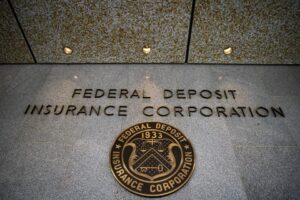
FDIC asks banks for final first republic bids due sunday
Process could lead to tidier cleanup of troubled bank than SVB but sale to JPMorgan would require exception to rule on size
The US government has asked JPMorgan, PNC and several other financial groups, including a handful of non-bank investment firms, to bid for all or part of First Republic, as US regulators try to determine how much it would cost to take over the embattled California lender. It has become clear in the past day to both First Republic and the government that stabilizing the bank will almost certainly require the Federal Deposit Insurance Corporation to take it over, four people briefed on the situation said.
First Republic shares have lost more than 97% of their value this year, driven down by concerns about paper losses on its mortgage book and other assets and massive deposit outflows after the March 10 collapse of Silicon Valley Bank. On Wednesday, the FDIC asked roughly a dozen banks to tell them what they would be willing to pay for First Republic’s deposits and assets, and what level of losses the FDIC would have to absorb to get the deal done, according to people familiar with the discussions.
On Friday, the regulator went back to JPMorgan, PNC and several other lenders and offered to give them access to more detailed information about First Republic. The potential bidders have been given digital access to a data room with extensive information on First Republic’s loans and other assets, according to two sources familiar with the process. A number of investment firms have also been given access to the data and encouraged to provide bids. Banks and others have been told that bids are welcomed that would include First Republic being taken into receivership, and that a winning bid is likely to include some assistance from the FDIC’s insurance fund. The bidders have been given until Sunday to submit binding bids.
JPMorgan, which led an earlier effort to stabilize First Republic by convening a group of 11 banks to put 30 billion USD in deposits into the lender, is now preparing a bid for a post-resolution deal, three people briefed on the situation said. JPMorgan and PNC declined to comment. It is not clear how many other banks will bid, or whether the FDIC will find any of the bids acceptable. When SVB failed, other lenders initially declined to bid, and the FDIC set up a bridge bank to give its customers access to their money. The FDIC said: “We cannot comment on or confirm reports that we are bidding an open and operating bank.” If San Francisco-based First Republic is taken over by the FDIC, it would rank among the biggest bank failures in US history, alongside Washington Mutual in 2008 and SVB.
Will Joe Biden die in office?

Actuaries review the survival prospects of the likely presidential nominees
When Joe Biden this week announced plans to seek re-election in 2024, he immediately triggered speculation as to whether he could serve a full second term.
Most political pundits agree that, at 80, age is one of Biden’s biggest political vulnerabilities. If re-elected, he would be 82 at the start of his next term and 86 at the end of it. Donald Trump, currently in pole position to win the Republican nomination, is not far behind: he would begin a second stint aged 78. For US voters, a battle between the oldest candidates in history throws up all sorts of special considerations, from whether either has the stamina for another four years as commander-in-chief to what happens if their mental faculties fade.
Yet perhaps the biggest problem of all is the not insignificant chance of them dying in office. If Biden were to win, Kamala Harris, his unpopular vice-president, would be first in the line of succession, while Trump has yet to pick his running mate. Nikki Haley, another Republican candidate, told Fox News this week: “I think that we can all be very clear and say with a matter of fact that if you vote for Joe Biden you really are counting on a President Harris, because the idea that he would make it until 86 years old is not something that I think is likely.”
Any predictions are by their nature uncertain, yet a longevity modelling firm has forecasted that both candidates are likely to live well beyond the end of the next presidency in 2029. According to Club Vita, actuarial data suggests both men could have more than another decade ahead of them. The company, which offers analytical services to insurers, said its US model suggested Biden has a life expectancy of another 11 years, taking him to 91. Trump has 14 more years to look forward to, per the model, meaning he would die at 90.
The model’s inputs include affluence, marital status, and employment. These key demographics for both Biden and Trump put them in the same favourable categories for the main factors, including addresses in the top category for life expectancy: the analysts used Trump’s Palm Beach address and Biden’s Delaware home. Erik Pickett, a New Jersey-based actuary for Club Vita, said a wide range of factors could prove its model wrong, from whether the candidates “are in significantly different health to the average of someone with the same characteristics” to the fact that presidents have “access to higher quality medical treatments” than the typical American.
Speaking to reporters at the White House this week, Biden said it would be up to voters “to judge whether or not I have it or don’t have it”, adding: “I respect them taking a hard look at it. I’d take a hard look at it as well. I took a hard look at it before I decided to run. And I feel good. I feel excited.” Biden’s political aides in particular have gone to great lengths to portray their boss as unusually active for a man of his age. He is known to break into a vigorous jog when approaching groups of reporters and reportedly begins most mornings with a workout. Longevity experts say exercise is crucial. Georgetown’s Glei said the best predictors of mortality for men aged 80 are physical function, whether the person is taking more than five medications, a diagnosis of heart disease, the number of hospital stays in the past year, and the frequency of exercise.
Stay up to date
More Newsletter to Check



SUBSCRIBE TO NEWSLETTER
Subscribe to download our daily economics and business roundup


×
![]()