
Oil prices could hit $150 if Israel-Hamas conflict intensifies

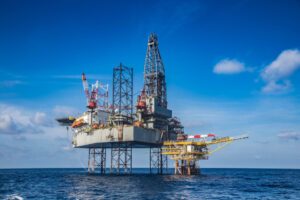
Oil prices could hit $150 if Israel-Hamas conflict intensifies, World Bank warns
Multilateral lender says commodity markets still reeling from Russia’s war in Ukraine. Crude prices could rise to more than $150 a barrel if the conflict in the Middle East escalates, the World Bank warned on Monday, risking a repeat of the 1970s oil price shock if key producers cut supplies. In its quarterly Commodity Markets Outlook, the multilateral lender said a prolonged Israel-Hamas conflict could drive big rises in energy and food prices in a “dual shock” for commodity markets still reeling from Russia’s full-scale invasion of Ukraine. “The latest conflict in the Middle East comes on the heels of the biggest shock to commodity markets since the 1970s — Russia’s war with Ukraine,” said Indermit Gill, the World Bank’s chief economist and senior vice-president for development economics.
Under the bank’s baseline forecasts, overall commodity prices are predicted to fall 4.1% in the next year, with oil prices declining to an average of $81 a barrel, down from a projected $90 a barrel in the current quarter, as economic growth slows. However, the report said this outlook could quickly reverse if the conflict in the Middle East intensifies. In a worst-case scenario, global oil supply could shrink by 6mn to 8mn barrels a day, sending prices to between $140 and $157 a barrel, if leading Arab producers such as Saudi Arabia moved to cut exports.
Under small and medium disruption scenarios, prices could hit $102 to $121 a barrel, the report added. Current global oil demand is about 102mn b/d. The war began when Hamas launched cross-border attacks from Gaza on October 7, killing more than 1,400 people and taking more than 230 hostages, according to Israeli officials. The Israeli bombardment has killed more than 8,000 people in Gaza and injured more than 20,000, according to Palestinian officials. The conflict threatens to spread beyond Israel and the occupied Palestinian territories, with energy analysts warning that global exports could be hit if leading crude producers such as Iran became actively involved.
European gas prices this month jumped to their highest levels since March as traders feared that pipeline disruptions would hit global supplies, but oil markets have mostly shrugged off the impact of conflict. Benchmark Brent prices fell more than 3 per cent to about $87 a barrel on Monday, having exceeded $89 after the outbreak of the latest conflict. Crude prices hit a record $147 a barrel in 2008 on the eve of the global financial crisis. The World Bank said the global economy was in a better position to withstand a supply shock than in October 1973, when Arab members of OPEC cut exports to the US and other countries that supported Israel in the Yom Kippur war, quadrupling crude prices. The Middle East is less important for global oil exports than it was 50 years ago, accounting for about 30 per cent of supply, down from 37 per cent in the 1970s.
But 30 per cent is still a big share, warned Ayhan Kose, the World Bank’s deputy chief economist. “When you think about oil prices, what happens in the Middle East does not stay in the Middle East. It has huge global repercussions.” But the report warned that there had not yet been a full recovery from Russia’s invasion of Ukraine in February 2022, which Kose described as “traumatic for commodity markets”.
The Federal Reserve’s dovish FOMC tilt gave way to a strong rally
U.S. Treasury bonds advanced on softer Manufacturing PMIs, low MBA mortgage applications and a lower refunding announcement, just as the FOMC delivered a more dovish verdict. Chair Powell signaled that the stance of policy remains restrictive and further tightening would be warranted in a strong growth environment. However, evidence this week was more akin to a softer landing, especially after non-farm payrolls. Meanwhile, Eurozone inflation came in below expectations at 2.9% and the ECB’s Vujcic said the Central Bank was done with rate hikes for now. The Bank of England’s MPC was more hawkish but that was still trumped by the Bank of Japan. The tweaking of Japan’s monetary policy was portrayed as adding more flexibility, but in reality, it is a policy that is slowly being dismantled having only been appropriate in a low inflation world. Elsewhere, Chinese PMIs disappointed and showed signs of weakening in the services sector.
The broader picture within EM remains mixed as Saudi Arabia’s 3Q GDP underwhelmed having declined 4.5%, Czech Republic are ever so close to a technical recession, Chile has all but given up on boosting FX reserves which allowed CLP to strengthen and Nigeria has been steadfast in devaluing the naira. Finally, Panama was downgraded by Moody’s to Baa3 as a larger fiscal deficit is expected as the government threatens to tear-up a contract with one of the country’s largest copper miners.
Emerging markets sovereign credit (cash bonds) ended the week up 2.1% with credit spreads 18bps tighter. Sovereign outperformers were Venezuela, Ethiopia and Tunisia, while Bolivia, Iraq and Panama underperformed. The JPM EM sovereign bond index review is now underway for Venezuela as U.S. sanctions were lifted. Venezuela was removed from the EM sovereign index in November 2019 and the bank will now assess the credibility of re-including Venezuelan and PDVSA debt.
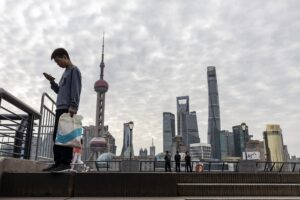
China’s Fight Against Deflation May Be Far From Over
China’s deflationary pressures just aren’t going away, underscoring the fragility of the economic recovery as 2023 enters the home stretch. Data due Thursday will likely show Chinese consumer prices slid back into deflation in October. Producer prices also probably declined for a 13th consecutive month. Consumer costs have been stubbornly weak this year. The consumer price index slipped into deflation in July and has since been teetering on and off the edge of negative year-on-year growth. While the People’s Bank of China said in August that prices would rebound from the summer rough patch, another drop may prove that assessment was too optimistic. Morgan Stanley sees China potentially facing a prolonged fight against falling prices in the next few years, writing recently that Beijing is “at the initial stage of the deflation battle” as it transitions away from an “overextended, credit-fueled growth model.”
Weak inflation figures would add more uncertainty to the nation’s growth outlook following an unexpected contraction in factory activity and slowing growth in the services sector in October. “China’s consumption demand is still weak,” said Larry Hu, head of China economics at Macquarie Group Ltd. He said the nation’s widest measure of prices, the GDP deflator, will likely be negative in the final three months of the year. It’s already declined for two consecutive quarters for the first time since 2015.
Other reports due in the coming days may provide additional clues about the trajectory of the economic recovery. Export figures on Tuesday will likely show the drop narrowing in October on a yearly basis, though that’s partly because of a lower base of comparison with a month in 2022 when China was still grappling with pandemic-related lockdowns. Credit data for last month may also be released, and will probably show overall financing picking up from a year ago as a deluge of government bonds hit the market.
Expectations are growing for the central bank to provide more liquidity support via a cut in the reserve requirement ratio — the amount of cash banks must keep in reserve. It is predicted that the central bank may do so ahead of its monthly policy loan operations in the middle of November as a surge in government bond issuance pressures interbank liquidity.
US Sanctions UAE Firms in Push to Curb Gulf State’s Russian Ties
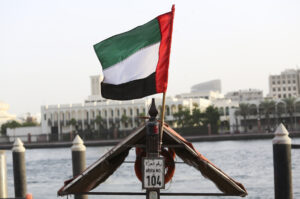
The US targeted several companies based in the United Arab Emirates in the latest round of Russia-related sanctions as it seeks to up the pressure on the Gulf country to curb ties with Moscow. The US Treasury Department blacklisted 130 individuals and companies in an effort to clamp down on Russia’s defense and technology sectors, as well as companies and people in third countries that help move goods into Russia. Several companies based in the UAE and Turkey were on the list, including logistics and at least one financial services firm. Western officials have pressed for the oil-rich UAE to stop acting as a gateway for Russia to get around sanctions.
Russia has so far been able to get around some of the trade restrictions imposed on it by the US, UK and Europe by routing banned goods via third countries such as the Gulf country, as well as Turkey and some Central Asian nations that have not introduced sanctions themselves. Dubai, the UAE’s commercial hub, also has seen an influx of Russians and their capital since the February 2022 invasion of Ukraine. The US said the sanctions were aimed at entities which trade goods that can be used as dual-use items for President Vladimir Putin’s war in Ukraine and financial services firms.
One of the sanctioned firms, ARX Financial Engineering Ltd., is a UAE-based financial engineering company that offered investment services to Russian investors. The US accused the firm of “identifying ways that Russian rubles could be sent from sanctioned Russian VTB Bank” and converted into US dollars. Two Irish nationals involved at ARX were also sanctioned. Still, in the statement announcing the sanctions, the Treasury said recent actions “particularly by the UAE” were encouraging as the agency continues its efforts to enforce restrictions. Thursday’s announcement was the latest of hundreds of sanctions actions imposed by the US and its allies against Russia since the war began.
Stay up to date
More Newsletter to Check



SUBSCRIBE TO NEWSLETTER
Subscribe to download our daily economics and business roundup


×
![]()