
Moody’s Downgrades USA Credit Rating: Raised Concerns Over US Economy and Banking Sector


Moody's Downgrades USA Credit Rating
Raised Concerns Over US Economy and Banking Sector. Moody's recent downgrade of US banks, along with JP Morgan's cautious growth outlook, intensifies worries about the US economy. Despite efforts to bolster credit conditions, Fitch and Moody's downgrades signal banking sector vulnerabilities, hinting at a potential mild recession. Investor caution is advised due to the downgrade's impact on sentiment, although markets may have already priced it in, allowing for alternative strategies.
The expanding US debt ceiling remains a critical concern, contributing to ongoing downgrades and requiring a comprehensive solution to curb the escalating debt crisis. Meanwhile, the Federal Reserve grapples with balancing interest rates to manage inflation and restore banking sector trust, while a resilient labor market warrants further rate hikes.
Despite challenges, the US stock market and economy demonstrate resilience, drawing from previous experiences to manage current turbulence. Geopolitical shifts involving the US, Russia, and China prompt investors to explore alternative reserve currencies.
In conclusion, Moody's downgrade, combined with existing economic vulnerabilities and intricate global dynamics, casts uncertainty over the US economy and global markets. Successful navigation demands adaptability and cautious decision-making.
Japan's and China’s Economic Shift Sparks Concerns
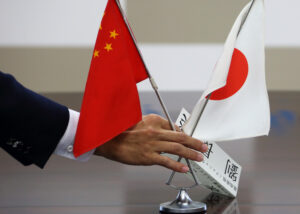
Amidst Inflation Inflation In Japan and China's Deflation Dilemma. Japan's bookstores have dedicated shelf space to a once-neglected genre: inflation literature. Titles like "Inflation Japan: the Coming Era of Endless High Prices" underscore Japan's economic transition after decades of stagnation and deflation. While the shift is significant, there's an abundance of complexities to address, especially as the nation prepares for possible inflation-related challenges.
China, however, finds itself in a different predicament, as it grapples with deflation and economic challenges. High youth unemployment, weak property prices, and a heavily indebted corporate sector are curbing demand and influencing consumer prices negatively. Comparisons between China's current situation and Japan's "lost decades" of the early 1990s are gaining traction, highlighting eerie similarities.
Notably, China is amassing troubled banks and indebted companies, similar to Japan's past struggles. The risk of a prolonged deflationary period in China looms, prompting comparisons to Japan's experience. While experts caution against drawing conclusions from short-term data, the prospect of prolonged deflation cannot be disregarded.
These parallels between Japan and China underscore the need for guidance and strategies to navigate unfamiliar economic territory. Books on investing in an era where traditional approaches fail offer insights into shifting mindsets and behaviors. The shift towards inflation represents a significant challenge for Japan, potentially more concerning than the prior deflationary era. Conversely, China may be more accepting of deflation's risks, considering Japan's relative stability during its deflation crisis.

Taking Solid Steps to Lead the World’s Fintech Industry
UAE Tops Global Connectivity Rankings with High Internet Penetration. The UAE has claimed the title of the world's most connected country, with a reported 99 percent of its population enjoying internet connectivity. This achievement, based on a report from the Telecommunications and Digital Government Regulatory Authority (TDRA), reflects the nation's commitment to digital solutions in both daily life and government services. The TDRA's Director General, Majed Sultan Al Mesmar, emphasized that this achievement aligns with the UAE's vision for 2031 and its dedication to digital transformation as an economic imperative in the face of rapid global changes.
The TDRA's "Digital UAE — Factsheet" report revealed that internet usage in the UAE encompasses a range of activities, from social networking and work to research, education, entertainment, and shopping. The country's download speeds reached 161.15 Mbps on smartphones and 207.41 Mbps for fixed lines in 2022.
Key digital initiatives have contributed to the UAE's connected status. The Unified Digital Platform, which provides access to government service information, received over 30 million visits last year. Additionally, the UAE Pass digital identity app garnered 5 million registered users.
The report highlighted the UAE's active presence on social media, with 10 million social media accounts in 2022, representing over 100 percent of both the population and internet users. People in the UAE spent an average of 2.3 hours daily on social media in 2022, with app downloads rising by 16 percent, reaching 569 million.
The UAE's digital ecosystem is expanding rapidly, with over 46,000 new websites registered within a year, bringing the total to more than 300,000. App purchases also surged, demonstrating a 25 percent increase in spending during the period.
In conclusion, the UAE's remarkable internet penetration and thriving digital landscape underscore its position as a global leader in connectivity and digital adoption.
China's Economic Challenges

Amidst "Lie Flat" Movement and Global Factors. China's economic landscape is facing significant challenges amidst the backdrop of a social movement dubbed "lie flat," which reflects disillusionment with President Xi Jinping's vision. This movement, driven by young professionals seeking to resist the pressures of the rat race, underscores a broader sentiment of uncertainty about China's future trajectory. Economic indicators have taken a concerning turn, with exports experiencing a 14.5% YoY decline for three consecutive months, and imports falling by 12.4% over five months.
The economy's struggles are highlighted by a 0.3% YoY decline in the consumer prices index, leading to deflation in July. Consumption remains subdued, contributing to a 4.4% drop in factory gate prices. Global factors, including geopolitical tensions, tariffs, China's COVID-19 policies, and an increasingly authoritarian regime under Xi, have prompted international companies and investors to reconsider their engagement with China.
Foreign direct investment (FDI) has plummeted 87% in a quarter, signaling a shift away from China as foreign companies diversify their supply chains. Apple, Samsung, and Siemens are among the companies seeking alternative manufacturing locations. This trend, coupled with trade controls and export restrictions, threatens China's position as the "workshop of the world."
Xi's administration faces the challenge of boosting domestic demand as the working-age population dwindles. Traditional methods are proving ineffective in stimulating growth. Economic experts anticipate a further decline in China's growth rate, presenting a hurdle for Xi's ambitious targets and pointing to a complex economic road ahead.

Global Central Banks' Persistent Gold Rush
Amid De-Dollarization and Geopolitical Shifts. The gold market remains fervent as central banks worldwide continue to amass the precious metal. Despite a 103-ton YoY decline in purchases during Q2, net central bank purchases reached a record 387 tons in the first half of the year, reflecting an ongoing global trend of de-dollarization. This "gold rush" comes as central banks seek to anchor their currencies against external risks and mitigate the impacts of aggressive US Federal Reserve monetary tightening.
China's central bank, the People's Bank of China (PBC), has accumulated a steady increase in gold reserves, marking an eighth consecutive month of growth. Other nations, including Singapore, Turkey, India, and the EU, have also boosted their gold holdings. The surge in geopolitical complexities and Fitch Ratings' recent US credit rating downgrade have driven increased investor risk aversion, elevating gold's appeal. Amid slowing global economic growth and heightened demand for risk aversion, central banks are projected to continue expanding their gold reserves.
For China, augmenting gold reserves aligns with its aspiration for the internationalization of the Chinese yuan. The establishment of the Asian Infrastructure Investment Bank, yuan inclusion in the IMF's Special Drawing Rights basket, and growing use of the yuan in trade settlements enhance its credibility. Gold reserves also play a role in stabilizing China's economy, curbing inflation, and bolstering the yuan's international standing. As central banks worldwide diversify away from the dollar and navigate geopolitical uncertainties, the "gold rush" is poised to persist, with gold's enduring appeal as a safe haven asset and strategic currency anchor.
Stay up to date
More Newsletter to Check


SUBSCRIBE TO NEWSLETTER
Subscribe to download our daily economics and business roundup


×
![]()