

Zilla Capital Global Espresso is a global newsletter containing a weekly briefing from the editors of The Economist, Bloomberg, New York Times and Financial Times after adding our analysis and signature.

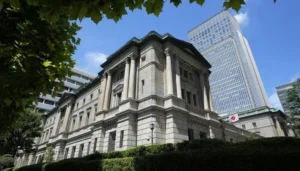
Japan’s core inflation hits 41-year high with central bank under policy pressure
4% price growth reading comes days after Bank of Japan stood by yield curve controls. What is particularly interesting here is that the highest inflation since 1981 is coinciding with the government encouraging wage increases and the central bank keeping unchanged its Yield Curve Control policy.
Japan’s core inflation rate rose to a new 41-year high of 4% in December, adding to mounting market pressure on the Bank of Japan to abandon its yield curve control policy which has helped maintain ultra-low interest rates. Official statistics released on Friday showed core inflation, which excludes volatile food prices but includes oil, reached its fastest pace since December 1981, exceeding the Bank of Japan’s 2% inflation target for the ninth consecutive month.
While price rises in Japan remain mild compared with those in the US and Europe, inflation in Asia’s most advanced economy has gained pace due to a weaker yen and heavy exposure to the increasing cost of imported commodities. Energy prices were a main driver of December’s price rises, increasing 15.2%, but inflation excluding energy also hit a 30-year high, climbing 3%.
The yen weakened 0.4% against the US dollar following the data release on Friday, reversing the previous day’s gains. The release came two days after Japan’s central bank defied market pressure and maintained its ultra-loose monetary policy, arguing that wage growth was not strong enough to sustainably achieve its inflation target.
Uniqlo owner Fast Retailing and other large companies have in recent weeks announced plans to dramatically raise wages, fuelling hopes that rising prices could finally drive salaries higher in a country that has wrestled with three decades of price stagnation. But economists remain divided on whether the wage increases are a one-off, and wider inflationary pressures are expected to subside after government curbs on gas and electricity prices take effect.
America and Europe once feared the Japanese economic juggernaut much the same way they fear China's growing economic might today. But the Japan the world expected never arrived. In the late 1980s, Japanese people were richer than Americans. Now they earn less than Britons. For decades Japan has been struggling with a sluggish economy, held back by a deep resistance to change and a stubborn attachment to the past. Now, its population is both ageing and shrinking. Japan is stuck. Japan was the future but it's stuck in the past.
Banks prepare for deepest job cuts since the financial crisis
 Banks prepare for deepest job cuts since the financial crisis" />
 Firings expected to be ‘super brutal’, with Credit Suisse, Goldman Sachs and Morgan Stanley already laying off staff.
Banks are gearing up for the biggest round of job cuts since the global financial crisis, as executives come under pressure to slash costs following a collapse in investment banking revenues. The lay-offs — which are expected to be in the tens of thousands across the sector — reverse the mass hirings banks made over the past few years and the reluctance to fire staff during the Covid-19 pandemic. Banks including Credit Suisse, Goldman Sachs, Morgan Stanley and Bank of New York Mellon have begun to cut more than 15,000 jobs in recent months, and industry watchers expect others to follow suit, emboldened by the headline-grabbing plans already announced.
The Wall Street bank began a process of firing up to 3,200 staff last week, equating to 6.5% of the workforce, as pressure mounts on chief executive David Solomon to improve the bank’s return on tangible equity. Goldman is cutting a similar number of staff as it did in 2008 during the depths of the global financial crisis, but its workforce then was two-thirds of its current size. Morgan Stanley laid off 1,800 staff in December, just over 2% of its workforce. Despite having a strong wealth management business, the lender’s investment bank suffered along with its fierce rival Goldman Sachs from a near halving of M&A revenues last year.
Unlike its rivals, UBS has not hired aggressively in recent years and so is not under the same pressures to cut roles. It has also dedicated more resources to wealth management over the past decade and senior executives at the bank feel now is a good time to invest more in the investment bank — along with hires in wealth and asset management — as competitors pull back. These efforts include picking off disgruntled dealmakers from boutique advisory firms.
By comparison, UBS was forced to cut 10 per cent of its workforce in 2008 — with most roles coming from its investment bank — as the lender was bailed out by the Swiss government after suffering heavy losses on subprime mortgages. Several of the biggest job cuts in 2008 came from banks that had rescued rivals brought to their knees by the financial crisis. When Bank of America took over Merrill Lynch, for example, it fired 10,000 staff, while also making 7,500 workers redundant at mortgage lender Countrywide Financial.
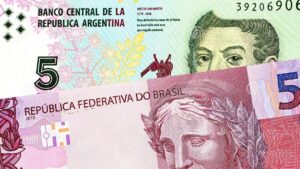 Brazil and Argentina to start preparations for a common currency" />
Brazil and Argentina to start preparations for a common currency
Other Latin American nations will be invited to join plan which could create world’s second-largest currency union.
Brazil and Argentina will this week announce that they are starting preparatory work on a common currency, in a move which could eventually create the world’s second-largest currency bloc. South America’s two biggest economies will discuss the plan at a summit in Buenos Aires this week and will invite other Latin American nations to join. The initial focus will be on how a new currency, which Brazil suggests calling the “sur” (south), could boost regional trade and reduce reliance on the US dollar. It would at first run in parallel with the Brazilian real and Argentine peso.
“There will be . . . a decision to start studying the parameters needed for a common currency, which includes everything from fiscal issues to the size of the economy and the role of central banks,” Argentina’s economy minister Sergio Massa said. “It would be a study of mechanisms for trade integration,” he added. “I don’t want to create any false expectations. . . it’s the first step on a long road which Latin America must travel.”
Initially a bilateral project, the initiative would be offered to other nations in Latin America. “It is Argentina and Brazil inviting the rest of the region,” the Argentine minister said. A currency union that covered all of Latin America would represent about 5 per cent of global GDP. The world’s largest currency union, the euro, encompasses about 14 per cent of global GDP when measured in dollar terms.
Lula’s comments about central bank independence highlight risks to economic policy management in Brazil that markets will be focused on this year
 Lula’s comments about central bank independence highlight risks to economic policy management in Brazil that markets will be focused on this year" />
 Brazil’s newly elected President, Luiz Inacio Lula da Silva, publicly criticized the Central Bank of Brazil (BCB) during the first TV interview he gave after last week’s riots in the capital, Brasilia, by supporters of former President Jair Bolsonaro.
Brazil’s Central Bank has been one of the EM institutions at the forefront of pragmatic monetary policymaking amid successive major economic shocks over the last several years. Aggressive pre-emptive policy tightening by the BCB has contributed to inflation pressures in Latin America’s largest economy likely peaking well ahead of most other EM peers and building a significant protective buffer for local-currency Brazilian assets in the form of high real interest rates.
Under a scenario involving a sustained normalization of inflation dynamics during 2023, the BCB will likely be among the best positioned EM central banks to start easing policy by lowering interest rates and supporting growth in the second half of this year. This constructive backdrop for Brazilian assets is at risk of being delayed and/or watered down if comments on economic policy management such as the ones made by President Lula during his TV appearance this week persist and, especially, if they start being translated in actual policy measures/actions.
Markets have grown increasingly concerned about the direction of fiscal policy under the Lula Administration since the October 2022 elections and will likely be extra sensitive going forward to signs that the government could attempt to put pressure on central bank policy management or question legislation granting BCB formal autonomy that was approved back in early 2021 under the previous Bolsonaro Administration.
 Global markets are at the mercy of central bank headlines while global leaders, economic thinkers and policymakers gather in Davos to discuss themes with varied degrees of short-term market relevance" />
Global markets are at the mercy of central bank headlines while global leaders, economic thinkers and policymakers gather in Davos to discuss themes with varied degrees of short-term market relevance
Markets performed well for the most part this week supported by soft U.S. economic data releases, perception that the European Central Bank (ECB) might be less hawkish than previously feared and continuation of the “China re-opening” narrative.
In Japan, a dovish outcome was also risk supportive as the BoJ left all its policy tools unchanged despite increasing speculation about a change to its yield curve control policy. However, DM fixed income instruments gave back some gains toward the end of the week as a fresh wave of hawkish comments by Fed and ECB officials signaled that market perception about nearing “peak hawkishness” by systemic DM policymakers might be premature. Meanwhile, oil continued to rally with Brent prices moving to a YTD high of around $87/bbl. Against this backdrop, EM credit performed well, with total returns supported by UST yields that finished lower on the week and tighter spreads.
Political headlines continue to dominate in Brazil and Turkey where investors focused on President Lula’s comments about central bank independence and President Erdogan’s increasing fiscal largesse ahead of crucial elections scheduled for mid-May. Argentina surprised markets by announcing plans to repurchase some of its 2029 and 2030 USD bonds, supporting valuations but raising concerns about further depletion of already pressured FX reserves.
For the week ahead, markets will be eagerly awaiting the Federal Reserve’s preferred measure of inflation, the core personal consumer expenditure (PCE) deflator due on Friday. Consensus expects 4.4% YoY and 0.3% MoM. In EM there will be a flurry of central bank policy rate decisions with Nigeria
(+50bps expected), Thailand (+25bps), South Africa (+50bps), Ukraine (hold), Chile (hold) and Colombia (+100bps) on the docket. The second round of Presidential elections in the Czech Republic will take place at the end of next week in which both candidates favor closer relations with Europe and the West rather than with China/Russia.
Stay up to date
More Newsletter to Check



SUBSCRIBE TO NEWSLETTER
Subscribe to download our daily economics and business roundup


×
![]()