
Investors ditch notion that interest rates will stay ‘higher for longer’


Investors ditch notion that interest rates will stay ‘higher for longer’
Fed’s dovish message is being interpreted by the bond market as a full-speed ahead signal. Christmas came early for markets this week when the Federal Reserve gave a clear signal that the time for unwinding of the post-pandemic monetary policy tightening is likely coming in 2024. Investors rejoiced at the Fed’s dovish pivot and quickly priced in six cuts next year versus the Fed’s projected three. Futures markets are now fully pricing in a first rate cut in March, with around 20% probability of a cut as early as January. Did Chairman Powel go too far in his remarks, and will he need to walk some of the optimism back in coming weeks? One way or another, the divergence that has opened up between Fed projections and market expectations about the pace of policy easing in 2024 will have to be resolved.
This week’s rally in global bond markets has shattered investors’ months-long assumption that interest rates in the US and elsewhere will remain higher for longer. The benchmark 10-year US Treasury yield, seen as a proxy for borrowing costs around the world, fell below 4 per cent for the first time since August. The policy-sensitive two-year yield, which closely tracks rate expectations, slipped to its lowest point since May. Other government bond markets have also undergone a dramatic about-turn in recent days, with Germany’s 10-year Bund yield sliding to its lowest level in nine months as its price shot higher. The sharp moves came after the Federal Reserve gave its clearest indication yet that it would not raise borrowing costs again, and signalled that it expected three quarter-point cuts in 2024. Fed chair Jay Powell noted that the benchmark rate was “likely at or near its peak for this tightening cycle”.
Meanwhile, the ECB and BoE signaled they do not intend to follow the Fed’s lead and start their own cutting cycles as soon as market participants expect, despite their sluggish economies. The EUR gained versus the USD as a result. In EM, the Central Banks of Brazil (-50bps to 11.75%), Peru (-25bps to 6.75%), and Ukraine (-100bps to 15%) reduced rates, while Mexico (11.25%), Philippines (6.5%), and Taiwan (1.875%) remained on hold. The Central Bank of Russia hiked by 100bps to 16% facing mounting inflationary pressures in its economy. Elsewhere of note, President Javier Milei formally assumed office in Argentina and immediately introduced the first batch of his promised “shock therapy” economic adjustment measures, including a 54% devaluation of the currency and a fiscal package targeting 5% of GDP consolidation in 2024.
China’s biggest nickel producer to list battery unit in Hong Kong

Debut of Tsingshan’s REPT Battero Energy comes at end of barren year for initial public offerings. China’s Tsingshan Holding Group, the world’s biggest nickel producer, is set to raise up to 306 million USD in an initial public offering of a battery-making subsidiary on Monday, testing investor appetite at the end of another lacklustre year for listings in Hong Kong. The IPO of Chinese lithium-ion battery manufacturer REPT Battero Energy is set to be the fourth largest in Hong Kong this year but comes after tepid market sentiment for new share listings. Its stock exchange has become only the seventh-largest destination for IPOs in 2023, after topping the global rankings as recently as 2019.
The listing gives rare public exposure to Tsingshan and its low-key founder Xiang Guangda, who was unexpectedly thrust into the global spotlight when his huge bet on falling nickel prices backfired in March last year. Tsingshan suffered a trading loss of about 1 billion USD and the London Metal Exchange suspended nickel trading for eight days. REPT is the latest Chinese battery maker to tap global investors in offshore markets, as the country’s electric vehicle industry gears up for global expansion. The listing exposes Xiang’s strategy of extending his raw materials business into the manufacturing of EV batteries. Tsingshan was a long-term, predictable supplier of raw materials that could support future global expansion, said REPT director Wang Haijun at an online briefing last week.
The largest IPO has been that of ZJLD, a Chinese distiller of the popular baijiu spirit, which raised 677 million USD in April. Only 58 companies have listed up to December 12, down 18% from the same period in 2022. The EV sector still offers structural growth given its importance in the energy transition, Iamthongthong said.
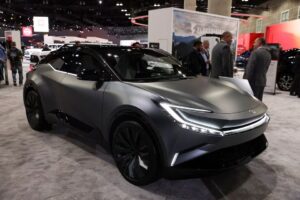
Americans opt to lease electric cars to tap Biden tax credits
Critics say incentives undercut efforts to increase US manufacturing of EVs. Car shoppers were far more likely to lease electric vehicles this year than buy them, as they took advantage of a 7,500 USD tax credit available under the Biden administration’s clean energy subsidies. About 52%% of EVs were leased in November, compared to 8 per cent in November 2022, according to data from Edmunds, the online car shopping guide. The lease rate for cars with traditional engines in November was 22%. Leasing allows car shoppers to apply the full 7,500 USD tax credit included in the Inflation Reduction Act to an electric vehicle, regardless of whether the car meets benchmarks for parts produced in North America that apply if the vehicle is purchased. The legislative dodge undercuts the law’s intent to bolster North American EV manufacturing while upholding its climate change goals by giving consumers more choices to go electric.
Leasing started as the preferred choice among early adopters of electric vehicles. In November 2020, consumers leased 65% of the electric vehicles sold, more than double the rate for cars with traditional engines. The leaseholders, looking ahead to improvements in battery technology and range, wanted to avoid being saddled with early-stage cars and trucks. But in 2021 leasing rates began to fall, and they kept falling last year, bottoming out at 7% in September and October. Supply chain shortages tightened the inventory of new cars, and amid the crunch, carmakers stopped subsidising leases. EVs also depreciate faster than gas-powered cars. The result is that leasing became as expensive as buying, so “it didn’t really make sense to lease at that time”, said Edmunds executive director of insights Jessica Caldwell.
But now leasing is “a pretty financially compelling option”, she said, because applying the tax credit makes the monthly payments more affordable. A report released in August by Energy Innovation, a San Francisco energy and climate policy firm, compared the cost of ownership for EVs versus petrol-powered cars, including lower operating costs, and found that the federal tax credit “makes average monthly lease prices 12% cheaper for leased vehicles, . . . making almost every EV model cheaper to lease than gasoline-powered alternatives in most states”. The US Treasury Department said when Congress wrote the IRA it categorised leased EVs as “commercial”, because the vehicle title technically belongs to either the dealership or finance company. Commercial electric vehicles do not need to be assembled in North America or have a certain percentage of their parts from there to receive the full tax credit.
But carmakers want their customers to qualify for the full tax credit, which can boost sales by making EVs cheaper, and many cannot do so under the purchasing requirements. Last month, Rivian, the most competitive of the new, all-electric carmakers after Tesla, announced a new option to lease its R1T pick-up truck. Korean carmakers Hyundai and Kia have benefited from the trend, say dealers and industry analysts. Leasing gives customers new to the brands a sense of security, and with prices starting at just over 40,000 USD, they are among the least expensive EVs, which typically cost more than petrol-powered cars and trucks. The brands’ EV offerings are even attracting shoppers who are trading in luxury vehicles. For Kia, only about 6 per cent of the vehicles traded in to purchase a new Kia are luxury models, according to Edmunds. But for the electric Kia EV6, 21% of the trade-ins are luxury cars. The figures are similar for Hyundai.
Eurozone bond yields sink to nine-month low as economy struggles
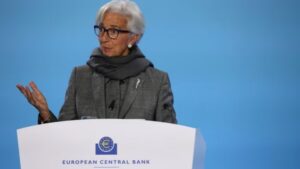
Moves extend rally in European government debt despite ECB’s insistence it is not considering interest rate cuts. European bonds rallied on Friday, pushing yields to nine-month lows as investors focused on the latest signs of a slowing economy and shrugged off the European Central Bank’s insistence that it was not considering interest rate cuts. The yields on 10-year German Bunds — the benchmark for the eurozone — dropped by 0.11 percentage points on Friday to 2.02 per cent, the lowest level since March. The moves came despite ECB president Christine Lagarde’s insistence on Thursday that it was too soon to talk about the timing of rate cuts and that the bank had “more work to be done” in its battle to tame inflation. The moves also extended a rally sparked by a more dovish message from the US Federal Reserve earlier in the week.
Friday’s gains, mirrored across other European markets, came as the eurozone economy suffered another setback after a closely watched survey showed business activity had declined in December at the fastest pace since the pandemic hit in 2020. “The markets feel the door is open in terms of reacting strongly to weak PMI data,” said Richard McGuire, head of rates strategy at Rabobank. “After the Fed blindsided the market with a really quite surprising pivot, the ECB’s efforts to roll back the recent easing of financial conditions has clearly fallen flat.” The HCOB flash eurozone composite purchasing managers’ index fell to a two-month low of 47, down from 47.6 a month earlier. The result was lower than the 48 reading forecast by economists in an earlier Reuters poll.
Yields on 10-year Italian debt fell 0.08 percentage points to 3.73%, while French government bond yields fell 0.1 percentage points to 2.56%. Lagarde’s attempts to warn investors against aggressive bets on lower borrowing costs were in stark contrast to Fed chair Jay Powell the previous day. He said the US Fed’s benchmark rate was now “likely at or near its peak for this tightening cycle”, alongside new forecasts from central bank officials pointing to 0.75 percentage points worth of cuts next year. “The discussion by the Fed to begin cutting rates in 2024 poured fuel on a raging bond rally that was sparked by weaker economic data,” said Craig Inches, head of rates at Royal London Asset Management. He added that the resultant fall in bond yields made the European Central Bank’s job of containing inflation “even harder”. The moves highlight the difficulty that the ECB faces as global markets react forcefully to signals from the Fed, despite officials’ concerns about persistent price pressures. “Central banks everywhere are still really struggling with credibility,” said Mike Riddell, a bond fund portfolio manager at Allianz Global Investors. “The ECB [is] telling us that rates will stay high and could even go higher, but markets simply don’t believe them any more.”
Stay up to date
More Newsletter to Check


SUBSCRIBE TO NEWSLETTER
Subscribe to download our daily economics and business roundup


×
![]()