
The US consumer price index rose 7.5% last month


The US consumer price index rose 7.5% last month
The US consumer price index rose 5% last month compared with January last year, its fastest annual pace since 1982, rising pressure on the Federal Reserve to act more aggressively to tame inflation. Data released on Thursday by the Bureau of Labor Statistics showed CPI surpassing economists’ expectations by surging above its previous 40-year high of 7% on an annual basis recorded in December.
On a monthly basis, CPI rose by 0.6% from the previous month, a steeper increase than predicted, as Americans paid higher prices for a wide range of goods, including food, electricity and shelter. US Treasury yields jumped after the report as traders bet on higher interest rates. Yields rise when bond prices fall. The persistence of high inflation has already prompted the Fed to speed up its timetable for tightening monetary policy, with the first interest rate increase since the onset of the pandemic expected to be approved next month. The balance sheet has expanded to 8.9 trillion USD as the world's most powerful central bank continues to inject liquidity into an inflation-prone system, growing by 7.5% in the last 6 months alone.
Accordingly, we are raising our Fed forecast to include seven consecutive 25bp rate hikes at each of the remaining FOMIC meetings in 2022 versus five hikes in 2022 previously. We continue to expect the FOMC to hike three more time at gradual once per-quarter pace in Q1 to Q3-2023 and to reach the same terminal rate of 2.5%-2.75%. We see the arguments for a 50bp rate hike in March. The level of the funds rate looks inappropriate, and the combination of very high inflation, hot wage growth, and high short-term inflation expectations means that concerns about falling into a wage price spiral deserve to be taken seriously. We could imagine the FOMC concluding that even a meaningful risk of an outcome as serious as a wage-price spiral requires a more aggressive and immediate response.
So far, though, most fed officials who have commented have opposed a 50bp hike in March. We therefore think that the more likely path is a longer series of 25bp hikes instead. St. Louis Fed President James Bullard became the first FOMC participant to call for a 50bp hike last Saturday, and we could consider changing our forecast if other participants join hi, especially of the market continues to price high odds of a 50bp move in March.
What would happen if financial markets crashed?

Next, we need to ask “What would happen if financial markets crashed?” We need to look into history for a guide, but know that next time will be different. Today America’s financial system looks nothing like it did before the crashes of 2001 and 2008, yet lately there have been some familiar signs of froth and fear on Wall Street: wild trading days on no real news, sudden price swings and an odd feeling among many investors that they have overdosed on techno-optimism.
Having soared in 2021, shares on Wall Street had their worst January since 2009, falling by 5.3%. The prices of assets favoured by retail investors, like tech stocks, cryptocurrencies and shares in electric-car makers, have plunged. It is tempting to think that the January sell-off was exactly what was needed, purging the stock market of its speculative excesses. But America’s new-look financial system is still loaded with risks. Asset prices are high: the last time shares were so pricey relative to long-run profits was before the slumps of 1929 and 2001, and the extra return for owning risky bonds is near its lowest level for a quarter of a century. Many portfolios have loaded up on “long-duration” assets that yield profits only in the distant future. And central banks are raising interest rates to tame inflation
The mix of sky-high valuations and rising interest rates could easily result in large losses, as the rate used to discount future income rises. If big losses do materialise, the important question, for investors, for central bankers and for the world economy, is whether the financial system will safely absorb them or amplify them. The answer is not obvious, for that system has been transformed over the past 15 years by the twin forces of regulation and technological innovation.
Nothing concentrates minds like 130,000 troops poised to invade
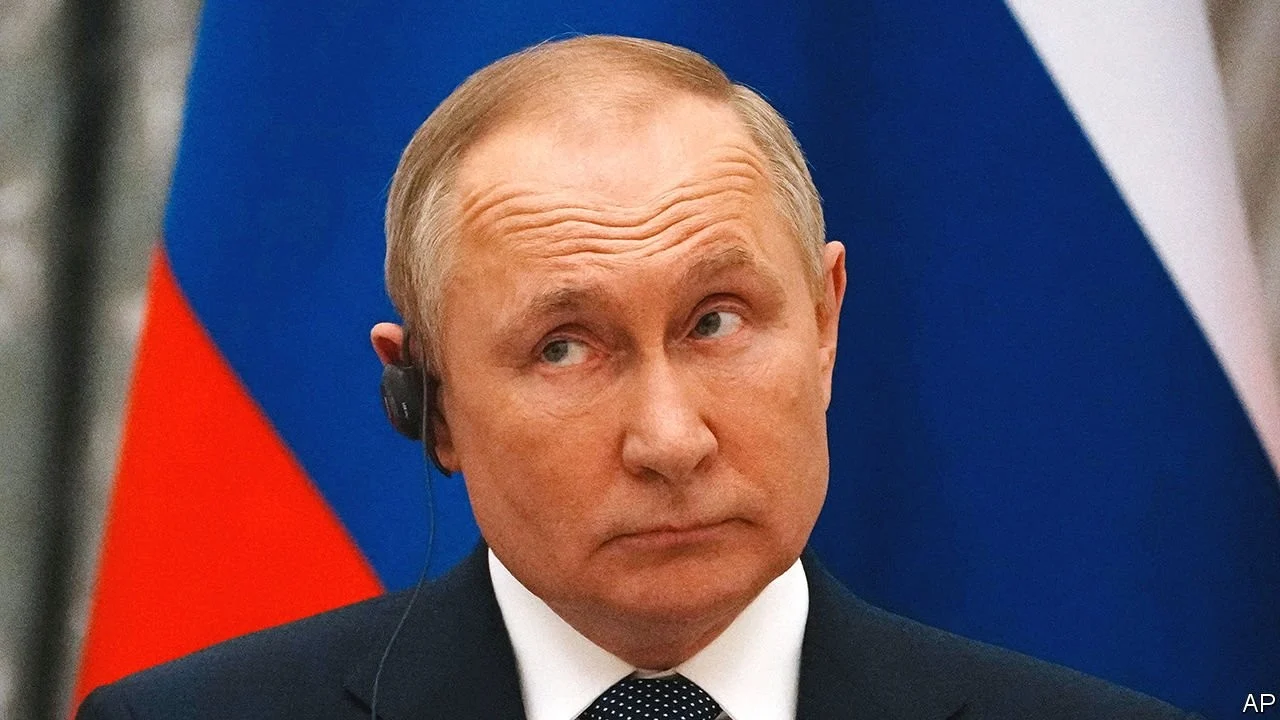
Nothing concentrates minds like 130,000 troops poised to invade. For years relations between Russia and the West have weakened, but the Russian forces converging on Ukraine have caused a spasm of diplomacy. On February 7th and 8th Emmanuel Macron, France’s president, went to Moscow and Kyiv with plans to prevent war. He was to be followed east by the British ministers of foreign affairs and defense. Next week will be the turn of Olaf Scholz, Germany’s chancellor.
Moreover, the US president made a last-ditch attempt to persuade Putin not to attack Ukraine, warning that western countries would impose “severe” economic sanctions if he does. But the White House said that Biden’s efforts had not changed the Kremlin’s position and an imminent attack remained a “distinct possibility”. US officials warned on Friday that Russia could launch a full-scale invasion as early as next week.
It is worth mentioning that one of the risks we need to pay attention to is that there is a danger is in seeking to avoid an invasion, the West lumbers Ukraine with a deal that leads to internal chaos, or even civil strife. The United States and some of its allies have announced a diplomatic boycott of the Games in protest at China's human rights record. China denies any abuses. In response, the United States warned Chinese firms that they would face consequences if they sought to evade export controls imposed on Russia in the event of it invading Ukraine.
Oil is up sharply in the midst of rumors of a Russian invasion of Ukraine this weekend. Market spillovers include downward pressures on both US stocks and yields on government bonds. Gone are the days when markets felt insulated by massive and predictable liquidity injections.
President Joe Biden has moved to freeze about $7bn in assets
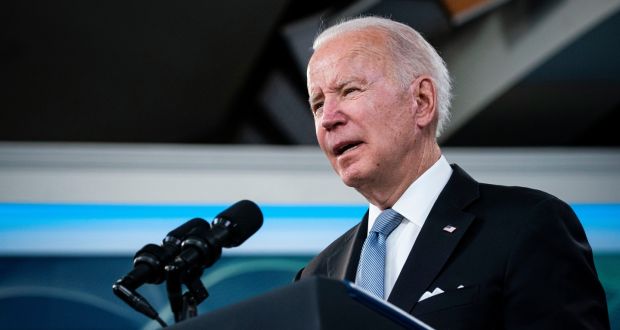
President Joe Biden has moved to freeze about $7bn in assets held in US financial institutions by the Afghan central bank in the wake of the Taliban takeover, as he vowed to direct $3.5bn to humanitarian aid and preserve the rest for families of victims of the September 11 terror attacks. In an executive order signed on Friday, Biden directed “all property and interests in property” of the Afghan central bank in the US to be blocked and transferred to an account at the Federal Reserve Bank of New York, effectively cutting off the Taliban’s access to the US financial system.
The move caps months of uncertainty over the Afghan central bank’s funds in the US. The Biden administration has faced competing pressures to keep humanitarian assistance flowing to the Afghan people while ensuring that court-ordered payouts to families of the victims of the 2001 attacks were honored. “This executive order is designed to provide a path for the funds to reach the people of Afghanistan, while keeping them out of the hands of the Taliban and malicious actors,” the White House said. “The United States has sanctions in place against the Taliban and the Haqqani network, including for activities that threaten the safety of Americans such as holding our citizens hostage.”
Since the US military withdrawal from Afghanistan in August, Washington has been under pressure to find a way to punish the Taliban government economically without closing the door to humanitarian aid. US officials said their plan was to set up a trust fund to manage the distribution of the 3.5 billion USD in funds, which would be separate from the bilateral aid that was already being sent to Afghanistan.
The fact that ex-President Donald Trump says he is still in touch with North Korea’s Kim Jong Un
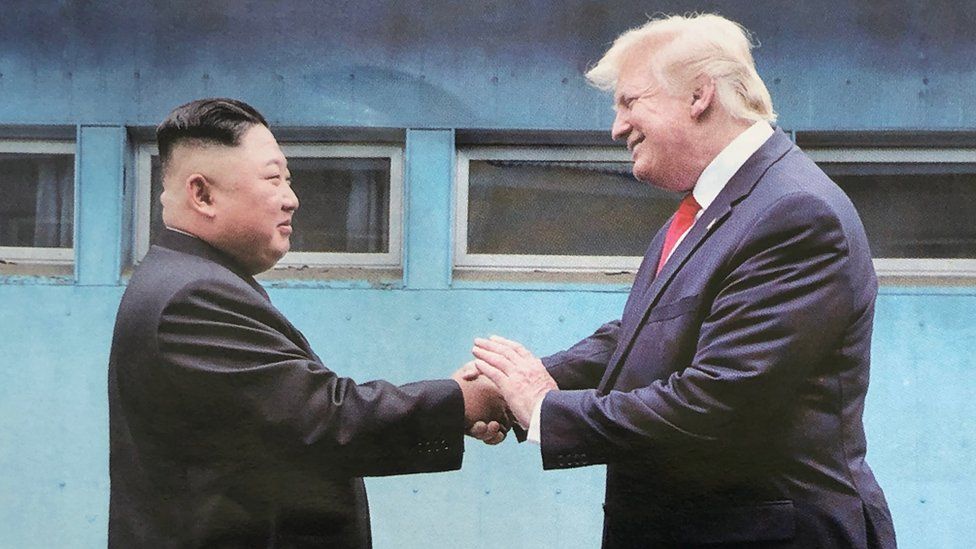
The fact that ex-President Donald Trump says he is still in touch with North Korea’s Kim Jong Un should worry the White House. It’s not unusual for former presidents to maintain some contact with foreign leaders. They will often have private meetings with them when they travel the world. Sometimes, they’ll be briefed by foreign policy or intelligence officials before they head abroad to ensure they stick to the US government's line on critical issues. Ex-presidents, due to their stature, can also be useful conduits for their successors. And in the case of North Korea, Jimmy Carter and Bill Clinton served as envoys during times of crisis. But it is hard to imagine Trump being a positive influence.
The fact that ex-President Donald Trump says he is still in touch with North Korea’s Kim Jong Un should worry the White House. It’s not unusual for former presidents to maintain some contact with foreign leaders. They will often have private meetings with them when they travel the world. Sometimes, they’ll be briefed by foreign policy or intelligence officials before they head abroad to ensure they stick to the US government's line on critical issues. Ex-presidents, due to their stature, can also be useful conduits for their successors. And in the case of North Korea, Jimmy Carter and Bill Clinton served as envoys during times of crisis. But it is hard to imagine Trump being a positive influence.
New York Times reporter Maggie Haberman revealed in an interview with CNN that Trump had been telling people he is still in touch with Kim — though what Trump says is happening is not always true. Still, continued contact would be consistent with the ex-President’s friendship with one of the world’s worst dictators after Trump said they “fell in love” when he was in office. All that affection and three meetings in person, however, did nothing to convince Kim to stand down his nuclear and missile programs. The problem for the Biden administration is that Trump could undermine US diplomacy toward North Korea if the US ever gets talks off the ground.
The ex-President has a history of using his power for his own personal ends rather than the country’s — for example, in the attempt to extort Ukraine to announce an investigation into then-Democratic candidate Joe Biden — that led to his first impeachment. It is easy to imagine Trump working to ruin any diplomacy that might give Biden a foreign policy win, especially if the Republican is running for president again in 2024. American citizens are forbidden from conducting personal diplomacy with foreign powers without government permission under a law known as the Logan Act. But the law is rarely an impediment to Trump when he’s got his own interests in mind.
Stay up to date
More Newsletter to Check



SUBSCRIBE TO NEWSLETTER
Subscribe to download our daily economics and business roundup


×
![]()