
Geopolitical conflict usually gives way to stagflation

Geopolitical conflict usually gives way to stagflation
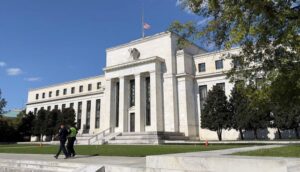
Federal Reserve warns of growing geopolitical risks to global financial system. The second aspect was Chair Powell noting that the Fed was “proceeding carefully” and that conditions had tightened significantly. He went one step further, highlighting that there was “evidence of persistently above-trend growth” and that existing policy was not “too restrictive”. This encouraged a bull steepening moment in U.S. Treasuries as the 30-year note rose 12bps and the 2-year note rallied 6bps. This gave way to the sharpest 2s10s steepening since the March banking stress. Most U.S. Treasury tenors rose above 5.0% this week. With the exception of the 10-year note, broader softness in global equities was a notable theme and the VIX traded above 20, just as oil and gold advanced 3% over the week. The overwhelming takeaway is that monetary policy is yet to lift sentiment as supply remains large and policy responses have been humble. Country Garden’s default is another example of that.
However, Chinese data through September and October has been more upbeat and the IMF only cut GDP to 5.0% from 5.2% with 2024 GDP forecast to land at 4.2%. Elsewhere, the Bank of Japan announced that it would intervene in the domestic bond market once again, U.K. CPI remained steady at 6.7% as disinflationary trends were notably absent, and U.S. data remains strong. U.S. retail sales were so strong in September (0.7%) that even August was revised higher. The conflict in Israel remains the U.S. is still without a House speaker and the President is looking to socialize significant aid to both Israel and Ukraine.
The ECB’s Stournaras remarked that the Middle East turmoil shifted the balance against any further tightening as “we are in the dark” where “it is better to keep all of our options open”. Indeed, Iran suggested an oil embargo on Israel, serving as a reminder of the 1973 oil embargo, which was 50 years ago this week. Poland’s pro-European party ended eight years of populist governing after tense elections, although we are yet to see the full stripes of the coalition as developments remain fluid. Nigeria quietly devalued its naira with the NAFEX rate some 6% over the week. Ecuador’s Daniel Noboa pipped Rafael Correa with 52% of votes and will become Ecuador’s new President.
However, the most striking headlines saw OFAC dial-back sanctions on Venezuela by allowing formerly banned opposition candidates to run in the 2024 election. This freed up the trading of Venezuelan and PDVSA bonds, which rallied materially. Ghana’s Ministry of Finance also began pushing for a higher haircut in the latest round of restructuring talks, in the order of 30-40%. Sri Lanka pushed back on a bondholder committee advancing the idea of a macro-linked bond that is tied to contingent on dollar GDP in 2026 and 2027 with coupons that would step-up and step-down. This is a clever idea and a more symmetrical approach to Ukraine’s GDP warrants. The onus is now on the Paris Club and the Official Creditor Committee to speed up talks with the Sri Lankan government. Meanwhile, Guatemala’s President-elect Arevalo from the Seed Movement Party temporarily suspended the political transition after recent protests. The center-left candidate won by a landslide (almost 60%) in a fairly peaceful election as a result of civil unrest. Finally, the S&P revised Chile’s outlook to negative on weaker political consensus.
China imposes export curbs on graphite
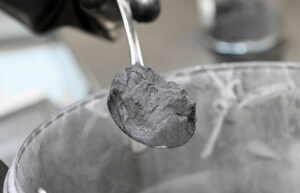
Restrictions on critical electric vehicle battery material set to escalate trade tensions with US. China has imposed export controls on graphite, a material used in electric vehicle batteries, as Beijing hits back at US-led restrictions on technology sales to Chinese companies. China, which dominates global supply chains for the mineral, will require special export permits for three grades of graphite. The new export controls, which China said were introduced on “national security” grounds, are set to escalate geopolitical tensions between Beijing and Washington and its allies over tech supply chains. They also underline China’s dominance of global supplies of dozens of critical resources.
Graphite for batteries can be produced either from mined material, which is called “natural” material, or in a “synthetic” process using petroleum feedstocks, which helps the cell charge quicker and last longer but is more expensive to produce. China is by far the biggest processor of natural graphite and generated almost 70% of the world’s synthetic graphite last year, according to Benchmark Mineral Intelligence, making it one of the critical materials where Beijing has the tightest stranglehold. The move comes days after US president Joe Biden’s administration tightened controls on exports of cutting-edge artificial intelligence chips to China. Beijing criticised Washington for the controls. The Chinese commerce ministry on Wednesday said the “US constantly overstretches the concept of national security, abuses export control measures and turns to unilateral bullying acts, which China is strongly dissatisfied with and firmly objects to”.
In July Beijing announced similar restrictions on gallium and germanium, metals used in a number of strategic industries including electric vehicles, microchips and some military weapons systems. The government also cited national security concerns. However, those export restrictions are yet to significantly disrupt supply for non-Chinese manufacturers since they typically hold stockpiles. Graphite is the most common material used in the anode side of lithium-ion batteries because of its relatively low cost, high energy density and stable structure.

Europe’s biggest money managers bet ECB rates haven’t hit a peak
Some of the biggest money managers in Europe say traders are wrong to bet the European Central Bank is done hiking interest rates. As a net energy importer, the region is particularly exposed to rising prices if the crisis in the Middle East escalates, and markets are underestimating the possibility of additional tightening in response. That leaves short-maturity government bonds particularly vulnerable. The view clashes with swaps pricing that shows a pause from the ECB virtually baked in this week — and only a 10% chance of a 25 basis-point hike at a subsequent meeting. In the US, swaps show a 40% chance of another quarter-point hike from the Federal Reserve.
It is worth mentioning that Europe is of greater vulnerability here than any other developed-market bloc, which has 1.3 trillion EUR (1.6 trillion USD) in assets under management. The ECB is the central bank that could feel the need to overshoot. At the same time, ECB President Christine Lagarde and colleagues would need to weigh the economic impact of a hike carefully, even if energy prices extend their climb. Italy’s debt load makes the EU’s third-biggest economy especially fragile in the face of tighter policy.
Fears of a wider conflagration since Hamas’s Oct. 7 attack on Israel have sent Brent crude up more than 10%. Disruptions to key shipping routes like the Panama Canal and extreme weather playing havoc with the supply of food staples are adding to the factors that could keep European inflation prints hot. The ECB’s single mandate of price stability also makes Europe’s policy makers more likely to hike in the face of rising energy costs. Their counterparts in the Fed are charged with promoting maximum employment as well keeping prices under control.
One of the arguments in favor of a pause in hikes is Italy’s fiscal situation, which deteriorated as growth faltered. Additional tightening would weigh on activity and could push the nation’s risk premium even higher, risking a debt crisis. ECB Governing Council member Gabriel Makhlouf said earlier this month Italy’s bond-yield spread over peers is “absolutely something” officials “will be very focused on.” The gap between Italy and Germany’s 10-year bond yields recently breached 200 basis points, a widely watched level. With the euro-area economy already struggling and BTP-Bund spreads having widened sharply, the ECB is probably much closer to its pain threshold than the Fed. They predict the ECB’s rates are at their peak.
Javier Milei enters the first round of pivotal Argentina elections on Sunday as the favorite

The first round of Argentina’s Presidential Election will take place on Sunday with a potential runoff between the two leading candidates scheduled for November 19th. Javier Milei, a libertarian anti-establishment candidate whose ideas on economic policy are considered radical by some observers, enters the race as the favorite, having delivered significant outperformance (30% support vs. polls <20%) in the August Primary Elections. Right-leaning Patricia Bullrich from the opposition JxC and current Finance Minister Sergio Massa from the left-wing ruling coalition are engaged in a severe battle for second place and a spot in a potential runoff in November.
Amid a very challenging macroeconomic environment, rampant inflation and dwindling living standards, Javier Milei, a political outsider with some radical economic policy ideas, appears to be in a great position to capitalize on voters’ discontent. Polls in Argentina tend to be unreliable, but an outright Milei victory in the first round on Sunday seems to be in the realm of possibility, albeit unlikely. The most likely scenario appears to be a second round run off in November between Milei and Massa, which according to most political experts in Argentina, should be an easy one for Mr. Milei to win given Mr. Massa’s association with the current economic environment and potential coalition-building scenarios between the first and second round that are expected to favor Milei.
If market-friendly candidate Patrica Bullrich makes it to the second round, the runoff is likely to be far more competitive and likely to be seen as the most constructive outcome for the Argentine sovereign bond complex. On the flip side, an outright Milei victory on Sunday could be interpreted by investors as the most disruptive scenario, given that it would likely catalyze a long period of potential significant economic volatility during the coexistence of the weak outgoing Administration and a firebrand incoming President on a mission to dismantle traditional economic institutions.
Some of Milei’s main proposals on economic policy, such as abolishing the Central Bank and dollarizing the economy, are shrouded in uncertainty around implementation challenges amid lack of congressional support for Milei and possible social and economic repercussions. From that perspective, the distribution of seats in congress after Sunday’s legislative elections will also be a key signpost for markets as the implementation of Milei’s economic agenda, in the event he becomes Argentina’s next president, will hinge heavily on his ability to construct legislative support.
Emergency convoy reaches Gaza, Israel says it will intensify strikes
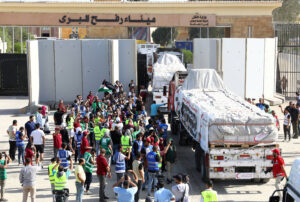
A long-awaited convoy of trucks carrying humanitarian aid crossed into southern Gaza on Saturday for the first time since Israel began a devastating siege 12 days ago, as Israel's military pounded northern Gaza and warned it would increase its attacks.
U.S. President Joe Biden cheered the arrival of the aid after days of intense negotiations and said the United States was committed to ensuring more assistance would enter via southern Gaza Strip's Rafah border point with Egypt. Twenty flatbed trucks, flying white flags and honking their horns, exited the crossing after checks and headed into Gaza's southern area which includes the major towns of Rafah and Khan Younis where hundreds of thousands of people made homeless by Israel's unrelenting air war are sheltering.
Israel's "total siege" of Gaza, launched after the Oct. 7 cross-border attack on southern Israel by militants of the Islamist movement Hamas, has left the enclave's 2.3 million people running out of food, water, medicines and fuel. Palestinian officials were disappointed that fuel supplies were not included in the consignment of food, water and medical supplies and added that the aid was only 3% of what used to get into Gaza before the crisis. "Excluding the fuel from the humanitarian aid means the lives of patients and injured will remain at risk. Gaza hospitals are running out of the basic requirements to pursue medical interventions," the Gaza health ministry said.
The United Nations said the convoy included life-saving supplies would be received and distributed by the Palestinian Red Crescent, with the consent of Hamas, which rules Gaza. U.S. Secretary of State Antony Blinken welcomed the opening but echoed a warning from Israel that no aid should end up in Hamas hands. "We have been clear: Hamas must not interfere with the provision of this life-saving assistance," Blinken said in a statement. U.N. officials say at least 100 trucks daily are needed and that any aid operation must be sustainable at scale - a tall order with Israel carrying out bombardments day and night that have wrecked entire populated districts. Before the outbreak of conflict, an average of about 450 aid trucks were arriving daily in Gaza.
Diplomacy to secure a ceasefire has been fruitless so far. Arab leaders at a hastily convened Cairo summit on Saturday condemned the Israeli bombardment of Gaza as Europeans said civilians should be shielded, but with Israel and senior U.S. officials absent there was no agreement on containing the violence. Israel had kept up air strikes on targets around Gaza in Saturday's early hours after Prime Minister Benjamin Netanyahu vowed to "fight until victory" following the release of the first two hostages by Hamas. Israeli military spokesperson Rear Admiral Daniel Hagari warned the strikes would intensify in the north, and called on Gazans to move south to get out of harm's way. "For your own safety move southward, we will continue to attack in the area of Gaza City and increase attacks," Hagari said in a briefing to Israeli reporters.
Stay up to date
More Newsletter to Check



SUBSCRIBE TO NEWSLETTER
Subscribe to download our daily economics and business roundup


×
![]()