
GE: Iran war drives biggest US inflation jump in four years as consumer sentiment hits record low

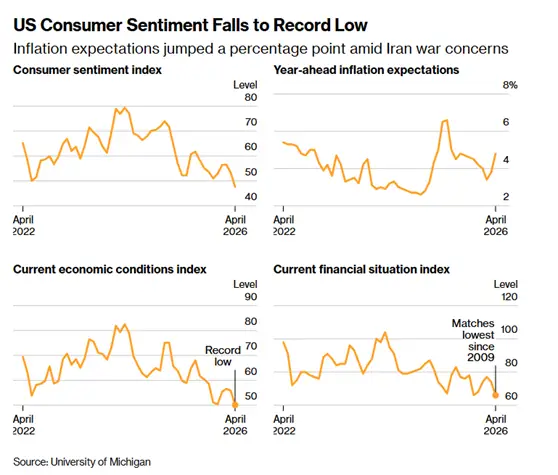
Iran war drives biggest US inflation jump in four years as consumer sentiment hits record low.
The Iran war has pushed US consumer prices up 0.9% in March the largest monthly surge since 2022 with record gasoline prices accounting for nearly three quarters of the increase, according to Bureau of Labor Statistics data. Americans' perceptions of their financial situation have deteriorated to levels not seen since 2009, per the University of Michigan. Economists warn the damage will persist for months regardless of the ceasefire, with gasoline prices expected to remain above prewar levels through year end, fertiliser disruptions set to filter through to grocery bills, and rising transportation costs pressuring consumer goods broadly. The Federal Reserve is expected to remain on hold, with Citigroup economists noting that persistent underlying inflation leaves officials little room to cut rates in the near term.
Strait of Hormuz remains effectively shut as only Iran linked vessels transit despite ceasefire.
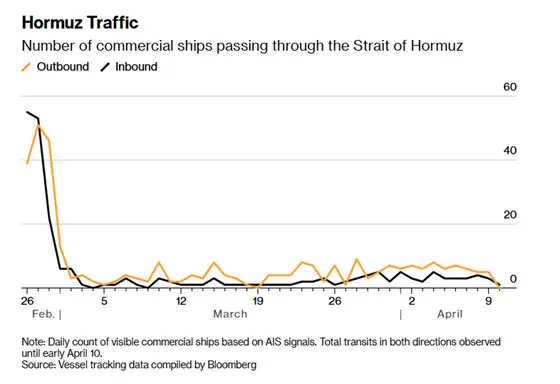
Despite the two week ceasefire, the Strait of Hormuz remains effectively closed to commercial shipping, with just nine ships observed transiting since Thursday morning the majority Iran linked vessels including a Suezmax tanker hauling Iranian crude and a Russian flagged supertanker heading toward Iran's Kharg Island export terminal. Trump publicly rebuked Iran on Truth Social, stating the resumption of flows was a condition of the ceasefire agreement, and warned against any attempt to charge fees on passing tankers. Iran has maintained that talks are invalidated by continued Israeli strikes on Lebanon. Adding to the pressure, Saudi Arabia confirmed that a series of Iranian attacks on its energy infrastructure including production, refining, petrochemicals, and the East West pipeline disrupted oil and gas supply. Several fully laden supertankers have moved toward the strait but none have crossed out of the Gulf, with analysts expressing low expectations for a realistic restart of Hormuz transit in the near term.
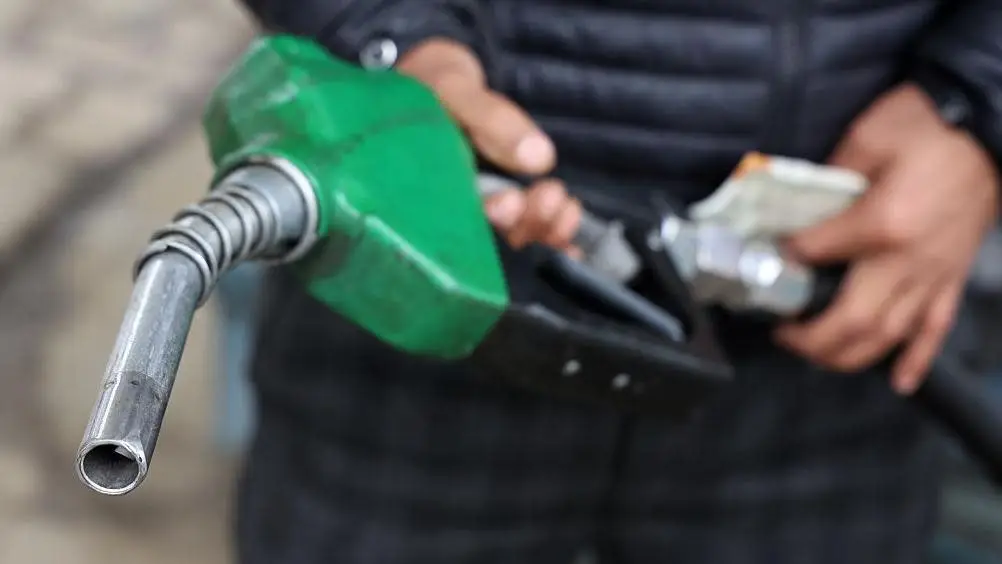
Oil tops $100 as markets weigh US blockade threat against Iran but full escalation far from certain.
Brent crude crossed $100 a barrel on Monday, but the modest advance suggests markets are not yet pricing in a full and sustained blockade of Iranian oil flows. Analysts note significant unanswered questions around what a blockade would look like in practice whether the US would interdict vessels or take more aggressive action and whether Washington has sufficient hardware in the region to simultaneously prosecute a war with Iran and enforce a naval blockade. Perhaps most critically, there is scepticism over whether the US is genuinely willing to take steps that would drive oil prices materially higher at a time when domestic inflation is already at multi year highs.
EU warns of stagflationary shock as European Commission prepares to cut growth forecasts.

The European Commission is preparing to downgrade its 2026 EU growth forecast despite the US Iran ceasefire, with Economy Commissioner Valdis Dombrovskis warning that Europe faces a "stagflationary shock" of slowing growth and rising inflation. Commission scenarios estimate growth could slow by up to 0.4 percentage points this year if energy prices normalise by year end, or by 0.6 percentage points both this year and next if the energy shock persists with inflation rising by up to 1.5 percentage points in the latter scenario. The updated official forecast will be published in May. Complicating the outlook, Iran is reported to be demanding cryptocurrency toll payments from shipping companies for Strait of Hormuz transit, raising doubts over whether oil and gas prices will sustainably decline. Dombrovskis also cautioned member states against turning the energy crunch into a fiscal crisis, warning that fiscal space is limited and measures must remain temporary and targeted a signal that Italy's hopes of exiting the EU's excessive deficit procedure this year are unlikely to materialise.

الحرب الإيرانية تتسبب في أكبر قفزة تضخمية في الولايات المتحدة منذ أربع سنوات، مع انخفاض ثقة المستهلكين إلى مستوى
.قياسي دفعت الحرب الإيرانية أسعار المستهلكين في الولايات المتحدة إلى الارتفاع بنسبة 0.9% في مارس، وهو أكبر ارتفاع شهري منذ عام 2022، حيث شكلت أسعار البنزين القياسية ما يقرب من ثلاثة أرباع هذه الزيادة، وفقًا لبيانات مكتب إحصاءات العمل. وتدهورت نظرة الأمريكيين إلى أوضاعهم المالية إلى مستويات لم يشهدوها منذ عام 2009، بحسب جامعة ميشيغان. ويحذر الاقتصاديون من أن الضرر سيستمر لأشهر بغض النظر عن وقف إطلاق النار، حيث من المتوقع أن تبقى أسعار البنزين أعلى من مستويات ما قبل الحرب حتى نهاية العام، وأن تؤثر اضطرابات إنتاج الأسمدة على فواتير البقالة، وأن يؤدي ارتفاع تكاليف النقل إلى الضغط على أسعار السلع الاستهلاكية بشكل عام. ومن المتوقع أن يُبقي الاحتياطي الفيدرالي على سياسته النقدية دون تغيير، حيث أشار اقتصاديون في سيتي غروب إلى أن استمرار التضخم الأساسي لا يترك للمسؤولين مجالًا كبيرًا لخفض أسعار الفائدة على المدى القريب.
لا يزال مضيق هرمز مغلقًا فعليًا، حيث لا تعبره سوى السفن المرتبطة بإيران، على الرغم من وقف إطلاق النار.
على الرغم من وقف إطلاق النار الذي استمر أسبوعين، لا يزال مضيق هرمز مغلقًا فعليًا أمام الملاحة التجارية، إذ لم يُرصد سوى تسع سفن تعبره منذ صباح الخميس، معظمها سفن مرتبطة بإيران، بما في ذلك ناقلة نفط من طراز سويزماكس تحمل نفطًا خامًا إيرانيًا، وناقلة نفط عملاقة ترفع العلم الروسي متجهة إلى ميناء خارك الإيراني للتصدير. وقد انتقد ترامب إيران علنًا على منصة "تروث سوشيال"، مصرحًا بأن استئناف حركة الملاحة كان شرطًا من شروط اتفاق وقف إطلاق النار، وحذر من أي محاولة لفرض رسوم على ناقلات النفط العابرة. وتؤكد إيران أن استمرار الغارات الإسرائيلية على لبنان يُبطل المفاوضات. ومما زاد الضغط، أكدت السعودية أن سلسلة من الهجمات الإيرانية على بنيتها التحتية للطاقة، بما في ذلك الإنتاج والتكرير والبتروكيماويات وخط أنابيب الشرق والغرب، قد عطلت إمدادات النفط والغاز. وقد تحركت عدة ناقلات نفط عملاقة محملة بالكامل نحو المضيق، لكن لم تعبر أي منها من الخليج، ويعرب المحللون عن توقعات ضعيفة بشأن استئناف واقعي لعبور هرمز في المدى القريب.
النفط يتجاوز 100 دولار مع ترقب الأسواق لتهديد الحصار الأمريكي لإيران، لكن التصعيد الكامل غير مؤكد.
تجاوز سعر خام برنت 100 دولار للبرميل يوم الاثنين، إلا أن هذا الارتفاع الطفيف يشير إلى أن الأسواق لم تستوعب بعدُ فرض حصار كامل ومستدام على تدفقات النفط الإيراني. ويشير المحللون إلى وجود تساؤلات هامة لم تُجب عليها بعد حول شكل الحصار عمليًا، وما إذا كانت الولايات المتحدة ستعترض السفن أو ستتخذ إجراءات أكثر عدوانية، وما إذا كانت واشنطن تمتلك ما يكفي من المعدات في المنطقة لشن حرب على إيران وفرض حصار بحري في آن واحد. ولعل الأهم من ذلك، هو وجود شكوك حول ما إذا كانت الولايات المتحدة مستعدة حقًا لاتخاذ خطوات من شأنها أن ترفع أسعار النفط بشكل ملحوظ في وقت وصل فيه التضخم المحلي إلى أعلى مستوياته منذ سنوات.
الاتحاد الأوروبي يحذر من صدمة ركود تضخمي مع استعداد المفوضية الأوروبية لخفض توقعات النمو.
تستعد المفوضية الأوروبية لخفض توقعاتها لنمو الاتحاد الأوروبي لعام 2026 على الرغم من وقف إطلاق النار بين الولايات المتحدة وإيران، حيث حذر مفوض الاقتصاد فالديس دومبروفسكيس من أن أوروبا تواجه "صدمة ركود تضخمي" تتمثل في تباطؤ النمو وارتفاع التضخم. تشير توقعات المفوضية إلى احتمال تباطؤ النمو بنسبة تصل إلى 0.4 نقطة مئوية هذا العام في حال عودة أسعار الطاقة إلى وضعها الطبيعي بحلول نهاية العام، أو بنسبة 0.6 نقطة مئوية هذا العام والعام المقبل على حد سواء في حال استمرار أزمة الطاقة مع ارتفاع التضخم بنسبة تصل إلى 1.5 نقطة مئوية في السيناريو الأخير. وسيتم نشر التوقعات الرسمية المحدثة في مايو. ومما يزيد الوضع تعقيداً، تشير التقارير إلى أن إيران تطالب شركات الشحن بدفع رسوم عبور مضيق هرمز بالعملات المشفرة، مما يثير الشكوك حول استدامة انخفاض أسعار النفط والغاز. كما حذر دومبروفسكيس الدول الأعضاء من تحويل أزمة الطاقة إلى أزمة مالية، محذراً من محدودية الحيز المالي وضرورة أن تظل التدابير مؤقتة، في إشارة إلى أن آمال إيطاليا في الخروج من إجراءات العجز المفرط في الاتحاد الأوروبي هذا العام من غير المرجح أن تتحقق. "في كل تحدٍ تكمن بذرة فرصة جديدة."
Stay up to date
More Newsletter to Check



SUBSCRIBE TO NEWSLETTER
Subscribe to download our daily economics and business roundup


×
![]()