
Fears of wider Middle East conflict cast shadow over global economy


Fears of wider Middle East conflict cast shadow over global economy
Risk of rising oil prices and hit to confidence threaten to undermine this year’s gains. The spectre of a wider conflict in the Middle East poses a fresh threat to the global economy just as the world emerges from shocks triggered by Covid-19 and the Ukraine war. Broader regional tensions would have significant economic ramifications, according to the meetings of the IMF and World Bank in Morocco this week. The biannual events took place as Israel declared war on Hamas and launched a major bombardment of the Gaza Strip. “If we are facing any escalation or extension of the conflict to the whole region we will face big consequences,” Bruno Le Maire, France’s finance minister, adding that risks ranged from higher energy prices stirring inflation, to a decline in confidence.
Kristalina Georgieva, the head of the IMF, warned of a “new cloud on not the sunniest horizon for the global economy”, encapsulating fears among the delegates in Marrakech that the medium-term prospects for the global economy are lukewarm. On the other side of the Atlantic, Jamie Dimon, chief executive of JPMorgan, called this “the most dangerous time the world has seen in decades”.
The key economic danger following the events of October 7, officials argued, was an escalation of fighting in Israel and Gaza into a wider regional conflict. This could not only hit confidence, but add a fresh inflationary outburst to economies that are only beginning to recover from a series of price shocks. The IMF believes a 10% rise in oil prices would raise global inflation by about 0.4 percentage points. Gita Gopinath, deputy head of the IMF, said the world was facing “a large number of shocks” including the Middle East conflict and its potential implications for energy prices.
Gopinath added: “Debt levels are at record levels and at the same time we are in this higher-for-longer interest [rate] environment. There is a lot . . . that could go wrong.” Paschal Donohoe, the head of the Eurogroup, told the Financial Times that the big economic question was over whether the conflict would have an impact on inflation expectations, and what that could mean for getting price pressures down in 2024. Europe will continue to grow as the conflict continues, he predicted, but at a lower pace than he had hoped for.
Janet Yellen, the US Treasury secretary, said she was sticking with her soft landing call, telling reporters this week she does not expect the conflict to be a “major likely driver of the global economic outlook”. But officials stressed the conflict came at a time when the world economy was in a fragile state. The global economy is now widely expected to grow at a relatively weak level over the medium term, coming in at just 3.1% in 2028. That compares with a five-year outlook of 3.6% growth just before the pandemic, and 4.9% before the onset of the financial crisis. More than 80% of economies are now facing worse prospects from 15 years ago, according to the fund, for reasons varying from slower productivity to a slowdown in population growth.
Israel-Hamas war tests China’s Middle East ambitions

Turmoil will show whether Beijing can turn its economic clout and relationship with Iran into regional influence. The crisis in the Middle East triggered by Hamas’s attack on Israel is becoming a big test of China’s ambitions to build influence in a region traditionally dominated by the US. Washington remains overwhelmingly the strongest military power in the Middle East and demonstrated its might by dispatching two carrier strike groups after the attack. It is also the main diplomatic player in the region, despite Arab concerns that it has been disengaging, and as Israel’s main ally it has leverage over the Jewish state.
But China’s economic role has grown rapidly and it now trades more than the US with most regional countries. Beijing is also on good terms with almost all of them, including Iran — the backer of Hamas and Lebanon’s Hizbollah — prompting hopes it can use this influence to prevent a regional conflagration. During a call with China’s foreign minister Wang Yi on Saturday, US secretary of state Antony Blinken discussed “stability in the region and discouraging other parties from entering the conflict”.
In recent years, Beijing has begun trying to extend its political sway in the Middle East as part of President Xi Jinping’s vision for Chinese leadership of the “Global South” of emerging and non-aligned countries. Beijing was instrumental in bringing four Middle Eastern countries — Egypt, Iran, Saudi Arabia and the United Arab Emirates — into the Brics grouping of emerging nations this year. It also brokered a detente between Saudi Arabia and Iran in March, a diplomatic first for China. Xi followed this up in June with an offer to help Palestinian president Mahmoud Abbas promote peace talks with Israel.
The question now is how these nascent ambitions will weather the instability brought by the Israel-Hamas conflict. When Hamas unleashed its assault, Beijing struck a neutral tone that angered many Israelis and western countries, blandly calling for both sides to “remain calm” and failing to condemn the Palestinian faction’s actions. It’s true that China can negotiate something between Saudi Arabia and Iran, but that’s not creating any great confidence on the Israeli side. While China has been a supporter of the Palestinian cause since the era of Mao Zedong, it has also, since the 1980s, built up friendly economic ties with Israel. The conflict with Hamas had returned China’s pro-Palestinian leanings to the fore, analysts said, with Chinese state media articles accusing the US of fuelling the crisis. This has sparked frustration among some Israeli academics.

The US may no longer avoid a recession
The economy is likely to weaken as markets internalise the significant likelihood that rates will stay higher for longer. An intense period of rising interest rates, high oil prices and a stronger dollar is pushing the financial market consensus on US economic growth away from the comforting notion of a soft landing. This will be the sixth time in the past 15 months that conventional wisdom shifts for the world’s most influential economy. It is a pivot that, unfortunately, is likely to stick for longer this time around, threatening what has been an impressively strong US economy, undermining genuine financial stability and exporting volatility to the rest of the world.
In just the last two weeks, the yield on the benchmark US 10-year bond has risen by some 0.5 percentage points to around 4.8% as part of a comprehensive shift in the entire interest rate structure. The move brought the change in yields to an eye-popping 1 percentage point since the end of June, leading to higher borrowing rates for companies, more burdensome car loans for households, and more pronounced and uneven deposit outflows from the banking system as investors shift cash into money market accounts. And notably, the cost of a 30-year mortgage is about to top 8 per cent, making already expensive home purchases even less affordable. The international spillovers from this shift include more costly and less reliable financing and, for Japan, a more complicated exit from an increasingly unsustainable monetary policy regime with knock-on effects for the US.
Pushing yields up in an increasingly disorderly manner is the combination of markets recognising that the higher policy rates set by the Federal Reserve will be here for a while, and the need to absorb a significant supply of Treasury bonds due to large budgetary deficits. Adding fuel to this fire are high prices for oil amid solid demand, continued production cuts by Opec+ and heavily depleted inventories. There is a material risk of this leading to higher inflation for a broader range of goods and services. These are developments that the economy and markets do not enjoy. They damp growth and increase the threat of stagflation. Financial stability risks are raised with interest rate mismatches within certain banks, the refinancing needs of other financial sector participants, and the risk of credit dislocations.
While markets are adjusting fast to higher rates, that of the real economy is at a much earlier phase with now a much bumpier road ahead. For well over a year now, we have argued that the US is able to avoid the 2023 recession that many were repeatedly calling. We are now less confident about what’s in store for 2024 given how the recent surge in rates compounds the erosion in financial, human and institutional resilience. Our confidence is also shaken by a Federal Reserve that is yet to realise that its forward policy guidance — as well as its monetary policy framework and the way officials communicate the appropriate inflation target — need to be rapidly adapted to the reality of a changed economic paradigm.
Indeed, the world’s most influential central bank has yet to sufficiently embrace the fundamental change in the basic characterisation of the economy from a world of insufficient demand to one in which the supply sector is a lot less flexible for several years. The longer the Fed takes to adjust, the greater the risk to economic wellbeing. Last year was about markets adjusting to central banks playing catch-up with adverse inflation realities. This year is about markets internalising the significant likelihood that rates will stay higher for longer, adding to the contractionary impetus in the pipeline. After all, as a Fed governor rightly said last week, “the most important question at this point is not whether an additional rate increase is needed this year or not, but rather how long we will need to hold rates at a sufficiently restrictive level to achieve our goals”.
Europe should not copy Bidenomics
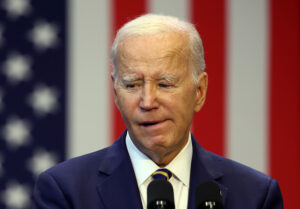
It needs a deeper, greener single market—not more state handouts. It is not hard to see why Europe feels the urge to copy President Joe Biden’s economic policies. The loss of cheap Russian fossil fuels has made the clean-energy transition feel like a matter of national security. Germany, Europe’s biggest economy, fears its automotive industry will lose market share to state-subsidised electric carmakers in China and America. And the euro zone’s economy is increasingly falling behind America’s. As we report, the worst-suffering European economies are grappling with inflation of over 10%, rapid ageing, high public and private debts and exposure to autocracies. This week the IMF said the euro-zone economy would grow by only 0.7% in 2023. It expects America to grow three times as fast.
Europeans increasingly see Biden-style industrial policy as the answer. The eu has loosened state-aid rules that restrict subsidised investment, and aims to set targets for the bloc’s production of green goods. France and Germany are at loggerheads over how to subsidise electricity for industrial users. Britain’s Labour Party, which will probably form its next government in 2024, also aims to spend lavishly on industry. Yet copying Bidenomics is a mistake. As in America, luring manufacturing with subsidies will waste money and, over time, encourage firms to compete for subsidies rather than customers. And though it is true that France, whose dirigiste economic philosophy is in the ascendant in Brussels, has had some successes with industrial policy, the web of institutions and norms that restrain the excesses of French interventionism are difficult to copy—just as Germany’s economic model could not be transplanted elsewhere when it was held up as a paragon.
Europe’s recent experiences are in fact a case study of the power of markets. After Russia invaded Ukraine, German industry claimed that the loss of Russian gas would cause an economic catastrophe. Instead, industrial production held up as firms quickly adapted. Unlike America, the EU already has a uniform carbon-price mechanism in place. After a rocky start in the 2000s the emissions-trading scheme has in recent years become the gold standard for carbon pricing, incentivizing the private sector to find the most efficient ways to cut emissions.
The best policies for Europe would build on its past market-friendly approach. The EU should foster a common and contested green single market—including services and capital—which means restraining state aid. It should let the carbon price for new sectors increase faster than planned, and get serious about a climate dividend for citizens. And it should trade freely with allies so that the vast tasks of decarbonisation, de-risking sensitive supply chains and boosting defence can be undertaken at the lowest cost. The EU would be neither more secure nor richer if it had national champions producing 27 different types of tank.
To boost growth, new government spending should focus on infrastructure, not handouts. Germany should fix a railway system that has rotted to the point of collapse. France should stop blocking interconnectors that could channel solar power from sunny Spain to the rest of Europe. And governments could write procurement rules that insist on greenery or security but which respect the single market and the principles of free trade.
It might be tempting for Europeans to think that if America is protectionist, everyone else must follow suit or be left in the dust. Actually, America’s long-running economic advantage over the rest of the world stems from the fact that it has been more committed to markets, not less. That makes its recent turn towards statism an aberration rather than an example to follow.
Stay up to date
More Newsletter to Check


SUBSCRIBE TO NEWSLETTER
Subscribe to download our daily economics and business roundup


×
![]()