
Escalating Inflation Challenges Egypt’s Economy as Inflation Records a Record High of 38.2%

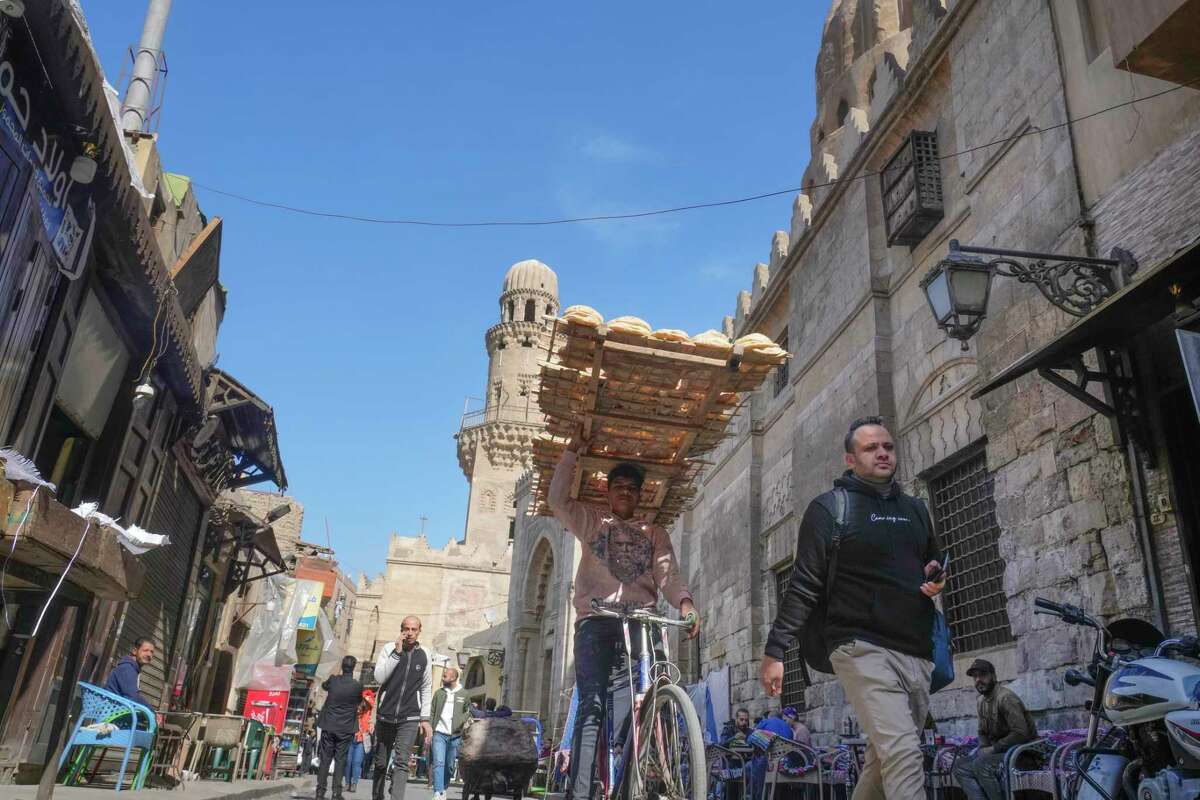
Escalating Inflation Challenges Egypt’s Economy as Inflation Records a Record High of 38.2% Egypt’s economy sees annual inflation rates reaching a record high in July, with consumer prices soaring by 38.2% year-on-year, driven by a remarkable 68.2% increase in average food and beverage costs. This surge in prices has hit working-class households particularly. Global factors, including Russia’s withdrawal from a grain agreement with Ukraine, have contributed to Egypt’s challenges as the world’s largest wheat importer. The devaluation of the Egyptian pound, amplified by economic reforms following a substantial IMF bailout, has further intensified the issue. Amid these difficulties, the depreciation of the Egyptian pound has had both negative and positive effects. While it has significantly raised the cost of imported goods priced in U.S. dollars, it has also made Egyptian products more competitively priced on the global market. The central bank has responded by increasing its main interest rates, as seen in the recent rise in the overnight deposit rate from 18.25% to 19.75%. Even before these recent challenges. (Reuters)
- Weakening of Egypt's currency to raise debt-to-GDP ratio to 95.6% in 2022/23.
The weakening of the Egyptian currency against the U.S. dollar is expected to increase the debt-to-GDP ratio to 95.6% for the financial year 2022/23, the finance ministry said in a statement on Thursday. The minister stated that the decline in the value of the Egyptian pound against the dollar led to an increase in the value of government debt by EGP 1.3 trillion, or 13.1% of GDP. (Reuters)
- Egypt and France Sign Health Sector Partnership to develop a Cancer Institute and Exchange Expertise.
Prime Minister Mostafa Madbouly and Minister of Health and Population Khaled Abdel-Ghaffar presided over a momentous signing ceremony that witnessed a collaboration between the two nations. The memorandum of understanding (MoU) encompasses a series of transformative agreements poised to reshape the medical landscape. Notably, the conversion of Cairo's Dar El Salam-Hermel Cancer Center into a branch of France's esteemed institute promises to infuse advanced medical expertise into Egypt's healthcare sector. Also, strategic plans include the establishment and management of specialized hospitals and medical centers, infusing the sector with investments and expanding the private sector's influence within Egypt's market. This dynamic partnership resonates with the nation's commitment to elevate the healthcare sector, aligning it with the nation's 2030 vision. By prioritizing quality enhancements, fostering public-private cooperation, and catalyzing collaborative research endeavors, this partnership holds the potential to usher in a new era of medical excellence in Egypt. (Al Ahram)
- Egypt's First Digitally Established Company Signals Investment Innovation.
A groundbreaking moment in Egypt's investment landscape unfolded as the Damietta Green Ammonia Production Company became the country's first digitally established firm. Prime Minister Mostafa Madbouly virtually oversaw this milestone, highlighting its alignment with a unified electronic platform decision made by the General Authority for Investment. This move signifies a leap towards a more streamlined investment environment, enhancing competitiveness and flexibility for potential investors. Attended by key officials including Tarek El Molla and Hossam Heiba, Chairman of GAFI, the event emphasized the transformative impact of the digital establishment process on Egypt's investment climate, offering an efficient and cost-effective alternative to traditional bureaucratic hurdles. (Arab Finance)
- Tourism rebound in Egypt’s Red Sea resort fuels optimism for strong growth.
The shores of Hurghada in Egypt's Red Sea resort are once again abuzz with activity as the country's tourism sector experiences a remarkable revival after years of pandemic-induced slowdown and geopolitical tensions. This resurgence is exceeding expectations, compensating for the industry's previous setbacks due to COVID-19 and the Russia-Ukraine conflict. The Egyptian Ministry of Tourism and Antiquities reported over 7 million visitors during H1 2023, setting the stage for the country's goal of attracting 15 million tourists this year and 30 million by 2028. With tourism contributing around 12% of Egypt's GDP, the industry's rebound is pivotal for economic recovery and growth. (Al Ahram)
- Egypt Inks $4 Billion Green Hydrogen Deal with Ocior Energy for Suez Canal Economic Zone .
The Egyptian government has taken a significant step towards a more sustainable future by signing a preliminary agreement with Indian renewable energy firm Ocior Energy to invest $4 billion in green hydrogen initiatives within the Suez Canal Economic Zone (SCZone). The final contracts for the project are anticipated to be formalized in the coming months. The venture, slated to conclude over a span of six years, is part of Egypt's larger strategy to reduce carbon emissions and expand the use of renewable energy sources in alignment with its National Climate Strategy 2050. The collaboration with Ocior Energy is one of several, as Egypt aims to funnel a projected $500 billion into its hydrogen infrastructure by 2030. Ocior Energy specializes in net-zero green hydrogen solutions, aimed at transforming industries reliant on fossil fuels and curbing emissions across various sectors. (Arab Finance)
- Egypt launches support programme to provide soft loans for irregular labourers
Egypt is launching an expansive initiative to uplift marginalized families by improving their living standards and boosting rural industries, crafts, and heritage. Initially covering six governorates—Giza, Beheira, Fayoum, Sohag, Assiut, and Qena—the program aims to ultimately encompass 16 governorates. Financed by the rural industries fund under the Ministry of Social Solidarity, this effort is part of a larger agreement worth EGP 570 million ($18 million) between the Ministries of Planning and Social Solidarity. The objective is to empower around 30,000 irregular workers and their families, a significant move considering that Egypt's labor market reportedly hosts around 11.8 million irregular workers. In line with previous initiatives, this program reflects Egypt's commitment to supporting vulnerable workers and enhancing their socio-economic status, underpinned by the establishment of an emergency support fund by President Abdel-Fattah El-Sisi. (Al Ahram)
- BYD Reveals Strong Presence and Expansion Plans in Egypt's Automobile Market.
China's renowned vehicle manufacturer BYD has reaffirmed its commitment to Egypt's automobile market, dismissing rumors about its exit. Yeung Jing, BYD's Marketing Manager for Africa and the Middle East, stated that the company has ambitious plans to boost its presence by initiating car manufacturing in Egypt, likely commencing by late 2023 or early 2024. Additionally, the company is set to establish three showrooms, including one in the New Administrative Capital. BYD's focus on environmental sustainability is apparent, with their shift towards electric cars and trains, discontinuing diesel vehicles in 2022. The possibility of exporting electric cars to Egypt is contingent on market demand, according to a company representative. With a history spanning over 20 years, BYD's diverse industrial influence spans electronics, automobiles, new energy solutions, and rail transit. (Arab Finance)
- Egypt's central bank offers $1.35bln T-bills.
The Central Bank of Egypt (CBE) issued treasury bills (T-bills) worth EGP 42 billion through two auctions on Thursday, 10 August, according to official data. The first issue was valued at EGP 18.50 billion and will mature in 182 days on 13 February 2024. With a tenor of 364 days until 13 August next year, the second tranche stood at EGP 23.50 billion. A week ago, the CBE auctioned T-bills at a total value of EGP 43 billion through two offerings. (Mubasher)
- Central Bank of Egypt Drives Financial Inclusion with "Meeza" Card Adoption and Digital Initiatives .
The Central Bank of Egypt (CBE) has taken significant steps to enhance financial inclusion and digital payment adoption. Replacing around 6 million pension cards with the "Meeza" national payment cards, the CBE aims to integrate pensioners into the banking sector and simplify their access to financial services. Additionally, 25 banks have issued 30 million "Meeza" cards, contributing to the expansion of this national brand. The CBE's "InstaPay" system, launched in March 2022, has garnered over 829,000 customers and facilitated more than 4.3 million instant transfer transactions worth EGP 22.4 billion. The growth of mobile wallet accounts to 29 million and a surge in e-government service receipts to EGP 93 billion further underscore Egypt's digital payment evolution. The CBE's initiative to deploy 6,500 ATMs in underserved governorates demonstrates the bank's commitment to bolstering the payment infrastructure throughout the country. (Al Ahram)
Stay up to date
More Newsletter to Check



SUBSCRIBE TO NEWSLETTER
Subscribe to download our daily economics and business roundup


×
![]()