
Egypt’s non-oil private sector activity sees downturn in April

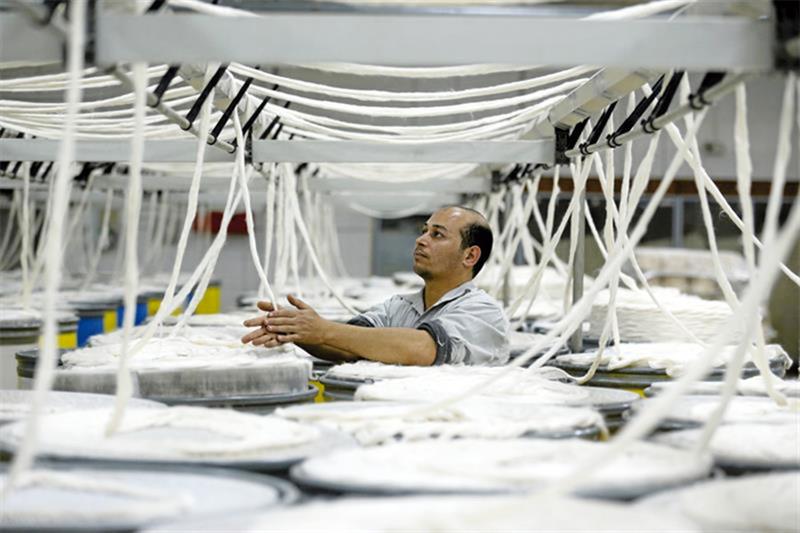
Egypt’s non-oil private sector activity sees downturn in April. Activity in Egypt’s non-oil private sector remained in contraction territory in April as the depreciation of the EGP, high inflation, and import restrictions continued to weigh on inventories. April’s PMI score inched up to 47.3, rising from 46.7 in March. The reading means activity is still shrinking, but is the highest level the PMI has hit since last October. Weak client demand linked to high inflation continued to play a key part in dampening sales. Restrictions on imported goods were also still cited by companies as an inhibitor to capacity levels. (S&P Global’s purchasing managers’ index)
- Tourist arrivals to Egypt in the first four months of the year jumped 33% from the same period in 2022.
It is worth remembering that the ministry is currently expecting to receive a record 15 million tourists this year, up 28% from 2022. The ministry will review the target in June, but thinks we’re on track to hit the 15 million figure. The industry had a strong 2022, quickly shaking off the impact of the Russia-Ukraine war as operators replaced low-margin Ukrainian and Russian package tours with higher value travelers from Europe and the US. (CNBC Arabia)
- Egypt’s BoP records surplus of 599.1 million USD in H1 FY2022/23.
On the other hand, the current account deficit fell by 77.2% to 1.8 billion USD in the July-December period of 2022 from 7.8 billion USD in H1 FY 2021/2022. The improvement in the current account deficit was impacted by the 28.4% decline in the trade deficit that reached 15.5 billion USD. The capital and financial account registered a net inflow of 2.8 billion USD in the six months to December 2022. Moreover, the net inflows of foreign direct investments (FDI) in the country increased to 5.7 billion USD in H1 FY 2022/2023. (Arab Finance)
- Egypt makes progress in converting oil extraction emissions into natural gas exports: World Bank.
Egypt has made great progress in converting oil extraction emissions into natural gas exports instead of gas flaring, which shored up the country’s exports of liquefied natural gas (LNG) to the European Union (EU). The report highlighted that the volume of flared emissions has slipped by 3% to 139 billion cubic meters worldwide, reaching its lowest level since 2010. It also showed that gas flaring intensity decreased across the globe to its lowest, given the increase in oil production by 5% in 2022. (Arab Finance)
- Egypt among thirteen MENA countries featured on 2023 Smart City Index.
Ten cities in the MENA region placed among the world’s top 100 smart cities, with Abu Dhabi and Dubai making it to the top 20. Other cities in the top 100 include Riyadh, Jeddah, Mecca, Medina, Doha, Ankara, Tel Aviv, and Muscat. Cairo just missed the top 100, coming in at 108. A total of 141 cities were assessed this year, compared to the previous 118. The Smart City Index was established in 2019 and assesses the technological and economic advances of cities, including ease of mobility. (Hapi Journal)
- Saudi Arabia’s state-owned National Shipping Company (Bahri) and Egypt’s Suez Canal Authority are investing 50 million USD to establish an Egyptian joint-stock company for maritime transport,
with the two companies planning to finalize procedures for the new company by the end of August. Bahri had signed a non-binding MoU with the Suez Canal Authority in March to establish an Egyptian joint-stock company that will “specialize in owning, leasing, chartering, and operating vessels to transport general and bulk cargo, chemicals, oil, and all operations related to maritime transport.”
- The details Bahri will manage and operate the new company. The company, which will serve as a shipping agent, will be entitled to all the incentives granted to SCA-affiliated entities.
Its fleet will be Egyptian-flagged and will carry most of Egypt’s imports of strategic commodities. Some 75% of the company’s employees will be Egyptians, as mandated by the law. The two companies are looking into purchasing two 60k ton ships for the new company’s fleet. The two companies are also looking to appoint a law firm in the next few days to handle registration procedures for the company, and are looking to establish the company’s headquarters soon. (Al Mal)
- Saudi Arabia’s state-owned national railway firm Saudi Railway Company and the Saudi Transport General Authority have appointed French transport and mobility engineering company Systra
to carry out the feasibility study for a railway link between Saudi Arabia and Kuwait. The value of the tender for the study and detailed design work for the first phase of the railway was set at 3.25 million USD. Kuwait had extended the bid submission deadline for the consultancy contract from 21 February to 30 May. The contract awarded to Systra involves a critical review of the railway, concept designs, and detailed engineering designs and technical documents. (Al Mal)
- An Africa-focused low-carbon investment fund planned by private equity outfit Avanz Capital Management and MGM Financial & Banking Consultants will launch at the beginning of 2024.
The fund will have an initial capital of 200 million USD and will start by targeting low-carbon projects in Ghana, Nigeria, and Morocco. It is managing the Planning Ministry’s 1 billion EGP EgyCOP fund, that will invest in low-carbon projects that issue carbon credits. (Al Mal)
- The Financial Regulatory Authority (FRA) is looking into irregularities relating to the trading of CIB shares during a session three weeks ago.
At the end of the trading session on Thursday, 13 April the bank’s share price surged 14.5% to 58.50 EGP on the strength of a single, 2-mn-share block trade at the closing bell, sending the benchmark EGX30 index up 5.5%. Shares opened sharply lower at 53.70 EGP the following session. The EGX doesn’t think this is a case of market manipulation and saw no irregularities in the session, but it is possible the FRA “may have a different opinion”. (Al Borsa)
- Toyota Tsusho, the Africa-focused trading arm of Japanese carmaker Toyota, is looking to build two car factories in Africa and is considering setting up one of them here.
The company wants each factory to produce some 100k vehicles annually. Toyota is in part considering putting one of the factories here because we have industries that feed into the automotive industry — including Japanese firm Sumitomo’s Tenth of Ramadan parts factory, set to be the largest of its kind in the world. (Al Mal)
- Egyptian B2B logistics startup Khazenly has launched a new cross-border service designed to make it easier for Egyptian merchants to sell their products overseas.
Cross borders is an integrated service that helps companies with local fulfillment, foreign-exchange transactions, permits and licenses, and product returns. The company is committed to supporting Egyptian merchants in digitizing their businesses, overcoming logistical and fulfillment challenges, and increasing their exports in line with the government's vision. (Arab Finance)
- Finally, on the global level, as Zilla Capital expected the US Federal Reserve raised interest rates by a quarter percentage point and hinted it may be the final move in the most aggressive tightening campaign since the 1980s as economic risks mount.
The increase lifted the Fed’s benchmark federal funds rate to a target range of 5% to 5.25%, the highest level since 2007, up from nearly zero early last year. The vote was unanimous. US equities maintained gains, while Treasury yields and the dollar declined. Policymakers are resolved to ensure inflation will continue decelerating — potentially with costs to employment — even as the banking system endures ongoing stress, lawmakers step up criticism and the latest data suggest emerging weakness in the labor market. (Bloomberg)
Stay up to date
More Newsletter to Check



SUBSCRIBE TO NEWSLETTER
Subscribe to download our daily economics and business roundup


×
![]()