
Egypt’s gas imports from Israel are expected to increase by 30% over the “coming period,” Oil Minister Tarek El Molla said

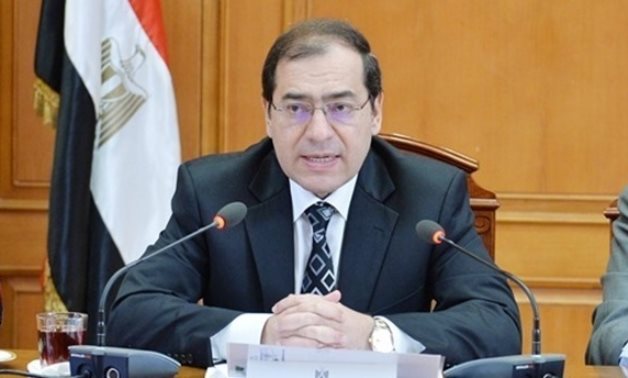
Egypt’s gas imports from Israel are expected to increase by 30% over the “coming period,” Oil Minister Tarek El Molla said. Gas imports from Israel are used to supply our two LNG plants, where gas is liquefied for re-export to Europe, El Molla cited the latter for boosting our gas imports from Israel. Egypt’s gas imports from Israel rose 21.5% y-o-y to 903 mn cubic feet per day (cf/d) on average in 1H 2023. Israeli gas imports could rise as high as 1.05 bn cf/d this month due to falling seasonal demand in Israel. Egypt is bracing for its LNG exports to halve this year alongside a drop in revenues from LNG exports, saying that he expects our LNG exports to drop to 4 mn tons from the 8 mn tons recorded last year. Egypt exported some 3 mn tons of LNG during the first half of the year. (Asharq Business & Sky News Arabia)
- We have exported hardly any LNG over the summer months due to higher domestic consumption and lower gas production.
The government’s decision to ration consumption during a seasonal spike in demand, combined with production falling to three-year lows, has put pressure on the electricity grid, forcing the government to introduce rolling blackouts since July. “We will resume LNG exports this month, confirming our presence in the market and our ability to export,” he told Sky. (Asharq Business & Sky News Arabia)
- Red covers the market indices at the end of the first trading sessions of the week.
The Egyptian Stock Exchange indices ended the trading session on Sunday - the first session of the week - with a collective decline in the indices; The main market index, EGX30 - which includes the 30 largest listed companies, closed with a decrease of 2.64% at the level of 19,348.66 points. The EGX70 EWI for small and medium stocks also fell by 4.08%, closing at the end of the session at 3582.97 points. Regarding the total value of trades, it amounted to 2 billion EGP, with a total number of transactions amounting to 87,722 transactions. (Mubasher)
- Egypt’s BoP records surplus of 882.4 million USD in FY2022/23.
On the other hand, the current account deficit narrowed by 71.5% to 4.7 billion USD last FY from 16.6 billion USD in the previous FY. The improvement in the current account deficit was affected by the 28.2% decline in the trade deficit that reached 31.2 billion USD. The capital and financial account registered a net inflow of 8.9 billion USD in FY 2022/2023. Meanwhile, the net inflows of foreign direct investments (FDI) in the country increased by 12.3% year on year (YoY) to 10 billion USD. As per the securities investments portfolio in Egypt, it realized a net outflow of 3.8 billion USD in the elapsed FY. (Al Mal)
- Moody's downgrades Egypt's credit rating to Caa1 with stable outlook.
Moody’s Investors Services has lowered Egypt’s long-term foreign- and local-currency issuer ratings to Caa1 from B3, with a stable outlook. The agency also downgraded the country’s foreign-currency senior unsecured ratings to Caa1 from B3 and its foreign-currency senior unsecured MTN program rating to (P)Caa1 from (P)B3. “The downgrade reflects the government of Egypt’s worsening debt affordability trend and the persistence of foreign currency shortages in the face of increasing external debt service payments over the next two years,” the credit ratings firm said. (Asharq Business)
- The Central Bank of Egypt's (CBE) receipts of asset sale funds are expected to aid in restoring the economy's foreign currency liquidity buffer, according to Moody's.
The ongoing reform progress achieved under the International Monetary Fund (IMF) program will unlock financial support from other official lenders to alleviate liquidity risk, Moody’s added. Commenting on Moody’s announcement, Minister of Finance Mohamed Maait said that Moody’s decision was based on the domestic and foreign challenges facing the local economy. For his part, Deputy Minister of Finance Ahmed Kouchouk revealed that the government would proceed with its structural reforms in the coming few months. (Asharq Business)
- Egypt to “bleed” reserves unless it further devalues EGP: IMF Chief.
Egypt will "bleed" valuable reserves if it does not devalue its currency once more. “Egypt would bleed reserves protecting the pound and neither the country nor overall the environment is such that this is desirable. That is a problem that has to be solved,” Georgieva said. However, Georgieva noted that the IMF's review of the country's 3 billion USD bailout program is making progress. “In the last couple of days there have been some constructive engagements,” the IMF head said ahead of a speech she made in Abidjan, Ivory Coast, revealing “more systematic work” with Egypt in the next weeks. Egypt has devalued the pound three times since early 2022. (Bloomberg)
- Two Egyptian banks tighten use of debit cards in foreign currency abroad.
The Arab African International Bank (AAIB) and Arab International Bank have suspended the use of Egyptian pound debit cards abroad for foreign currency withdrawal or payment transactions amid the current foreign exchange liquidity crunch. Several customers reported being notified by both banks of their decisions. Other banks are likely to take similar actions this week. (Reuters)
- Mashroo’ak initiative carries out 207,000 projects with 27.1 billion EGP in financing.
The National Program for Community, Human, and Local Development (Mashrou’ak) has executed 207,500 projects since its launch in 2015 until September, with total loans amounting to around 27.1 billion EGP. The projects created over 1.6 million job opportunities all over the country. Minya topped the country’s governorates in terms of the number of projects executed within the initiative, with 23,100 projects financed with more than 2.9 billion EGP. The projects provided over 160,500 job opportunities. (Arab Finance)
- 30 Indian firms show interest in investing in several Egyptian sectors.
Some 30 Indian companies have expressed their intention to invest in the Egyptian market in the sectors of textiles, petroleum, natural gas, hospitality, pharmaceuticals, vaccines, and green ammonia production. During the meeting, some Indian companies showed interest in importing liquefied natural gas (LNG) from Egypt. Moreover, a number of Indian banks expressed their eagerness to finance the Egyptian-Indian joint projects whether in Egypt or India. (Al Mal)
- Egypt’s strategic reserve of basic commodities sufficient for 6 months: Moselhy.
Egypt’s strategic reserve of basic commodities is sufficient for 6 months. Earlier in August, Moselhy announced that the strategic reserve of wheat is sufficient for 4.7 months. The strategic reserve of sugar is sufficient for domestic consumption until next April, while the cooking oil reserve is sufficient for 4 months. (Arab Finance)
- Heliopolis Housing sells Heliopark land to NOSI.
Heliopolis Company for Housing and Development has sold its Heliopark land to the National Organization for Social Insurance (NOSI) at a lump sum of 15 billion EGP. The project area spans over an area of 1,695 feddans, and is located in New Cairo. (Arab Finance)
- The National Council for Wages hiked private sector minimum wages by 11% in July in a bid to move closer to minimum wage parity between the private and public sectors.
The move, which marked the second time private sector wages were increased since the beginning of 2023, compels private sector firms to pay their employees at least EGP 3k a month, up from 2,700 EGP. Broadly speaking, the private sector was prepared for these wage hikes, and lauded the move to enforce baseline salaries across industries, according to sources Enterprise spoke with. (Arab Finance)
- The private sector minimum wage is relatively new in Egypt, having been introduced at the beginning of FY 2021-22 at 2,400 EGP a month.
Private sector companies were initially resistant to the new minimum wage requirements, with thousands of companies filing for exemption. Companies claimed that high employment counts, increased production costs, and the pandemic have left them unable to pay for the additional labor costs. (Arab Finance)
Stay up to date
More Newsletter to Check



SUBSCRIBE TO NEWSLETTER
Subscribe to download our daily economics and business roundup


×
![]()