
Egyptian President Abdel Fattah El-Sisi directed, excluding production requirements and raw materials from the procedures that were recently applied to the import process

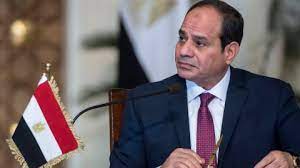
For our top talks today, first, yesterday, Egyptian President Abdel Fattah El-Sisi directed, excluding production requirements and raw materials from the procedures that were recently applied to the import process, by returning to the old system through “collection document”. In documentary credits, the dealing is between the importer’s bank and the exporter’s bank, and the banks are a key player in the process, while in the collection documents, the deal is between the importer and the exporter directly and based on an old trust between them in dealing, and the bank’s role is only an intermediary, and documentary credits require larger amounts, the process takes longer compared to collection documents. It is worthy to mention that the decision will ensure the availability of goods and prevent a slowdown in the industrial sector, taking into account the challenges that the economy is already facing as a result of global developments. (Mubasher)
- Second, the Minister of International Cooperation, Dr. Rania Al-Mashat, discussed with the Italian Ambassador in Cairo, Michel Quaroni, the position of extending the third tranche of the Egyptian-Italian debt swap program for development, as well as launching a fourth tranche to implement development projects in its framework.
The debt swap mechanism is a way to enhance the financing available for development projects by signing agreements whereby part of the debts owed to development partner countries will be exchanged, with the aim of reducing the burden of external debt and achieving sustainable development through financing priority projects. The Minister of International Cooperation stressed the importance of the debt swap program mechanism that is being implemented with the Italian side, which many development partners seek to emulate as it aims to reduce the burden of the external debt on the Egyptian government. (Economy Plus)
- Egypt signed a commitment agreement with companies with a consortium of “Eurojet Germany”, “Conchip Italy” and “Hapag Lloyd” for international shipping lines for the purpose of developing the superstructure, using, managing, operating, exploiting, maintaining and re-delivery of the second container terminal “Tahya Misr 1” in Damietta Port.
The infrastructure is currently being completed by the Damietta Port Authority at an estimated cost of 4.5 billion pounds through the (Arab Contractors-Arcrodon) alliance, and it is planned to be completed next December. “This signing is the result of marathon negotiations with the coalition, which is the largest global coalition in the field of managing and operating shipping lines and international container terminals,” according to Transport Minister Kamel Al-Wazir. (Economy Plus)
- Egyptian tourism revenues in 2021 were 32% lower than what was achieved in 2019 before the Corona pandemic. It was also found that it increased by 102% compared to 2020, to record 8.9 billion USD.
Egypt tourism plunged by more than 66% during 2020, due to the spread of the Corona virus, to fall to about 4.4 billion dollars, compared to more than 13 billion in 2019, before recovering about 68% of those revenues in 2021. The Egyptian economy was hit after Russia's invasion of Ukraine prompted foreign investors to flee emerging markets. Russia and Ukraine were also a major source of tourist influx. Tourism contributes up to 15% of Egypt's economic output and is a major source of foreign exchange, along with the Suez Canal, remittances and exports. (Bloomberg Asharq)
- The number of tourists that Egypt received reached 3.5 million visitors in the first half of 2021, equivalent to the number of tourists for the whole of 2020.
The largest number of tourists recorded by Egypt was in 2010, when 14.7 million tourists visited it, with revenues amounting to 12.5 billion dollars. While the number of tourists reached 13.1 million in 2019. Egypt is seeking to open the Grand Egyptian Museum in the second half of this year, to be the largest museum in the world that includes the remains of one civilization, the ancient Egyptian civilization, which may contribute to boosting tourism numbers and revenues in one of the largest countries in the Middle East and Africa in terms of population. (Bloomberg Asharq)
- It’s Inflation week! Figures for April are due out yesterday. Egypt's annual urban consumer inflation quickened to a faster-than-expected 13.1% year-on-year in April compared to 10.5% in March, which is the highest level of numbers since April 2019.
Consumer prices accelerated at their fastest rate in almost three years in March as the spillover effects from the war in Ukraine fed through to the Egyptian economy. With commodity prices still feeling the effects of the conflict, the devaluation of the EGP, and the traditional Ramadan inflationary hit, we’re not expecting the figures to have been any better in April. (Bloomberg Asharq)
- We’re still waiting for Prime Minister Moustafa Madbouly to unveil the government’s plans to boost private sector involvement in the economy.
Cabinet said Saturday that the PM would hold a presser “at the beginning of next week” to announce new details on how the government intends to attract more FDI and private-sector investment in Egypt. Whether or not we get word of the state’s privatization plans this week, we now have a rough idea of what it wants to achieve in the coming fiscal year: The draft budget shows that the government wants to raise 6 billion EGP from selling shares in state-owned companies in the coming fiscal year. Which companies and how many shares will be up for grabs, we still don’t know. But the government has sought to convey its seriousness about privatizing state assets in recent days, pledging to resume its privatization program in September and offer shares in several military-owned firms by the end of the year. (Zilla Capital)
- Moving to the EGX and companies talks, Egyptian payment aggregator Paymob has raised 50 million USD in Series B funding, marking the largest fintech Series B ever in Egypt.
The funding round was led by Kora Capital, PayPal Ventures, and Clay Point, with the participation of new investors such as Helios Digital Ventures, British International Investment, and Nclude, along with existing investors including A15, FMO, and Global Ventures. This round brings Paymob’s total funding to more than 68.5 million USD. Accordingly, Paymob becomes one of the most funded companies in the region. The startup will use proceeds from the round to expand its product range, scale up its position in the Egyptian market, and enter new markets across the Middle East and Africa (MEA) region. (Arab Finance)
- El Nasr Housing and Development has bought an additional stake in Zahraa Maadi Investment and Development (ZMID) in consideration of 77.68 million EGP.
The deal was executed on 8 million shares at an average price of 9.71 EGP per share. Following the transaction, El Nasr Housing’s stake in Zahraa Maadi was raised to 9.32% from 6.295%. Zahraa Maadi is an Egypt-based public shareholding company engaged in real estate development, construction, contracting, urbanization, housing, and tourism, as well as other investment activities. The listed firm is involved in the construction and development of residential and commercial buildings, as well as the purchase, sale, and reclamation of lands and properties. (Arab Finance)
- German fiberboard producer Homann Holzwerkstoffe has signed a shareholders agreement with Egyptian Kuwaiti Holding (EKH) (EKHO) for the acquisition of the latter’s 27% stake in its subsidiary Global MDF Industries BV.
The deal is set to be executed in two phases. The first phase will take place upon signing the partnership contract and will include Homann’s acquisition of 16.2% of EKH’s stake in Global MDF Industries. The second phase involves the acquisition of the remaining 10.8% stake and will be completed upon the start of production. Global MDF Industries BV plans to start producing medium-density fiberboard through Nile Wood company as of the fourth quarter (Q4) of 2022. Production capacity is set to reach 200,000 cubic meters under full load. (Arab Finance)
- International Company for Leasing’s (Incolease) (ICLE) has reported a 156.8% year-on-year (Y-o-Y) increase in net profit after tax, reaching 41.317 million EGP during the first quarter (Q1) of 2022, up from 16.085 million EGP in the same period a year earlier.
The company’s operating revenue grew to 103.503 million EGP in Q1-2022, from 100.404 million EGP in the comparative period last year. Incolease is an Egypt-based company engaged in the provision of customer service and personalized financial solutions. The company leases a range of assets, including commercial vehicles, machinery, information technology equipment, production lines, real estate, and other tangible and intangible long-term assets. (EGX)
- Arab Cotton Ginning Company (ACGC) has reported a 14% year-on-year (YoY) increase in standalone net profit after tax in the first nine months of fiscal year (FY) 2021/2022, registering EGP 31.659 million.
The company’s revenue soared 111% YoY to 65.317 million EGP in the nine-month period ended March 31st. ACGC is an Egypt-based company active in the textiles and clothing industry sector. The company is engaged in cotton ginning, as well as trading of its products domestically and internationally. (EGX)
- And for the startups talks, Mylerz, last-mile delivery and fulfilment innovation startup, raised 9.6 million USD in a round led by Lorax Capital Partners. Fawry also participated in the round, to help bolster Mylerz’s cash collection services for its merchants.
Launched in 2019, the startup currently operates a fleet of over 350 eco-friendly vehicles and 21 local fulfilment hubs positioned across Egypt. Mylerz will use the fund to scale and expand its operations in Egypt and North Africa. The startup will also use the investment to construct and open a brand-new AI-enabled, automated 25,000 sqm cross-docking fulfilment center West of Cairo by Q4 2022, to augment its current 1,500 sqm fulfilment center that began operations in Q3-2021. (WAYA)
- Flynas, Saudi airline, secured a 225 million USD, which accounts to 844 million Saudi riyal, Murabaha corporate financing facility out of a total funding package of 599.86 million USD to boost further growth.
The financing was arranged by Credit Suisse and syndicated to several Saudi banks with leading participation from Banque Saudi Fransi, Arab National Bank, al-Rajhi Banking and Investment Corporation, and Bank Aljazeera, with Banque Saudi Fransi acting as Facility Agent. Flynas connects more than 70 domestic and international destinations through its fleet of more than 35 aircraft, and since its inception in 2007 until now, it has transported more than 60 million passengers. (WAYA)
Stay up to date
More Newsletter to Check



SUBSCRIBE TO NEWSLETTER
Subscribe to download our daily economics and business roundup


×
![]()