
Egypt plans to cut wheat imports by 500,000 tons per year

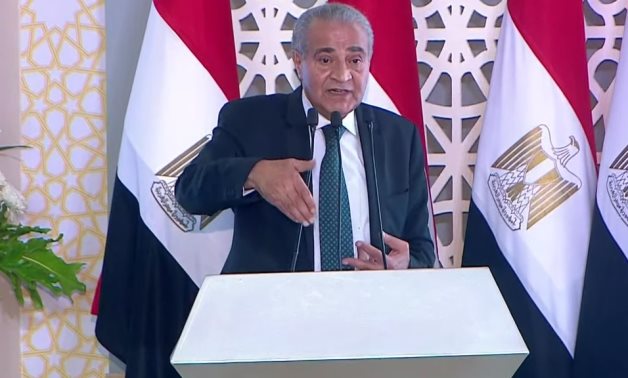
Egypt plans to cut wheat imports by 500,000 tons per year, or about 10%, by eking out more subsidized bread from its grain, Supply Minister Aly El-Moselhy said. The move comes as one of the world’s largest wheat importers struggles with soaring commodity prices as a result of the Russian invasion of Ukraine. Egyptian officials are looking to boost their reliance on local wheat production in a bid to reduce the import bill. Authorities are calling on millers who produce the flour for the subsidy program to increase the amount of wheat bran used. Food security is key in the nation of over 100 million, where a majority benefit from the subsidized bread, with officials mindful about the possibility of social unrest amid rising inflation and other cost increases linked to a recent devaluation of the Egyptian pound. El-Moselhy said Sunday the government plans to import 5 million-5.5 million tons of wheat in the next fiscal year that begins July 1. Current wheat stocks are enough for 5.7 months, he said, and purchases of local wheat are up 12% to 3.92 million tons so far in 2022 compared to the previous year. (Bloomberg)
- Moreover, the Egyptian government has sealed a deal with India to import 180,000 tons of wheat, Reuters reported on June 26th, citing Minister of Supply and Internal Trade Ali El-Moselhi.
The contracted wheat will be shipped once the cargo reaches Indian ports, Moselhi revealed. On June 2nd, the supply minister announced that Egypt was in talks with India over a potential swap deal, upon which it could import wheat from the south Asian country in exchange for fertilizers exports. It is worth noting that the Indian Ministry of Commerce and Industry stated on May 17th that it eased some of the restrictions imposed on wheat exports, allowing a shipment headed to Egypt. (Reuters)
- The government wants to double the private sector’s role in the economy over the next three years, and aims to raise 40 billion USD over the next four years by selling stakes in state-owned assets to local and international investors.
The state may not be able to exit some sectors easily because some sectors just aren’t that attractive economically at the moment, vice chairman of Domty Mohamed El Damaty told the gathering. But the government can make assets in this sector more attractive by getting the pricing right, which could need the help of foreign advisors or the Sovereign Fund of Egypt, Ayman Korra, chairman of Cairo Oils and Soaps, said. (Al Mal)
- The number of beneficiaries from the Presidential initiative for the replacement of obsolete vehicles who received new cars during fiscal year (FY) 2021/2022 has exceeded 20,000, according to the Egyptian Minister of Finance Mohamed Maait.
The state's public treasury has afforded 465 million EGP as green incentives for the replacement of old cars, Maait said. The initiative will contribute to reducing pollution and curbing harmful carbon emissions, he added. The minister maintained that the private sector is a key partner in the presidential initiative, which help in boosting the economy and creating further jobs. Sharm El Sheikh, Luxor, and Aswan governorates were added to the initiative after Cairo, Giza, Qalyubia, Alexandria, Port Said, Suez, and Red Sea, Maait said. (Arab Finance)
- Egyptian fintech startups have attracted 167 million USD worth of investments during the first half (H1) of 2022, according to a recent report by Fintech Galaxy.
The amount was collected in 31 transactions of which series A and B funding accounted for around 90%. The report ascribed growth in fintech funding to regulatory reforms implemented by the Egyptian government and the increase in the number of investors in the market. Among initiatives that boosted the market are the Central Bank of Egypt’s (CBE) Sandbox and the launch of Nclude Fintech Fund. (Arab Finance)
- The first popular source of funding for Egyptian fintech startups was bootstrapping, followed by venture capital (VC) funding.
Bootstrapping is relying on personal resources when building companies, while VCs are private equities that fund promising startups. As for top appealing activities, around 58% of funds disbursed for Egyptian fintech startups in H1 2022 were collected by companies operating in the payment and remittances activity. Furthermore, startups operating in lending and alternative finance attracted 26% of total financing, followed by startups operating in wealth management and savings with 12%. (Arab Finance)
- Moving to our EGX and companies talks, Drive Finance, a subsidiary of GB Auto (AUTO), has concluded its first bond issuance at a value of 700 million EGP.
The offering comes as part of a program worth 2 billion EGP, with the first issuance amounting to 700 million EGP. The first issuance is divided into two tranches; the first tranche is worth 300 million EGP with a tenor of 13 months and a fixed coupon rate of 14% payable monthly, and the second tranche of EGP 400 million with a tenor of 60 month and a fixed coupon rate of 13.5% payable monthly. Proceeds from the bond issuance will be used to “deleverage” the balance sheet of Drive Finance and consider further opportunities for growth. (EGX)
- Juhayna Food Industries (JUFO) reported a 15.5% year-on-year (YoY) growth in consolidated net profit after tax for the first quarter (Q1) of 2022.
Consolidated net profit after tax amounted to 142 million EGP in Q1 2022, compared to 123 million EGP in Q1 2021. The company also generated consolidated revenues of 2.403 billion EGP in Q1 2022, up by 29.1% YoY from 1.86 billion EGP in Q1 2021. As per the standalone preliminary financial results, Juhayna incurred a net loss after tax of 1.3 million EGP in the three-month period ended March 31st, versus 1 million EGP in the same period last year. (EGX)
- Egyptian Chemical Industries (KIMA) (EGCH) has turned to profitability in the first nine months of fiscal year (FY) 2021/2022.
The company has recorded a net profit after tax of 481.95 million EGP in the nine-month period ended March 31st, versus a net loss of 1.019 billion EGP in the same period of FY 2020/2021. The company’s sales surged by 378% year-on-year (YoY) in the period ended March 31st to 3.12 billion EGP from 825.44 million EGP. KIMA is an Egypt-based nitrogen-based fertilizers manufacturing leader and is engaged in the agricultural chemicals industry. (EGX)
- The board of directors of Rowad Tourism (Al Rowad) (ROTO) has approved to raising the company’s authorized capital to 865 million EGP from 500 million EGP.
The board also agreed upon the submitted proposal from the company’s management to consider new investments and purchase further assets. Rowad is an Egypt-based public shareholding company that operates in the tourism industry. (EGX)
- Misr Chemical Industries Company (MICH) reported a 45.9% year-on-year (YoY) increase in net profits for the first 11-month period of fiscal year (FY) 2021/2022.
Net profits amounted to 188.83 million EGP in the period from July 2021 until May 31st 2022, compared to profits of 129.402 million EGP in the same period of FY 2020/2021. Misr Chemical Industries owns a manufacturing plant that produces a range of chemical products including liquid caustic soda, caustic soda flakes, liquid chlorine, hydrochloric acid, and bleaching powder. (EGX)
Stay up to date
More Newsletter to Check



SUBSCRIBE TO NEWSLETTER
Subscribe to download our daily economics and business roundup


×
![]()