
Egypt obtains additional funding of 3 billion dollars to confront the wheat crisis

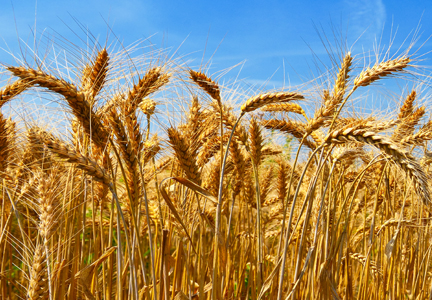
For our top talks today, firstly, Egypt obtains additional funding of 3 billion dollars to confront the wheat crisis. The 3 billion USD increase in financing granted by the International Islamic Trade Finance Corporation will help Egypt in dealing with the increasing wheat prices due to the Russian invasion of Ukraine. It is worthy to mention that under an agreement with the institution, which is affiliated with the Islamic Development Bank and is headquartered in Saudi Arabia, the total funding granted to Egypt was doubled to 6 billion USD, according to the Supply Minister Ali Moselhi. He added that this means that the International Islamic Trade Finance Corporation is the party that pays and covers Egypt’s imports from Wheat. Therefore, wheat purchases from abroad do not represent any pressure on the central bank, stressing that Egypt has enough stocks to last until mid-October. (Bloomberg Asharq)
- Secondly, geopolitical conflicts cost the world economy 1.6 trillion USD in 2022. The past four years have seen an escalating series of upheavals.
Tariffs doubled during the US-China trade war, and the pandemic triggered lockdowns. Now, sanctions and export controls are causing shortages in the supply of consumer goods and merchandise. These things increase the risk that advanced economies will be exposed to a problem they thought they had long ago overcome, namely scarcity, and emerging countries could also see more severe threats to energy and food security, such as those that have already caused turmoil in many countries stretching from Sri Lanka to Peru. So, everyone has to deal with the high price. (Bloomberg Asharq)
- The Sovereign Fund of Egypt (TSFE) is studying 21 investment projects during 2022, CEO of TSFE Ayman Soliman stated in a meeting headed by Prime Minister Mostafa Madbouly on May 23rd.
These projects will be developed across six different sectors, namely telecommunications, facilities and infrastructure, healthcare and pharmaceuticals, agriculture and food industries, tourism, and real estate, Soliman highlighted. For her part, Minister of Planning and Economic Development Hala El-Said said that the TSFE is making great efforts to attract regional and international investments and boost the participation of the private sector amid the ongoing global economic instability that negatively impact inflows to the emerging markets. (Arab Finance)
- Moreover, during the meeting, the latest development regarding the establishment of a sub-fund to accelerate the government’s initial public offerings (IPOs) program have been discussed.
Under the government IPOs program, stakes in a number of state-owned companies are set to be offered on the Egyptian Exchange (EGX). The government also targets offering state-owned assets at a value of $40 billion to encourage partnerships with the Egyptian and foreign private sectors throughout a four-year period. (Arab Finance)
- As many as eight international auto companies have stopped exporting cars to Egypt on the back of Egypt’s decision to move importers to letters of credit instead of the longstanding process of documentary collection to import goods.
The combination of a very tight global car market and delays opening letters of credit (L/Cs) has seen manufacturers diverting shipments to other markets, the newspapers quote industry sources as saying. One dealer expects imports to decline “significantly” in the coming months. (Al Mal & Al Borsa)
- However, this week was wonderful for the car industry.
The Consumer Protection Agency ordered dealers to hand a full refund of down payments with 18% interest to customers who had placed before 12 April, and said that anyone who purchased a vehicle prior to 12 April would be protected from any subsequent price hikes. The CPA is also raising by 5% the cap on prices it introduced in March in the wake of the float of the EGP, despite the industry’s demands of around 10%. (Al Mal & Al Borsa)
- Also, it applies to all consumer goods. People who put down down payments on any consumer goods prior to 12 April will enjoy the same protections against higher prices, according to the CPA chief Ayman Hossam El Din.
Retailers will be required to return down payments plus 18% interest to anyone who wants a refund, he said. The measures come following complaints by customers that sellers are hiking prices above the original price in response to rising inflation. (Al Mal)
- Moving to our EGX and companies talks, Commercial International Bank Egypt (CIB) (COMI) on May 24th launched two new high-yield certificates of deposit (CDs) under the name of "Premium" with an interest rate of up to 14%.
The four-year Premium certificate was launched with a fixed monthly yield of 14%, while the other three-year CD was offered with a fixed monthly return of 13.5%. The bank’s new announcement came after the Central Bank of Egypt’s (CBE) Monetary Policy Committee (MPC) decided at its meeting on May 19th to raise the overnight deposit rate, overnight lending rate, and the rate of the main operation by 200 basis points (bps). (Arab Finance)
- Mouwasat Medical Services has signed a non-binding memorandum of understanding (MoU) to fully acquire Al-Marasem International Hospital, an Egyptian limited joint-stock company.
Under the signed MoU, the two parties have agreed to set the value of the transaction after conducting the due diligence. Once a final agreement is reached, the Egyptian company will be 100%-owned by Mouwasat Medical Services following the completion of the due diligence process. The financial impact is expected to be reflected on the company once the transaction is concluded. Any further developments concerning the transaction will be disclosed in due course. (Arab Finance)
- Sales of "Noor", "Madinaty" and hotels raise the profits of the Egyptian "Talaat Mostafa" by 27%, on an annual basis, to reach about 554 million EGP, compared to 434.6 million EGP for the same period a year ago.
The consolidated group’s revenues increased 12% to record 3 billion EGP in the first quarter of 2022, compared to 2.7 billion EGP a year ago. The group’s profits were higher than the expectations of investment banks, while the revenues were close to expectations. Talaat Mostafa Group is the largest private real estate development company in Egypt, with a land portfolio of 74 million square meters. The real estate sector represents about one-fifth of the Egyptian GDP, and is witnessing a steady growth, supported by an increase in the population of two million people annually, in addition to the movement of movement from the countryside to the cities at a rate of 2% annually. (Bloomberg Asharq)
- valU, a subsidiary of EFG Hermes Holding (HRHO), has signed a protocol with Zero Tech, provider of high-tech safety and security systems, and the Arab Organization for Industrialization (AOI) to give consumers of both manufacturers access to valU’s services and solutions.
Under the protocol, AOI’s consumers will be able to use its various consumer products including phones, televisions, and home appliances at affordable payment schemes. Consumers will also afford buying Zero Tech’s electronic surveillance systems including security cameras, finger print and access control, video intercom and surveillance systems, home automation, and fire alarms through valU’s diverse installment plans. (Arab Finance)
- Education management firm Egypt Education Platform (EEP) will acquire a majority stake in Montessori preschool chains Trillium and Petals.
The acquisition is in its final stages and has received regulatory approval. The move ties in with EEP’s expansion strategy: Trillium and Petals are the first preschools EEP will add to its portfolio. The two preschools together have eight branches across Cairo. EEP was attracted to the two schools’ strong brand name in the local market, and not because of a particular interest in Montessori education. The Montessori system — which emphasizes learning through choice-driven play and movement — diversifies EEP’s portfolio, which currently includes schools following the IB, American, British, and national curriculums. (Enterprise)
- It’s worth noting that EEP plans to work on further expansion with the schools’ founder and CEO, Sherine Ibrahim, who will be retaining a stake in the preschools.
The hope is to open new branches of the two schools in East and West Cairo. EEP is also exploring investments in international schools targeting the medium-income segment, particularly in Alexandria, as well as edtech companies. (Enterprise)
Stay up to date
More Newsletter to Check



SUBSCRIBE TO NEWSLETTER
Subscribe to download our daily economics and business roundup


×
![]()