
Egypt initially identifies 7 strategic industries to be exempted from taxes

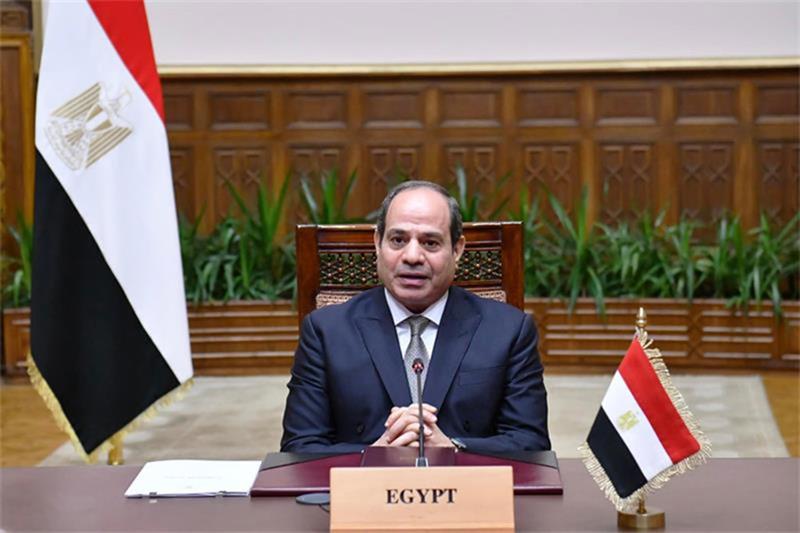
Egypt initially identifies 7 strategic industries to be exempted from taxes. The government has initially identified seven major strategic industries to benefit from the tax exemptions announced by the Egyptian presidency at the end of last August, to include the petrochemical industries, green hydrogen, solar energy, electric cars, mining, textiles, and electronic devices. The president Abdel Fattah Sisi, at the end of last August, decided to grant a number of targeted industrial projects an incentive package that includes exemption from all types of taxes, except value-added tax, for up to 5 years, with the possibility of extending the exemption for additional years for a number of industries. (Asharq Business)
- Egypt eyes selling stake in Banque du Caire in 2024.
Egypt is considering selling a stake in Banque du Caire to a strategic investor in 2024. Negotiations on selling the bank have been in the process for years, noting that closing the deal is currently being coordinated. In terms of scaling up the investment plan, the bank has been working on establishing an independent digital bank for three years, expecting the launch of the bank in the Egyptian market in the first quarter (Q1) of 2024. Also, it is expected to open a branch of the bank in Riyadh soon, pointing out that all the related regulatory procedures were finalized. Likewise, the National Bank of Egypt (NBE) is seeking to launch a branch in Riyadh. (Asharq Business)
- Downturn in Egypt’s non-oil private sector business remains mild in August.
The decline in Egypt's non-oil private sector business remains soft in August, with companies continuing to report some indicators of a market recovery. The headline seasonally adjusted S&P Global Egypt PMI recorded 49.2 points in August, which is the same reading as in July, reaching its joint-highest level in two years. The index is still below the 50-point threshold that separates expansion from contraction. (S&P Global Egypt Purchasing Managers’ Index™’s (PMI™) survey posted on September 4th)
- Moreover, in August, output decreased somewhat but at a significant rate as firms indicated that tighter price constraints had forced them to limit capacity.
Also, input cost inflation accelerated to a five-month high, which caused selling prices to increase at a faster pace than they had since the most recent low in July. Non-oil companies reported that a stronger round of cost inflation had limited output. This was due to poor exchange rates, problems with the availability of raw materials, and wage pressures, resulting in a surge in business expenses for five months. Only 9% of respondents were positive that output will grow over the coming year, while many still feared recessionary conditions. (S&P Global Egypt Purchasing Managers’ Index™’s (PMI™) survey posted on September 4th)
- On the other hand, Egypt’s MCV, Swedish Volvo pen agreement to manufacture e-buses.
Egyptian vehicles manufacturer MCV signed an agreement with the Swedish multinational manufacturer of luxury vehicles Volvo to manufacture electric buses with a local component of 50%. These e-buses will be exported to the European market. Minister of Trade and Industry Ahmed Samir said that this cooperation contributes to the localization of the transport industry, including manufacturing environmentally friendly buses. Samir also expressed his country’s keenness to boost investment and industrial cooperation with Sweden in the near future. (Arab Finance)
- Egypt to form committee to revitalize tourism.
Minister of Tourism and Antiquities Ahmed Issa has issued a ministerial decision on forming a committee that discusses the general strategy to promote tourism in Egypt. The committee will be headed by Issa, with membership including the CEO of the Egyptian General Authority for Tourism Activation, head of the Egyptian tourism Federation, and head of the tourism and aviation committee at the Parliament. It will also study programs and mechanisms to achieve the strategic goals of the tourism industry in accordance with the ministry’s 2030 vision. (Arab Finance)
- Two leading Emirati business families are behind Global Investment Holding (GIH), the firm that agreed this week to the 625 million USD purchase of a 30% stake in Eastern Company from the Holding Company for Chemical Industries (CIHC).
Abu Bakr Al Hussaini, whose wide family interests are rooted in trade and distribution, holds a 90% stake in GIH, while Emaar Properties and Noon founder Mohammed Alabbar is also a shareholder. The newspaper writes separately that the two also hold stakes in United Tobacco, the Egypt-incorporated company that manufactures cigarettes under license for Philip Morris.
- We’re still seeking confirmation on whether Philip Morris is involved. The global tobacco giant owned an economic interest of around 25% of United Tobacco as of the end of H1-2023, while another 24% of United is held by Eastern Company.
Eastern Company’s stake in United is not impacted by GIH’s 30% buy-in to Eastern. Egyptians living abroad can now purchase land in new cities from abroad (in FX, of course) after the government opened reservations. More than 2.3k plots of land in 14 new cities have been made available to purchase by expats. Reservations close in three weeks time.
- Beltone Leasing adds factoring to lines of business.
The Financial Regulatory Authority (FRA) has approved adding factoring to the services provided by Beltone Leasing Company, a subsidiary of Beltone Financial Holding. Accordingly, the company has become a fully-fledged alternative finance provider, with its name changed to Beltone Leasing and Factoring Company. The move comes amid the medium and large-sized companies’ growing demand for financing, while reducing the related credit risk. (Al Mal)
- In addition, Cairo-based Sehatech secures 850,000 USD funding round from Belton’s VC.
Sehatech, a leading health tech startup in Egypt, has raised $850,000 in a funding round from A15 and Beltone Venture Capital (VC) of Beltone Financial Holding. The startup will use the investment to leverage proprietary technology in order to digitise and automate the relationship between insurers and healthcare service providers. This includes claim and approval management processes, known as third-party administration (TPA) in the healthcare industry. (Mubasher)
- n.go unveils expansion plans in Saudi Arabia, Egypt at seamless.
Abdullah Albruaidi, Business Development Manager of n.go, announced the company’s expansion plan in Riyadh and the Eastern Province. The tech firm is currently running its business in the UAE, particularly Dubai, and will soon expand across Egypt, including Cairo. Albruaidi added that n.go's virtual sessions boost its presence in the Saudi market by fulfilling the customers’ needs online. (Mubasher)
- Allianz, Sanlam launch JV to offer insurance, financial service in Africa.
Sanlam, Africa’s largest non-banking financial services provider, and Allianz have launched SanlamAllianz, a joint venture (JV) that will provide insurance and non-banking financial services in 27 African markets. This came after the two companies obtained regulatory approvals for SanlamAllianz, leading it to be among the top three players in the African market in terms of share and profitability. The JV is expected to have a combined group equity value (GEV) of around R35 billion. The offered products and services will be available in the markets where one or both companies currently operate, including Namibia at a later stage, with South Africa being excluded from the agreement. (Arab Finance)
Stay up to date
More Newsletter to Check



SUBSCRIBE TO NEWSLETTER
Subscribe to download our daily economics and business roundup


×
![]()