
Don’t fight the Fed mantra is back

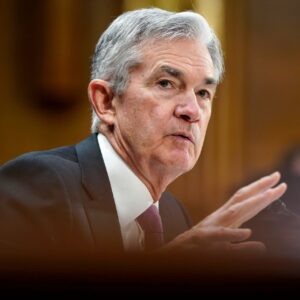
Don’t fight the Fed mantra is back
In many senses the Fed is afraid of prematurely easing policy as it seeks to restore credibility.
Just as the Fed sought to retire the word “transitory”, they are similarly seeking to retire what participants define as a “pivot”. Neel Kashkari did just this and was motivated to support the mildly hawkish FOMC minutes. However, rates rallied after Bullard’s view that they were close to being sufficiently restrictive. Declining goods inflation and recent ISM surveys also support that cause. The challenge for markets is China’s reopening, which comes with higher hospitalizations with the West responding to tighter immigration (negative Covid tests upon arrival), which admittedly are near-term headwinds. Yet, global recession risks are also picking up. The fall in oil, rally in gold, tighter global rates and softer equities created further alarm. The next barometer will be earnings season, but the market is already geared up with a weak set of tech-sector results.
Needless to say, U.S. financials will likely highlight weaker Fixed Income, Currencies and Commodities (FICC) & Investment Banking Division (IBD) revenues, which is where EM banks are likely to outperform. The question is then whether this recession appears to follow the shallowness of 1969, when Earnings per Share (EPS) growth only declined 13%, which would seem manageable. In any event, the theme in EM was more upbeat this week. New sovereign primary deals highlight strong sentiment. The source of EM volatility was around lower inflation in Poland that led to investors wanting to “receive” rates, after it fell from 17.5% to 16.6%, which also caused a large rally in other Central and Eastern Europe (CEE) countries.
The same theme was visible in DM after French inflation fell from 6.2% to 5.9%, just as German inflation missed to the downside (from 10.0% to 8.6%), and follows the Netherlands CPI reading which fell from 14.3% to 9.9% in November. On Friday, the Euro-area reported flash CPI for December at 9.2% y/y, down from 10.1% in November. Inflation returned to single digits in the Euro-area for the first time since August. The next bout of volatility was in Turkish equities which plunged 7% and led to a circuit breaker going off and effectively ends the bull run since July. The volatility is centered around rumors that the Istanbul Mayor may be removed from office, potential closing of the HDP headquarters and bringing elections forward to April or sooner. This was the second worst trading day for Turkish equities in twelve months.
Core Inflation in Europe Hits a Record

An underlying gauge of euro-zone inflation flared to a record last month, indicating persistent price pressures that will likely extend the European Central Bank’s most-aggressive bout of interest-rate hikes in its history.
Stripping out food and energy prices, so-called core inflation rose to an all-time high of 5.2% in December. Slower growth in energy costs was the only reason for the moderation in the overall annual figure, which fell below 10% for the first time in four months. In the US, robust hiring and a cooling in wage growth raised hopes that the Federal Reserve can tame inflation without triggering a surge in unemployment. The jobless rate fell last month to match a five-decade low.
Euro-area inflation returned to single digits for the first time since August, fueling hopes that the bloc’s worst-ever spike in consumer prices has peaked. December’s reading came in at 9.2%. Highlighting how inflation continues to menace Europe’s economy, however, a measure of underlying price pressures that strips out energy and food edged up to a record 5.2%.
German factory orders fell in November, a reminder that the country’s manufacturers are still struggling — even as the economic backdrop improves. Demand declined 5.3% from the previous month, driven by foreign orders, especially from the euro zone, and the drop was exacerbated by large-scale orders, the German statistics office said. Meanwhile, British rail workers walked off the job for much of this week, paralyzing transport and adding to the troubles piling up for Prime Minister Rishi Sunak’s government. The protests stem from growing anger over the tightest cost-of-living squeeze in memory. Inflation reached a four-decade high last year, and wages aren’t keeping pace, especially in public services.
In addition, home-sales activity slowed to a crawl in Canada’s largest city in December, with just 3,117 homes trading hands to end a year that saw prices decline by a record amount. The benchmark price of a home in Toronto fell 8.9% from a year earlier, the biggest drop for a calendar year since the benchmark was first compiled in 2005. Also, Japanese workers’ real wages fell by the most in eight years, suggesting that there’s still some way to go before the central bank can achieve its wage-growth accompanied price goal. The decline was led by a sharp drop in bonus payments, as the gain in basic salaries remained relatively stable.
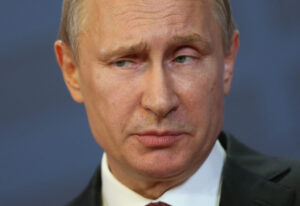
Putin’s 36-hour ceasefire does not herald the end of war in Ukraine
Russia’s President, Vladimir Putin, announced a 36-hour unilateral ceasefire ordering his troops in Ukraine to pause fighting starting at noon local time on January 6, ahead of Russian Orthodox Christmas on January 7.
We see Putin’s decision as symbolic and catering to appeals by Russia’s influential Orthodox Church and we do not think it is likely to alter anything in the situation on the ground in Ukraine. The authorities in Kyiv have dismissed the Kremlin’s move as a “propaganda gesture” and are highly unlikely to respect any pause in fighting, especially given the momentum that Ukraine’s forces have been enjoying on the battlefield in recent months. A ceasefire announcement by Russia appears particularly odd, given that its forces have been mostly on the defensive since September 2022.
In general, we remain pessimistic about the prospect that the conflict comes closer to a resolution in the near-term (in 2023) given that both sides appear to believe that achieving their key objectives remains within reach. Moreover, domestic political pressure for ending the war is not strong in either Kyiv or Moscow, which points to continued fighting that could be prone to significant escalation when the weather conditions in Ukraine start to improve. As we believe that the conflict is set to linger, we remain cautious on Ukraine’s ability to service external debt obligations in the near to medium-term. The duration of the conflict and associated structural economic and geopolitical implications for the country will ultimately determine recovery values for sovereign and other Ukrainian market assets after the conflict is over, but uncertainty on the outlook is extraordinarily elevated and we believe will remain such throughout 2023.
Divergent but still weak China PMIs amid large COVID wave and policy unwind
In December, composite NBS PMI dropped materially further into contractionary territory to 42.6 from 47.1 led by non-manufacturing while the composite Caixin PMI ticked-up to 48.3 from 47.0 led by services.
Meanwhile, zero-COVID policy has largely been abandoned with downplayed case and death numbers and announced reopening of international travel on January 8th. We believe the still weak economic data as unsurprising given the speed of the unwind of zero-COVID polices and limited pre-existing immunity driving widespread illness and likely initial caution by the population. Additionally, the pace and nature of rollout at the local level has likely been mixed possibly contributing to the differences in survey data. We anticipate an improvement in activity in 1Q albeit with continued room for volatility given uncertainties associated with both duration and severity of waves and new possible variants. Thereafter, the authorities’ increased emphasis on growth-oriented policies and likely further measures to support the property sector should help to stabilize growth at a higher level than in 2022.
Key macro events next week include the U.S. CPI release on Thursday. Earnings season will also kick-off on Friday with U.S. banks. Before both of those events, Russia’s proposed ceasefire was planned over the Orthodox Christmas (January 6-7), even if rejected by Ukraine. The World Bank will also release its global economic prospects report on Tuesday. EM interest rate decisions are limited to Kazakhstan (16.75%), Peru (7.50%), Romania (6.75%) and South Korea (3.25%). For China after NBS and Caixin PMIs, the attention will shift to CPI and PPI although these releases aren’t until the end of the week. Other inflation releases are due out of Argentina, Brazil, Czech Republic, India, Mexico, Poland, Romania and Russia. Finally, Turkey will report its latest current account release, where the focus will continue to be on net errors and omissions.
Argentina successfully completes third IMF review in December
The IMF approved the third review of Argentina’s EFF triggering a roughly 6 billion USD disbursement.
All performance criteria were met with a waiver provided for policy measures that have given rise to new exchange rate restrictions and multiple currency practices. The IMF’s growth and inflation projections for 2022 were revised further upward to 4.6% and 97%, respectively, while the 2023 growth and inflation estimates of 2% and 60%, respectively, remained unchanged. Similarly, the 2023 primary deficit target of 1.9% of GDP is unchanged and aligned with the budget.
Gramercy commentary: The government and IMF’s ability to keep the program on track amid challenging external and domestic conditions is credit positive. This, combined with solid fiscal performance, moderation in the monthly pace of inflation, a successful swap of domestic debt improving the near-term maturity profile, and better external conditions have supported external bond prices for much of 4Q. The still fragile macroeconomic backdrop which has been largely successfully navigated with one-off and temporary measures, most notably the multiple FX rate regime as flagged by the IMF, suggests that room for volatility persists. Nevertheless, we anticipate investor focus to more meaningfully shift to the start of the electoral cycle in the coming months where our base case remains for an outcome with improved governability and policymaking.
Stay up to date
More Newsletter to Check


SUBSCRIBE TO NEWSLETTER
Subscribe to download our daily economics and business roundup


×
![]()