
Crude climbs above $96 a barrel on US stockpiles concern


Crude climbs above $96 a barrel on US stockpiles concern
Chinese equities advance after data shows improvement in industrial sector profits. Oil prices surged nearly 3 % to a fresh 10-month high on Wednesday, approaching $100 a barrel, as lower than expected US stockpiles added to concerns about the impact of tighter global supplies of crude. International benchmark Brent crude climbed as high as $97.06 a barrel, its highest intraday level since November 2022, before paring that gain slightly to settle at $96.55. The US equivalent, West Texas Intermediate, rose 3.6% to $93.68 a barrel, as stockpiles at a critical delivery hub fell further, according to weekly government data.
The latest report from the Energy Information Administration showed that US commercial crude oil inventories fell by 2.2mn barrels from the previous week, further tightening supply, while the delivery point for WTI saw inventories fall to the lowest point in more than a year. Oil prices have risen 30 % since June after some of the world’s biggest producers announced a series of supply cuts to last until the end of this year, adding to investors’ concerns over persistent inflation in the US and Europe.
The benchmark US S&P 500 closed marginally higher, after hitting a three-month low in the previous session. The Nasdaq Composite rose 0.2%. Energy stocks rose on higher oil prices, with supermajors ConocoPhillips and ExxonMobil up 3% and 3.3%, respectively.
In Europe, the region-wide Stoxx Europe 600 index ended the day 0.2% lower, notching its fifth successive day of losses. US government bonds extended their sharp sell-off from earlier in the week, prompted by the Fed’s hawkish guidance that interest rates were likely to remain higher for longer because of persistent inflation. Yields on the benchmark 10-year Treasury rose 0.05 percentage points to 4.61% on Wednesday, hitting a fresh post-2007 high. Yields on the 30-year note advanced 0.03 percentage points to 4.72%. The dollar, which tends to strengthen when investors expect higher rates, rose 0.4% against a basket of six peer currencies, hitting a fresh 10-month high.
Attention turned to US and eurozone inflation data due later in the week, as investors hoped to gain further insight into central banks’ plans for upcoming monetary policy. Separate data on Wednesday showed that profits in China’s industrial sector fell 11.7% year on year in the first eight months of 2023, compared with a larger 15.5% contraction in the first seven months of the year, in a sign that recent support measures may be helping to stabilise the world’s second-largest economy. Hong Kong’s Hang Seng index rose 0.8% and China’s CSI advanced 0.2 % following a two-day losing streak.
Fed’s ‘higher for longer’ message hits US stocks and bonds
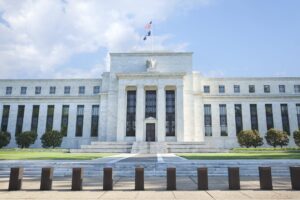
Treasuries and Wall Street shares on course for worst month of 2023. US stocks and government bonds are on course for their worst month of the year as investors respond to the Federal Reserve’s message that interest rates are set to stay higher for longer than previously thought. Wall Street’s benchmark S&P 500 stock index has fallen more than 5% in September — dragging it towards its first quarterly loss in 12 months. A retreat in the US bond market also accelerated last week after the Fed signalled it would cut rates much more slowly next year and in 2025 than investors had been pricing in. The yield on 10-year Treasuries, which rises when prices fall, on Wednesday hit its highest level since 2007 and is on track for the biggest monthly jump in a year. At the beginning of the month, traders in the futures market were betting that interest rates would be about 4.2% by the end of 2024. Now they are betting on rates of 4.8% by that time. Expectations of a prolonged period of high rates have hit equities because of the impact of higher bond yields on investors’ quest for returns, as well as the potential effect on the real economy.
The S&P is still up 11 % this year, but has been propped up by a small number of heavily weighted tech stocks that surged earlier in the year fuelled by enthusiasm about artificial intelligence. The equal-weighted version of the index this week fell back into negative territory for the year. Corporate debt markets have also been affected, as investors worry that highly indebted companies may struggle to refinance their borrowings in the face of higher rates. The average interest rate for US junk bonds has risen from 8.5 % to almost 9 % this month, outpacing the rise in Treasury yields.
The shift in the US has come as the Fed reacts to strong economic data and a still hot labour market, which contrast with the eurozone and the UK, where fears of a downturn — which would reduce pressure to keep interest rates high to control inflation — are greater. Fed officials last week lowered their forecasts for unemployment and increased their growth predictions. While the central bank held its main interest rate steady in a range of 5.25% to 5.5%, projections by its policymakers signalled one more increase this year. Soaring oil prices compounded market worries about persistent inflation and tight monetary policy. Brent crude jumped nearly 3% on Wednesday to a 10-month high of more than $97 a barrel, as lower than expected US stockpiles added to fears of a global supply shortfall. Some investors predict that higher rates could eventually push the economy towards recession despite the recent strong data.
US lawmakers pass short-term deal to avoid government shutdown
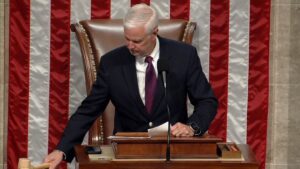
Agreement to maintain funding until mid-November leaves out billions of dollars in Ukraine aid. The US Congress has voted to avert a government shutdown, after lawmakers agreed a last-minute measure that keeps the government funded until mid-November but leaves out billions of dollars of aid for Ukraine. The Senate voted 88-9 on Saturday night to approve a deal that was brokered earlier in the day by the House of Representatives, with just nine Republicans voting against the bill in the upper chamber. President Joe Biden signed the agreement before a midnight deadline, avoiding a shutdown that would have furloughed hundreds of thousands of workers and stopped basic government functions. The agreement marks a dramatic turnabout in Washington, where just one day earlier a shutdown seemed inevitable.
Earlier on Saturday, the House voted 335-91 on the deal that keeps the government funded at current levels for another 45 days, postponing the risk of a shutdown until mid-November. All but one Democratic House member joined with the majority of Republicans in supporting the measure, while 90 Republicans broke with Speaker of the House Kevin McCarthy in opposing the deal. In a statement released after the Senate vote, Biden lauded the stop-gap measure for “preventing an unnecessary crisis that would have inflicted needless pain on millions of hardworking Americans”. He criticised “extreme” House Republicans who opposed funding.
Biden said US support for Ukraine could not be allowed to lapse, adding that he expected McCarthy to “keep his commitment to the people of Ukraine and secure passage of the support needed to help Ukraine at this critical moment”. Ahead of the vote, Chuck Schumer, the Senate’s top Democrat, said he and Mitch McConnell, the Republican minority leader, had agreed to “continue fighting for more economic and security aid for Ukraine”. While many House Republicans have been wary of providing more support for Kyiv, McConnell has been resolute about the need to back Ukrainian president Volodymyr Zelenskyy.
McConnell said on Saturday night that “most Senate Republicans remain committed to helping our friends on the front lines”, adding he was “confident” the Senate would pass “further urgent assistance to Ukraine later this year”. Saturday’s vote in the House came after days of failed attempts at compromise that cast doubt on McCarthy’s leadership. The scale of Saturday’s rebellion will raise further questions about the strength of McCarthy’s speakership.
Democrats had placed the blame for the shutdown threat on Republicans, given the small but powerful minority of hardliners in the House who hindered several proposed compromise deals in recent days. A White House official called the House vote on Saturday a “big victory on funding levels and keeping the government open” for Biden, noting that Republicans had “reversed themselves” on their demands for deep spending cuts. The official said they “fully expect” McCarthy to bring forward a separate Ukraine funding bill “shortly”.
Moody’s warns of ‘systemic risk’ from leveraged lending market

Rating agency says looming ‘race to the bottom’ between banks and private debt funds could erode credit quality. Credit rating agency Moody’s has warned of a “race to the bottom” between banks and private credit funds financing risky leveraged buyouts, a contest it believes will increase systemic risks across the US financial system. The rating agency said on Thursday that a renewed appetite among banks to lend on such deals and greater competition from the fast-growing private debt sector risked funnelling more money to lower-quality deals, just as general economic conditions are deteriorating.
The warning from one of the largest US credit rating agencies comes as the private equity industry slowly begins to find its footing after the Federal Reserve last year aggressively hiked interest rates, rocking financial markets and dramatically denting deal making. But buyout shops are once again hunting for elephant-sized transactions as volatility in markets and concerns over a looming recession have subsided. As a result, bankers and private credit executives shared that in recent months they have fielded an uptick in calls to lend to the industry.
Many private equity firms had turned to the 1.5 trillion USD private credit industry to finance their deals over the past two years. Banks, which have lost out on lucrative fees underwriting buyouts as a result, are hoping to muscle back in on a business they have long dominated. They are also facing greater competition as private credit funds increasingly offer services once squarely in banks’ purview, for instance providing revolving credit facilities to companies.
To be sure, private equity deal making remains sluggish and banks have so far been mostly conservative in the buyouts they have ultimately agreed to finance. Many of Wall Street’s largest banks have only slowly started getting back into the market after a painful 2022, when they were stuck holding loans tied to risky leveraged buyouts for software maker Citrix, television ratings provider Nielsen, auto parts maker Tenneco and social media company X, formerly known as Twitter. Lenders including Bank of America, Barclays, Credit Suisse and Goldman Sachs collectively lost billions of dollars as they eventually sold the debt on to other investors. Lenders to Elon Musk, who bought X last year, have so far been unable to sell the debt tied to that deal.
But their appetite has started to return as prices in the loan market have rebounded and fund managers eagerly buy up lowly rated corporate bonds and loans. That rebound in prices has in part been driven by a precipitous drop in loan issuance, with new high-yield bond sales — excluding refinancing activity — at their second-lowest annual level since the immediate aftermath of the 2008 financial crisis, according to data from LSEG.

Markets misread comments on debt relief for emerging markets from President Ruto of Kenya
In remarks during the UN General Assembly in New York, Kenya’s President, William Ruto, criticized the existing sovereign debt restructuring architecture and called for a new streamlined approach by multilateral and bilateral creditors on providing debt relief for poor nations.
The Kenya sovereign bond complex underperformed following Ruto’s call for a new debt framework for highly indebted poor countries, which in our opinion reflects markets misreading his comments or lacking the proper context. We do not think Ruto’s intention was to send a signal that Kenyan authorities might be reconsidering their position that they intend to continue repaying external debt obligations on time and in full. Rather, they reflect a prudent attempt by Ruto to capitalize on international momentum behind issues such as climate change and combating deeply rooted social issues plaguing Africa and to position himself and Kenya as the continent’s “spokesperson” in front of the global community.
Amid lack of market access, markets have been concerned about Nairobi’s ability to refinance its next large Eurobond maturity of $2bn that comes due in June 2024. However, in order to meet their upcoming external liquidity needs, we expect the authorities to use a combination of syndicated bank borrowing, additional multilateral funds, and, if necessary, existing FX reserves. Remarks by Central Bank Governor Kamau Thugge on the authorities’ preparedness to use FX reserves for external bond repayment confirms this and attests to a strong willingness to repay, but also contradicts the market’s reaction to President Ruto’s comments in our view.
Stay up to date
More Newsletter to Check



SUBSCRIBE TO NEWSLETTER
Subscribe to download our daily economics and business roundup


×
![]()