
China’s Economic Stability Teeters: Mounting Debt and Societal Strains


China's Economic Stability Teeters
Mounting Debt and Societal Strains China, renowned for its military strength and global economic prowess, confronts a grave internal crisis that threatens to unravel its stability. Over the past 15 years, the nation's meteoric economic ascent has come hand in hand with an unparalleled accumulation of debt. This mounting debt, now at 282 percent of annual output, permeates all facets of the economy and society, creating a perilously unstable situation. While China's military satellites monitor joint exercises with allies and its weaponry extends worldwide, a distinct type of danger has emerged - one rooted in economic instability. The country's remarkable growth has been overshadowed by a colossal debt buildup, with significant portions of this debt amassed since the global financial crisis. Yet, the returns from stimulus initiatives have been diminishing, leading to deflation and trade disruptions.
A pressing concern lies in the soaring youth unemployment rate, where over one in five young individuals remain jobless. This economic turbulence carries severe repercussions, particularly for trading partners like Australia, which heavily relies on China's economic might. China's property market, a pivotal economic pillar, has also experienced a distressing deflation, exposing citizens and local administrations to substantial losses.
Comparisons with Japan's economic trajectory are evident. Like Japan, China faces demographic challenges due to an aging and shrinking population. Nonetheless, China's political landscape, dominated by President Xi Jinping, has seen power consolidation and purges of political and business figures. President Xi's stringent measures on the property sector have led to unintended consequences, with real estate prices plummeting and developers grappling with financial instability.
Amidst this turmoil, President Xi's minimal response and market uncertainties persist. The suspension of critical data, such as youth unemployment figures, fuels concerns about transparency. China's extensive loans to developing nations also add complexity, as these countries seek debt relief, prompting President Xi to weigh domestic backlash against global influence. As China's internal pressures mount and its debt escalates, the nation stands at a crossroads, potentially reshaping both its own future and the global economic landscape.
Challenges to Dollar Dominance
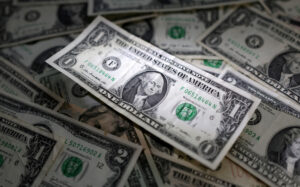
The BRICS Currency Quest Faces Significant Hurdles The prospect of the United States shifting from its strong-dollar policy has been debated for years. Former US Treasury Secretary Paul O'Neill humorously mentioned that he'd celebrate such an announcement with a brass band at Yankee Stadium. However, while challenges to the dollar's global role have often been discussed, they rarely materialize. The recent buzz about a currency shared by BRICS nations (Brazil, Russia, India, China, and South Africa) doesn't seem likely to lead to any significant change. Even if such a shared currency emerged, China's yuan would probably be the frontrunner, although its share of global reserves remains small despite being included by the IMF.
Initiatives like the New Development Bank, created by the BRICS nations as an alternative to institutions like the IMF or World Bank, don't pose a substantial challenge to the dollar. These efforts reveal more about those advancing them than about the dollar's weaknesses. Challenges to the dollar's dominance usually lack the economic leadership needed to establish a genuine alternative. Despite headlines suggesting shifts away from the dollar, these attempts often fall short due to structural and geopolitical complexities.
South Africa, hosting the recent BRICS summit, downplayed rumors of a currency shift. Officials emphasized that the focus was on establishing a common payments system and a technical committee to explore a joint currency. These efforts suggest that supplanting the dollar is a distant prospect, and the reasons for the idea gaining traction are often tied to the challenges faced by the participating nations. Russia and China, for instance, grapple with international isolation and economic pressures, respectively.
Despite periodic hype, the dollar's dominance remains firm. It constitutes around 60% of global currency reserves, followed by the euro at about 20%. The dollar's stronghold in trading also persists, accounting for 88% of all transactions in the foreign exchange market. While emerging-market central bankers may distance themselves from the Federal Reserve's actions, they still align with broader US rate trends. Establishing an alternative currency requires a decisive management authority, a hurdle that many potential contenders struggle to overcome.
For the BRICS nations, pursuing an alternative to the dollar presents significant challenges, considering their diverse interests and limited shared purpose. While the rise of the euro had its own hurdles, its establishment was aided by events like the fall of the Berlin Wall. The Federal Reserve's creation faced opposition from within the US political landscape. In contrast, BRICS lack the cohesive trajectory seen in the European Union. As of now, a genuine rival to the dollar remains elusive.

Amid Global Supply Uncertainties
Saudi Arabia Likely to Extend Voluntary Oil Cut Saudi Arabia is anticipated to extend its voluntary oil production cut of 1 million barrels per day (bpd) for a third consecutive month into October. This move comes as global supply uncertainties persist and the kingdom aims to further reduce global inventories. According to analysts cited by Reuters, the decision aligns with Saudi Arabia's efforts to bolster oil prices, benefiting initiatives like Vision 2030, which seeks to transform the nation's economy, reduce oil dependence, and create employment opportunities.
The voluntary cut was introduced after the broader deal between the Organization of the Petroleum Exporting Countries and allies (OPEC+) led by Russia to curtail supplies until the end of 2024. This extra cut pushed Saudi Arabia's oil production to a multi-year low of 9 million bpd. The voluntary reduction was initially extended into September, with the possibility of further extension or deepening, as stated by the country's energy ministry.
In response, Russia announced its own plans to cut oil exports by 300,000 bpd in September. The dynamics have impacted oil prices, with Brent oil prices seeing a 14% increase in July, the highest monthly rise since January 2022. However, August witnessed a 3% decline in prices, attributed to concerns about China's demand. China's drawdown of record inventories, influenced by rising oil costs, has prompted the world's largest oil importer to scale back purchases.
While the extension of voluntary cuts aligns with Saudi Arabia's economic goals, it also indirectly impacts global geopolitical dynamics. Higher oil prices aid Saudi Arabia's ambitious projects, such as the $500 billion Neom city. Additionally, these prices could assist Russian President Vladimir Putin in funding ongoing activities, given Western efforts to reduce Moscow's revenues through price caps and sanctions.
Despite challenges like weak economic data and a stronger US dollar, oil prices have maintained upward momentum. Morgan Stanley predicts that Brent crude prices will remain supported around $80 per barrel, as the oil market is expected to be in deficit for the second half of 2023 before slightly shifting to a surplus in the following year. While the impact of OPEC's production cuts will likely be bullish in the near term, concerns over the group's market share decline could impact prices in the long run.
Market Jitters Ahead of September

US Economic Signals Send Mixed Messages. As summer draws to a close, investors are eagerly awaiting September for potential market stabilization after a turbulent period. The Standard & Poor’s 500 index, which surged almost 10 percent in the prior months, experienced a setback, giving up over half of those gains in the past three weeks. The technology sector bore the brunt, with significant drops in stocks like Tesla, Facebook (Meta), Apple, Netflix, and Nvidia.The market turmoil stems partly from shifts in the bond market, a trend that has persisted since April. Hopes that the Federal Reserve's rate-hike campaign was nearing its end dissipated. US government bond returns turned negative, and yields on the benchmark 10-year note reached 4.28 percent, a level last seen in 2008. The housing market was affected as well, with the 30-year fixed mortgage rate surpassing 7 percent.
Amidst these fluctuations, US economic performance emerges as a paradoxical contributor. Despite the Fed's efforts to combat inflation by increasing borrowing costs, the economy demonstrated resilience. Instead of the predicted recession, the economy expanded around 2 percent in the first half of the year. Employment remained robust, unemployment rates declined to near-record lows, and inflation moderated from its peak in mid-2022.
Investors initially anticipated the Fed would initiate interest rate cuts later in the year, which would have increased the value of their holdings as yields fell. However, the stronger-than-expected economy led to a revised perception. Market participants now believe policy makers will maintain higher interest rates for an extended period to ensure inflation reaches their 2 percent target. Consequently, investors retreated from bonds, causing prices to drop and yields to rise.
In addition to domestic factors, global issues impacted the markets. China experienced a notable economic slowdown, driven by the end of its "zero-COVID" policy. Mounting debt, a burst real estate bubble, and restrained consumer spending dampened the anticipated economic boom. This, in turn, affects Western economies intertwined with China's. While cheaper Chinese imports could ease inflationary pressures, a decline in exports to China could hinder global growth.
Further contributing to market unease is the expanding US budget deficit. Money that would typically flow into equities is being redirected to Treasuries due to the government's need to offer higher yields to attract investors.

US Government Debt Rating Downgraded
Future Implications for Economy and Fiscal Policy. Fitch Ratings' recent downgrade of the US government's creditworthiness from AAA to AA+ has raised concerns about the nation's growing debt. Although the immediate market impact is limited, the downgrade could influence budget negotiations and potentially lead to a government shutdown. While not an instant crisis, the downgrade has implications for the economy and fiscal policy.
The federal government's failure to balance income and expenses each fiscal year has led to an expanding gap covered by borrowing. The US Treasury now owes $32.6 trillion to bondholders and federal entities. Fitch's downgrade primarily resulted from mounting debt and governance issues, including political battles over the debt ceiling.
Investors might perceive US Treasury bonds as riskier due to the downgrade, potentially demanding higher interest rates or avoiding them altogether. This could increase the government's borrowing costs. While this doesn't indicate an immediate financial crisis, it reflects a decline in America's fiscal standing and its capacity to protect it.
The downgrade warns Congress as it navigates fiscal challenges, including upcoming budget negotiations. Higher government debt is often linked to lower long-term economic growth, creating a cycle of reduced revenue and increasing debt. Consequently, addressing growing borrowing costs presents challenges, such as borrowing more or raising taxes, both of which carry political consequences.
Stay up to date
More Newsletter to Check


SUBSCRIBE TO NEWSLETTER
Subscribe to download our daily economics and business roundup


×
![]()