
China is reopening


China is reopening
China’s trade data may well have weakened to levels not seen since the beginning of the pandemic, but it was largely ignored.
Instead, the country’s relaxation of COVID-19 measures was center stage. This was also anticipated and reflected a clear buy-the-rumor-sell-the-fact, but the narrative was soon replaced with global recessionary pressures. One is hard-pressed to use the U.S. as a case study. The Atlanta GDP now for 4Q rose to 3.4% from 2.8% and unemployment is forecast to only rise to 5.5% next year, but 3Q productivity did decline with a fall in unit labor costs. The latter is what drove U.S. Treasuries to rally 11bps on Wednesday, although rates were largely flat on the week. Commodities still paint a different picture. Crude oil has now erased all gains in 2022, after falling 11% this week or down 23% from the November peak.
The news-flow is not much better in Europe either as construction PMIs were miserable, German industrial production is still contracting and UK house prices fell at the fastest rate since 2008. The German bund curve on a 2s/10s basis is now the most inverted it has been since 1992, just as the U.S. Treasury curve is the most inverted it has been since 1981. Inflation may be showing strong signs of peaking in emerging markets (even in Turkey), but we are yet to see a growth shock. Needless to say, the disinflationary trends across emerging markets were never expected to be uniform. Chile is the latest country to document a higher-than-expected CPI release, yet the Central Bank is expected to be the first emerging markets central bank to cut rates in 2023.
Hungary also recorded higher CPI inflation, but it will be more nuanced in coming months. The fiscal decision to remove gasoline price caps now risks inflation heading substantially higher and weighing on FX. Hungary’s energy crisis and fuel shortages are increasingly putting PM Orban on an awkward path with the EU, especially as the 7.5 billion USD funds were postponed this week. India slowed the pace of hikes to just 35bps after three 50bps intervals, with inflation expected to slow to 6.8% next year. Meanwhile, Peru’s Castillo was impeached before he fled, only to be arrested as he was caught in heavy traffic while headed to the Mexican Embassy in Lima.
For the week ahead, key interest rate decisions are coming up next week from the ECB, Fed and BOE. Chinese retail sales, industrial production and fixed asset investment data stands out, along with the 1-year MLF rates decision (2.75%). Other emerging market rate decisions include Colombia (11.0%), Costa Rica (9.0%), Mexico (10.0%), Philippines (5.0%) and Russia (7.5%). There will also be inflation releases out of Czech Republic, Hungary, Nigeria, Panama, Poland, Romania, and South Africa. Finally, the most imminent data release is Turkey’s current account deficit which will be reported late today with an inevitable focus on net errors and omissions.
The Chinese government announced several measures to support the Property Sector

In recent weeks, there was more positive news on the policy front after the 20th National Congress of the Chinese Communist Party, which concluded on the 22nd of October 2022, as the Chinese government has shown its support for and its focus on the sector and economy.
A number of supportive policies have been introduced including: (1) the gradually easing of COVID-19 policies (e.g. quarantine was cut from 10 days to eight days for inbound travelers together with clear instructions for local governments to have targeted measures that balance livelihood with lives); (2) a package of 16 supporting measures for the property sector which are mostly focused on improving the financing channels of the sector were introduced (e.g. trust lenders were encouraged to lend to the sector and banks were encouraged to lend to construction companies); (3) the government has given clear instructions to local governments to start to loosen the escrow account rules; (4) the People’s Bank of China (PBOC) has been offering another CNY200bn (~USD 28.1bn) in new loan quotas at almost no cost to commercial banks to encourage lending to developers that have delayed delivery of homes (the first batch of CNY200bn was offered in August 2022); (5) the government has been instructing the six largest commercial banks in China to lend CNY1.3tn (~USD 180bn) to 17 property developers; (6) the government has reopened the onshore A-share equity financing channel which was closed for years to help support the property developers; and (7) the Chinese government has instructed its four largest state banks to lend offshore to higher quality property developers with onshore assets as collateral.
We see these policy changes as constructive which confirms our thesis. Investor sentiment has improved in recent weeks, and we believe these measures will contribute to a gradual stabilization of the sector and improvement of home sales in the medium-term. Near-term positive catalysts include a gradual improvement in home sales after summer 2023 and more in 2024E, in addition to an expected improvement in the regulatory environment following the two sessions planned in March 2023 where the Chinese government will further support the property sector. We are also upbeat on further COVID-19 policy easing and improving financing conditions. In turn, we expect restructuring proposals from developers such as Evergrande, Logan, Sunac, Shimao and others, which may provide comfort to the market and trigger other developers to move forward.

ECB staff in pay dispute to hold talks about potential strike
Union will discuss protest action in new year if wage offer remains well below inflation rate.
European Central Bank staff will discuss protest action and even potential strikes after rejecting a pay offer well below the rate of eurozone inflation, a union official has warned. The ECB’s proposal to increase pay 4.07 per cent in January is consistent with its own opposition to deals that link wages to inflation that it believes risk fuelling a damaging wage-price spiral. But its latest offer, up from a 1.48% rise at the start of this year, is less than half what annual eurozone inflation is expected to be this year and will leave its staff with a significant pay cut in real terms. “People are losing faith in this institution,” said Carlos Bowles, vice-president of the Ipso union that represents ECB staff. “What the ECB leadership is telling us is ‘sorry we missed our own inflation target and now you, the staff, are going to pay the price’.
A recent survey by the union found “the vast majority of colleagues are angry” about the ECB’s pay offer, he said. “The pay consultation is due to finish at the end of the year and we will decide in January if we protest.” The union met ECB president Christine Lagarde a few weeks ago and she made it clear there was no room for negotiation, he said. A strike, as happened at the ECB over pension reforms in 2009, was “not excluded” but it would only “come after an escalation curve”. Staff at the Brazilian central bank went on strike earlier this year in protest over pay. But strikes are hard to organize at the ECB because it is not subject to any national law and operates under its own rules, including a “minimum service obligation” for staff, which is decided on a case-by-case basis.
The dispute puts the ECB in a difficult position as it prepares to raise interest rates for the fourth consecutive time at its meeting next week to try to tame the biggest surge in inflation for a generation. The ECB said it had also recently agreed a new “teleworking policy” with staff for them to work remotely up to 110 days per year, or about half their working time, after a long negotiation. The agreement, which will be reviewed after two years, allows ECB staff to work remotely up to 10 days a month and for no more than 10 consecutive working days.
Eurozone inflation hit double digits in October for the first time in the 23-year history of the single currency after Russia’s invasion of Ukraine caused a surge in energy and food prices. In November, eurozone inflation dipped for the first time in 17 months to 10 per cent, which is still five times higher than the ECB’s target. Over the whole of this year, the ECB has predicted inflation will be 8.1 per cent and it is likely to lift this forecast further next week. Wages in the single currency bloc have not kept pace with inflation, eating into the spending power of households and prompting economists to predict a recession this winter. Hourly labour costs in the eurozone rose 4 per cent in the year to the second quarter, according to Eurostat, the EU’s statistics agency.
Saudi Peru Congress impeached Pedro Castillo; VP Dina Boluarte sworn in as new President
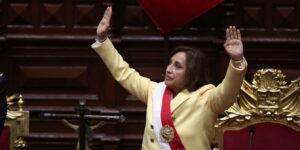
Former President Castillo attempted to unconstitutionally dissolve Congress which was followed by a successful impeachment vote against him with 101 votes (87 were needed).
The Vice President under Castillo, Dina Boluarte, has been sworn in as the new President. At the time of writing, the composition of the new cabinet is unknown. The market reaction has been relatively benign following some initial weakness on the view that governability should be similar or marginally better under Boluarte. The eventual removal of Castillo was largely anticipated with only growing momentum for his ouster since his inauguration last year.
We see President Dina Boluarte as a similar leader to Castillo with a leftist ideology and separation from the radicals, most notably Vladimir Cerron. A key issue for markets will be the cabinet composition and the Ministry of Economy and Finance (MEF). If the MEF is led by another technocrat like Kurt Burneo or Oscar Graham and Prime Minister and cabinet appointments are generally acceptable to Congress, then the market reaction should be neutral to positive. In contrast, if Boluarte puts the MEF in the hands of an unknown/ideological individual or selects a Prime Minister who is unacceptable to Congress, market and political pressure may ensue. In the event Boluarte faces similar challenges to Castillo and leaves office, then new elections would be called where we see prospects for a repeat of the 2021 election with a wide range of candidates and prospects for outsiders.
Peru has had six presidents in little over four years. In 2020, it had three in one week. But the economy of the world’s second-largest copper exporter had weathered the political instability until it was hit by the Covid-19 pandemic and the extreme dysfunction of the Castillo administration. Markets did not move much this week, though they did seem to react slightly to Castillo’s removal, with the dollar bond maturing in 2031 trading just above 86 cents on the dollar on Friday, having dipped on Wednesday to about 84.6 cents.
Stay up to date
More Newsletter to Check


SUBSCRIBE TO NEWSLETTER
Subscribe to download our daily economics and business roundup


×
![]()