
Central Asia’s Geopolitical Battle: China and Russia Compete for Influence and Resources

Central Asia’s Geopolitical Battle
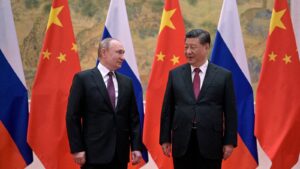
China and Russia Compete for Influence and Resources. In a high-stakes geopolitical contest, China and Russia are vying for dominance in Central Asia, a region rich in untapped natural resources and strategic importance. As tensions escalate due to uncertainty in Afghanistan and the war in Ukraine, Chinese President Xi Jinping and Russian President Vladimir Putin are intensifying their efforts to secure economic and political ties with Central Asian nations.
President Xi's recent meeting in Xi'an with Central Asia's five leaders, forming the new "c+c5" group, showcased China's ambitious plans to invest $3.8 billion in the region, offering lucrative trade deals, investments, and knowledge transfers. China already has a significant presence in Central Asia, involved in over 90 industrial projects and emerging as the region's largest trading partner in 2022.
However, Russia, fearing China's growing influence, has ramped up its own overtures to Central Asian countries. President Putin has pledged substantial infrastructure investments, particularly in building transport networks to extract and export the region's natural resources. The competition between the two powers is fierce, as both seek to solidify their economic, military, and political footholds.
The consequences of this rivalry are driving economic growth in Central Asia, with booming industries tied to transporting Russian exports. The region's economies are flourishing, currencies are strengthening, and wages are rising. However, the escalating demand for energy and resources poses challenges, as countries like Kazakhstan and Uzbekistan consider reducing gas exports to meet growing domestic needs.
As China and Russia engage in a silent standoff for influence, the battle for control over Central Asia's resources and strategic advantages continues. The outcome of this geopolitical contest will shape the region's future and have far-reaching consequences for global dynamics.
America's Looming Debt Default
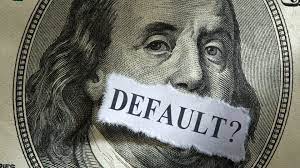
A Catastrophic Economic Crisis on the Horizon. The United States is on the brink of an unprecedented economic catastrophe as Congress faces a critical decision that could lead the country into its first-ever sovereign default. Failing to raise America's debt ceiling in time could trigger a chain reaction of devastating consequences, including stock market collapse, surging unemployment rates, and global economic panic. With the deadline to raise the debt limit approaching, the possibility of such a catastrophic event is becoming increasingly real.
Past experiences have created a false sense of security, as observers assumed that Congress would act in the eleventh hour to raise the debt limit. However, the current political landscape is more divided than ever, with Republican Speaker of the House of Representatives Kevin McCarthy pushing for significant spending cuts that could decimate President Joe Biden's legislative achievements. The impasse between Republicans and Democrats has resulted in multiple breakdowns in negotiations, further escalating the risk of a default.
The consequences of a default would be severe, with the Federal Reserve playing a crucial role in containing the fallout. The global economy would suffer, as the US is home to the world's largest sovereign debt market. Treasuries are considered risk-free assets and serve as the foundation for daily financial transactions. Even a short-term default would disrupt markets and increase the cost of borrowing, while a prolonged default could lead to a deep recession and trigger a chain reaction of credit downgrades.
The potential repercussions extend beyond the financial realm, with trust in the US government eroding and questions arising about the stability of the dollar as a global reserve currency. Once shattered, restoring faith in the US economy and financial system would be an arduous task. As the deadline looms closer, the fate of the US economy hangs in the balance, and the world watches with growing concern.
Unveiling the Bias
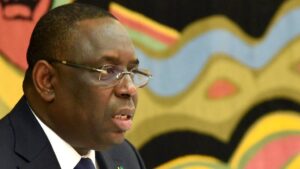
Africa Challenges Credit Rating Agencies' Assessment of Debt Risk. Since the spring of 2022, no sub-Saharan African country has tapped into international bond markets due to soaring yields on African debt, making borrowing unaffordable for most governments. The prevailing belief is that investors are shying away from risky assets amidst global uncertainties. However, African governments argue that the perceived risk is exaggerated compared to the actual risk. President Macky Sall of Senegal, speaking on behalf of the African Union, and Ghana's finance minister, Ken Ofori-Atta, have pointed fingers at credit-rating agencies, questioning their impact on Africa's debt crisis.
Critics argue that credit-rating agencies overlook positive developments in Africa and downgrade countries at the first sign of trouble, adopting a blanket approach to risk that fails to consider the nuances between different African nations. Rating agencies contend that they employ consistent methodologies worldwide and provide value through expert discretion. The debate revolves around assessing unquantifiable factors such as institutional strength and political will. African critics argue that subjective biases may influence rating decisions, with agencies potentially favoring their home country or culturally similar regions.
A recent report by the United Nations Development Programme suggests that Africa would benefit from more objective credit ratings. By comparing ratings from major agencies with risk scores from Trading Economics, the report indicates that aligning these assessments could enable African governments to borrow more frequently and at lower costs, potentially unlocking gains estimated at $75 billion. However, the issue is complex, as human judgment may detect risks that pure data analysis misses. Nevertheless, Africa's challenge against credit-rating agencies reflects a broader demand for fair treatment and recognition within the global order.
South Africa's Precarious Crossroads
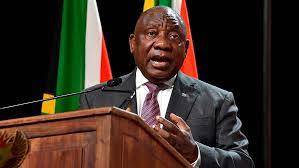
Can Cyril Ramaphosa Salvage a Nation Teetering on the Brink? In 2018, Cyril Ramaphosa's ascent to the presidency of South Africa brought hope to business leaders who saw him as a pragmatic figure capable of addressing the country's deep-seated problems. However, five years into his tenure, CEOs of large businesses are growing increasingly frustrated, and concerns about South Africa's future are mounting. Prominent business leaders, including Neal Froneman of Sibanye-Stillwater, Daniel Mminele of Nedbank, and Ralph Mupita of MTN, have sounded the alarm, questioning whether South Africa is on the path to becoming a failed state.
The challenges facing the nation, including power shortages, logistical bottlenecks, and rampant crime, have intensified, eroding confidence in the government's ability to address these issues effectively. Power cuts in 2022, which may have reduced GDP by 7-8%, have had a devastating impact on businesses, with some experiencing significant profit losses. Corruption allegations and mismanagement have plagued state-owned enterprises like Eskom and Transnet, hindering economic activity and impeding export capabilities. Crime, including theft and disruptions by criminal groups, has further hampered progress and cost the country billions.
While Ramaphosa promised to tackle these challenges, his leadership has been criticized as morally principled but lacking in effectiveness. Business leaders have taken matters into their own hands, collaborating with the government on various initiatives and providing expertise and resources. However, some critics argue that the business community needs to be more vocal in addressing corruption and communicating the severity of South Africa's crisis to the public.
The future remains uncertain, with concerns about the ruling African National Congress (ANC) party and its statist approach to governance. Some believe that a fundamental change in the political landscape is necessary to address the country's deep-rooted problems. As businesses navigate the challenges and risks, the interconnectedness between the success of the private sector and the fate of the South African economy becomes increasingly evident. The nation stands at a critical juncture, with its trajectory potentially leading to either recovery or further decline.
Stay up to date
More Newsletter to Check



SUBSCRIBE TO NEWSLETTER
Subscribe to download our daily economics and business roundup


×
![]()