
Australia’s Exposure to Chinese Downturn Raises Concerns Amid Resilient Markets


Australia's Exposure to Chinese Downturn Raises Concerns Amid Resilient Markets
Australia's pronounced vulnerability to a Chinese economic downturn has been a source of growing concern. Yet, paradoxically, commodity markets exhibit no tangible signals of an impending Chinese recession. Iron ore, a linchpin of Australia's economy, remains in high demand, with prices surging by 50% since last October. Notably, China's banking sector has outperformed its American counterparts, and Chinese government bond markets remain stable. Nevertheless, lingering uncertainties encompass China's property market woes, escalating local government debt, and troubles within the shadow banking sector.
Despite the prevailing pessimism, several factors underpin China's potential resilience. Its robust financial health, underscored by a government capable of providing a safety net for the property market, offers a buffer. A recent IMF analysis of China's government balance sheet revealed total financial assets of $12.5 trillion, ranking it as the world's wealthiest nation in terms of financial assets. Moreover, its net financial assets, equivalent to 7.25% of GDP, place it among the top 15% of nations globally. A second key consideration is the belief that much of the current economic fragility hinges on faltering consumer confidence, which could rebound as business conditions improve. Gavekal economists highlight rising employment and household incomes, suggesting that if these trends persist, household spending patterns will eventually return to normal. China's formidable economic size, global manufacturing competitiveness, leadership in energy transition, and the world's largest middle-class consumer base collectively endow it with a resilience that some observers may underestimate as they foresee an inevitable downturn.
For Australia, these concerns bear substantial weight, given that its exports to China account for nearly 8% of its GDP. With the exception of a few countries like Zambia, Chile, and the United Arab Emirates, Australia has the highest exposure to China among nations globally. For decades, Australia's burgeoning living standards have been closely tied to its export relationship with China, despite domestic productivity challenges. While fears of a Chinese economic downturn have impacted Australia's exchange rate, which has fallen from US$0.689 to US$0.645, it is still too early to adopt a doom-and-gloom perspective.
Gold Holds at Three-Week Highs Amidst Rate Hike Uncertainty, Copper Weakened by Economic Concerns

Gold prices reached three-week highs on Wednesday, aided by a weaker U.S. dollar, following disappointing U.S. economic data that led to expectations of a limited rate hike by the Federal Reserve. Gold had a strong rally over the past week, partly driven by safe-haven demand as concerns grew about the U.S. economic outlook. However, further price increases for gold were tempered by the possibility of U.S. interest rates remaining elevated for an extended period, with various economic indicators influencing the rate outlook this week.
Spot gold dipped 0.1% to $1,936.45 an ounce, and gold futures for December fell 0.1% to $1,963.85 an ounce, having surged nearly 1% each on Tuesday, reaching their highest levels since early August. Focus now turns to upcoming economic data, including revised second-quarter economic growth figures, personal consumption expenditures data, and August nonfarm payrolls. Any signs of cooling in U.S. inflation and labor market activity could reduce the Fed's motivation to raise interest rates further. Despite the Fed's commitment to keeping rates higher for an extended period, gold may not see significant relief until the central bank begins to cut rates next year. Higher interest rates have weighed on gold, making non-yielding assets less attractive to investors.
Meanwhile, copper prices weakened due to concerns about slowing economic activity after disappointing U.S. data. Although the dollar's decline limited losses for copper, uncertainty about China's role as a major importer, particularly as Beijing has not shown signs of providing fiscal support to its economy, also impacted copper's performance.
Canada's Second-Quarter GDP Slowdown May Halt Further Rate Hikes
Canada is expected to witness a significant slowdown in economic growth during the second quarter, according to a Reuters poll of economists. The forthcoming GDP report, scheduled for release on Friday, is likely to reveal a growth rate of around 1.1% for Q2, down from the 3.1% seen in the first quarter and below the Bank of Canada's (BoC) estimate of 1.5%. This anticipated slowdown could potentially prompt the BoC to pause its interest rate hikes, even though recent inflation data showed an uptick in July. The BoC has been on a tightening trajectory, raising its benchmark rate to a 22-year high of 5% in July, but it remains data-dependent and hasn't ruled out further hikes.
Analysts believe that the Q2 slowdown could be due to transient factors, such as wildfires, energy project maintenance, and a civil servants strike. The BoC's decision will also be influenced by the preliminary estimate for July's economic activity, set to be released concurrently with the Q2 data. Money markets currently indicate a roughly 70% probability of the BoC holding rates steady in September but leaning toward further tightening later in the year, potentially peaking at 5.25% in this cycle.
Pound Surges on Speculation of Fed's Rate Pause, Dampens FTSE 100a

The British pound experienced its most significant surge in six weeks, rising by 0.9%, the most since July 13, driven by optimism that the US Federal Reserve might refrain from further interest rate hikes. This boost followed a downward revision of US economic growth and weaker-than-expected job figures. The Commerce Department reported that gross domestic product (GDP) grew at a 2.1% annual rate in the three months through June, down from initial estimates of 2.4%. Additionally, private sector hiring in August fell below expectations, with the lowest number of new jobs added since March, according to ADP payroll data.
As money markets increasingly bet on the Federal Reserve keeping interest rates unchanged at the upcoming September meeting, Wall Street saw slight gains. However, the pound's ascent above $1.27 had a dampening effect on the FTSE 100, as many of its constituent companies earn revenue in dollars. The UK's blue-chip index initially rose by as much as 0.6% but was last up around 0.3%.
Addressing Climate Change Challenges in Fragile African States: Urgent Actions Needed
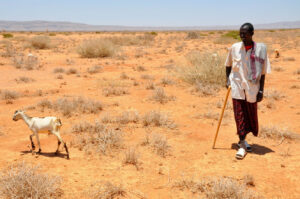
Climate change poses grave threats to countries across Africa—but especially fragile and conflict-affected states. As the continent’s leaders converge on Kenya for next week’s African Climate Action Summit, it is vital that they come up with solutions to support these vulnerable countries.
From the Central African Republic to Somalia and Sudan, fragile states suffer more from floods, droughts, storms and other climate-related shocks than other countries, when they have contributed the least to climate change. Each year, three times more people are affected by natural disasters in fragile states than in other countries. Disasters in fragile states displace more than twice the share of the population in other countries.
And temperatures in fragile states are already higher than in other countries because of their geographical location. By 2040, fragile states could face 61 days a year of temperatures above 35 degrees Celsius on average—four times more than other countries. Extreme heat, along with the more frequent extreme weather events that come with it, will endanger human health and hurt productivity and jobs in key sectors such as agriculture and construction.
Stay up to date
More Newsletter to Check



SUBSCRIBE TO NEWSLETTER
Subscribe to download our daily economics and business roundup


×
![]()