
As widely expected, the Federal Reserve hiked interest rates by 75 basis points

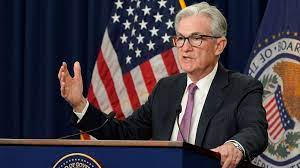
As widely expected, the Federal Reserve hiked interest rates by 75 basis points
Also, the Bank of England hiked by 75 basis points, in line with market expectations, but pushed back against the height of the terminal rate implied by markets.
Many "high-conviction" US recession calls are immediately coupled with the assertion that it will be "short and shallow." This reminds me of the behavioral trap that the "transitory inflation" proponents fell into last year. It is critical to keep an open mind on the characteristics of such a recession if it were to materialize. Simply put: There is still a lot that we simply do not know.
This week, all eyes were on the FOMC meeting and Chair Powell’s press conference following the Fed’s decision to hike the policy rate by 75bps to 4.0%, the fourth consecutive increase of this magnitude. The decision was widely expected by markets but Powell’s message was mixed in terms of the outlook for U.S. monetary policy: he appeared to signal that the pace of Fed tightening could slow down in coming months (to 50bps from 75bps), but that the “ultimate level of interest rates could be higher than previously expected”, depending on how macroeconomic data evolves.
In that context, data on the U.S. labor market released on Friday revealed that the rate of job creation continued to slow, but the U.S. still added 261,000 jobs in October, which was much better than expected. Meanwhile, average hourly earnings were also firmer, suggesting ongoing inflation pressures from the jobs market. On the flipside, the ISM services employment component suggested a slowdown in hiring momentum. As such, in a dynamic and often quite contradictory data environment, whether the Fed would be downshifting the pace of tightening in December appears likely to remain an open question for markets in the coming weeks. Meanwhile, Eurozone Q3 GDP growth and October inflation data surprised to the upside, suggesting that it is probably too early for the ECB to make a dovish pivot either. The week ended on a more upbeat tone as rumors intensified around potential earlier than expected recalibration of China’s “zero-COVID” policies, driving market optimism about a stronger pickup in Chinese economic activity next year.
And for the Emerging market credit update, we found that after delivering strong returns last week, emerging market sovereign credit (cash bonds) ended the week 0.5% lower with spreads virtually unchanged. EM corporate credit was 0.2% lower with spreads 8bps tighter. Sovereign outperformers over the week were Ethiopia, Ghana and El Salvador while Sri Lanka, Ukraine and Pakistan underperformed.
And for the week ahead, the main predicament for global investors at the moment is whether or not the Fed will be in a position to slow the pace of rate hikes in December. As such, the key U.S. data release next week will be month-on-month core CPI on Thursday. Beyond economic data releases, markets will also be focused on the U.S. mid-term elections on Tuesday and implications for the policy outlook in Washington, DC. In Asia, trade data from China and Taiwan will be published that may indicate slowing global trade. EM central bank meetings next week will be held in Poland, Romania, Mexico and Peru. In all four cases, the market consensus expects further rate hikes, but some of the central banks may signal a reduction in the pace of tightening going forward.
Interest rate rises boost Warren Buffett’s Berkshire Hathaway results

US Fed’s monetary policy hits Berkshire’s stock portfolio but nearly triples returns on its cash pile.
Warren Buffett’s Berkshire Hathaway is quickly becoming one of the principal beneficiaries from the sharp increase in interest rates in the US, as its fortress-like balance sheet begins to generate hundreds of millions of dollars in income for the sprawling conglomerate. The interest the company earns on its 109 billion USD cash pile nearly tripled from a year before to 397 million USD in the third quarter, it disclosed on Saturday, noting the gain was “primarily due to increases in short-term interest rates”.
Berkshire holds the vast majority of its cash in short-term Treasury bills, deposits at banks and in money market accounts, where interest rates have been rapidly rising as the Federal Reserve has tightened monetary policy. Last week the US central bank lifted rates to between 3.75 and 4%, up from near zero at the year’s start, and traders expect that rate to top 5% next year. While tighter policy has sent shockwaves through financial markets — even bludgeoning the value Berkshire’s mammoth stock portfolio — it is finally beginning to pay dividends for companies and consumers holding cash. Data from the Investment Company Institute showed that cash parked in money market funds that cater to everyday retail investors has swelled to a record high.
The dozens of businesses it owns, which are widely-watched for signs of the health of the American industrial and business complex, laid bare the resilience of the US economy while also signalling the potential slowdown engineered by the Fed. Berkshire’s results also showed the effects of inflation and the fights over better wages as real living standards come under pressure from higher prices. Revenues at its BNSF railroad surged 17% to 6.5 billion USD, but profits slid as the volumes of freight it shipped declined and it paid higher wages to its employees. The railroad became a flashpoint earlier this year as more than 30,000 unionized workers at BNSF threatened to strike, pushing back against conditions and demanding a boost to pay.
A tentative agreement in September delivered concessions to employees and BNSF said pay costs rose 27% in the third quarter from a year earlier. The energy businesses within Berkshire’s utility division reported a 17% jump in revenues, boosted by higher power costs. But the company’s real estate brokerage unit saw sales tumble by nearly a fifth, and operating profits at the unit plummeted 72% from the year before as the housing market cooled and it sold fewer homes. Berkshire said higher mortgage rates were also expected to pressure its handful of businesses in the housing sector. During the quarter, however, those businesses — including the brick maker Acme and flooring group Shaw — were able to raise prices and registered strong demand. Overall, operating earnings rose to 7.8 billion USD from 6.5 billion USD a year earlier. The results were helped by larger profits in its manufacturing and services business lines.

US oil producers reap 200 billion USD windfall from Ukraine war price surge
Record profits put sector in crosshairs of White House as it battles soaring inflation.
US oil producers have raked in more than $200bn in profits since Russia’s invasion of Ukraine as they cash in on a period of geopolitical turmoil that has shaken up the global energy market and sent prices soaring. Aggregate net income for publicly listed oil and gas companies operating in the US came to 200.24 billion USD for the second and third quarters of the year, according to an analysis of earnings reports and estimates carried out by S&P Global Commodity Insights for the Financial Times. The figure — which includes supermajors, midsized integrated groups and smaller independent shale operators — marks the sector’s most profitable six months on record and puts it on course for an unprecedented year. The cash bonanza has infuriated the White House as elevated petrol prices drag on Democrats’ polling numbers ahead of next week’s critical midterm elections.
President Joe Biden this week dubbed the outsized earnings a “windfall of war” and accused companies of “profiteering” from Moscow’s invasion. Unless they invested the cash haul into pumping more oil to bring down prices at the pump, he said he would ask Congress to hit them with higher taxes. Windfall tax legislation remains unlikely to pass in Washington. But it has become a reality across the Atlantic: Brussels has introduced a 33% “solidarity contribution” on excess profits, while London has enacted an additional 25% “energy profits levy” that has taken the tax on profits to 65% until the end of 2025. Rishi Sunak, the new UK prime minister, is considering increasing the levy to 30% and extending it to 2028.
The bumper profits have been underpinned by soaring free cash flow, a key industry metric which is defined as cash flow from operations minus capital spending. Elevated commodity prices have pushed up the former; investor insistence on frugality has slashed the latter. Brent crude, the international oil benchmark, averaged more than 105 USD a barrel over the second and third quarters — well above an average of around 70 USD/b over the past five years. It hit a high of almost 140 USD/b in early March after Russian tanks rolled into Ukraine. Meanwhile, Wall Street, still reeling from a decade of profligacy and persistent losses has demanded companies enter a new era of capital discipline — prioritising shareholder returns over expensive drilling campaigns in pursuit of ever-greater output growth. Investment bank Raymond James estimates capital spending by the world’s 50 biggest producers will be around 300 billion USD this year, roughly half what it was in 2013, the last time prices were at a comparable level.
Lula elected President of Brazil in a very close runoff against Bolsonaro

In the tightest Presidential Election race since the restoration of democracy in Brazil in the 1980s, left-wing former President Luiz Inacio Lula da Siva narrowly edged right-wing incumbent Jair Bolsonaro with 50.9% vs 49.1%. Lula prevailed in the runoff with a margin of just over 2 million votes (60.3mn vs 58.2mn) and each candidate won 13 of Brazil’s 26 states, further illustrating the tightness of the elections. At the time of writing, Bolsonaro has not formally conceded defeat, but ordered the transition process to begin and vowed to act in accordance with Brazil’s constitution.
We see Bolsonaro’s statement as a major step toward the peaceful transition of power to Lula, who is set to take over the Presidency on January 1, 2023. We think that a meaningful institutional crisis in Brazil is highly unlikely despite ongoing protests by Bolsonaro supporters. With election uncertainty now out of the way, in coming weeks the market focus shifts to Lula’s cabinet nominations, more specifically his economic team. Investors will also be looking for signals on the path of economic policy in general and fiscal policy in particular. Consultations have already started, and Vice President-Elect Geraldo Alckmin was confirmed as the coordinator of the transition cabinet. Alckmin is an experienced politician from the political center, so his confirmation as a leading figure in the cabinet formation process is a constructive signal from a market perspective. Investors will be particularly interested in Lula’s pick for Economy Minister given Brazil’s relatively tight fiscal space and concerns that a left-leaning Administration would have a bias toward expanding fiscal spending.
As such, the appointment of a credible economic team would be a signal that fiscal sustainability will be maintained. We expect that economic policy in the early stages of the incoming Lula Administration will be characterized by a moderate/centrist approach that would be welcomed by markets. Lula’s track record indicates that he is a pragmatic politician who would appreciate that the space for increasing taxes in Brazil is limited, which means aggressively boosting public spending would come at the cost of fueling concerns about public finances. We believe this is something that the new Administration would like to avoid. Furthermore, Brazil’s newly elected Congress has the most conservative composition in the last twenty years, which is likely to also catalyze policy moderation. A centrist Congress gives us comfort that a material shift in the economic policy framework is unlikely to occur under Lula’s third term in office as Brazil’s President.

Russia agrees to rejoin Ukraine grain exports deal
Turkey confirms resumption of pact that Putin says will focus on ensuring shipments to poorer countries
Grain shipments from Ukraine will resume on Wednesday after Russia agreed to rejoin a UN-backed initiative to allow exports via the Black Sea, ending a stand-off that threatened to reignite a global food crisis. Turkey’s president Recep Tayyip Erdoğan said Sergei Shoigu, the Russian defence minister, had phoned his Turkish counterpart to say Moscow was back on board. Addressing his security council on Wednesday, Russian president Vladimir Putin said Russia would continue to supply “the volume of grain that was supplied from Ukraine to the poorest countries” even if the latest agreement collapsed. Many Middle East and African countries have been sympathetic to Moscow’s arguments that sanctions — rather than the invasion of its neighbour Ukraine — are the main obstacle to grain exports.
The next shipments of grain would head to Somalia, Djibouti and Sudan, Erdoğan said. The Turkish leader, who has maintained close ties with Putin since Moscow launched its full-scale invasion in February, helped broker the original grain deal in July. Russia quit the pact on Saturday, accusing Kyiv of targeting its naval fleet in the Black Sea following claims of a Ukrainian drone attack on its warships. Moscow’s withdrawal threatened a rare example of wartime co-operation that has allowed more than 9 million tons of Ukrainian agricultural products to reach international markets, helping forestall a global food crisis.
Putin said Russia “would not hinder grain supplies from Ukraine to Turkey at any point in the future”, citing Turkey’s neutral stance on the war and Erdogan’s efforts to represent the “poorest countries”. He said Ukraine had given Russia guarantees not to use the grain export routes for “military means” but said Moscow “retained the right to exit the deal if those guarantees are violated”.
The original grain agreement was brokered in July by the UN and Ankara to end Russia’s blockade of grain, food and fertiliser exports via Ukraine’s ports after Moscow’s full-scale invasion of its neighbour in February. Ukraine is also seeking to lift Russia’s blockade on other commodities including steel, another source of hard currency for Kyiv. Ukraine is one of the world’s leading suppliers of grain and other agricultural products. Food security experts have warned that shortages triggered by the war will have serious consequences for poor countries already facing a crisis caused by the impact of climate change and the Covid-19 pandemic.
Stay up to date
More Newsletter to Check



SUBSCRIBE TO NEWSLETTER
Subscribe to download our daily economics and business roundup


×
![]()