
An obsession with control is making China weaker but more dangerous

An obsession with control is making China weaker but more dangerous
The Communist Party’s five-yearly congress will further tighten one man’s grip.
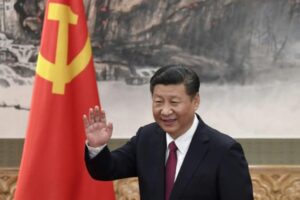
President Xi Jinping’s expected reappointment for a third five-year term as head of the Chinese Communist party and the military is set to be a watershed moment in China’s modern history. As with Deng Xiaoping’s launch of economic reforms in 1979 and his decision a decade later to crush pro-democracy protests with force, it will — for better or worse — radically alter the country’s course. The party’s 20th congress opens in Beijing on Sunday and will bring together more than 2,000 delegates from across the country. It will close a week later with the unveiling of the party’s new leadership, which is set to again be headed by Xi. In doing so, the congress will bring down the curtain on a two-decade period defined by predictable and orderly transitions from one party leader to another.
The Communist Party has always been obsessed with control. But under President Xi Jinping that obsession has deepened. After three decades of opening and reform under previous leaders, China has in many ways become more closed and autocratic under Mr Xi. Surveillance has broadened. Censorship has stiffened. Party cells flex their muscles in private firms. This is evident in Mr Xi’s response to covid-19. China’s initial lockdown saved many lives. However, long after the rest of the world has learned to live with the virus, China still treats every case as a threat to social stability. When infections crop up, districts and cities are locked down. Compulsory movement-tracking apps detect when citizens have been near an infected person, and then bar them from public spaces. It goes without saying that no one thus tagged may enter Beijing, lest they start an outbreak at a politically sensitive time.
Some hope that, once the congress is over, a plan for relaxing the zero-covid policy may be unveiled. But there is no sign yet of the essential first steps to avoid mass deaths, such as many more vaccinations, especially of the old. Party propaganda suggests that any loosening is a long way off, regardless of the misery and economic mayhem that lockdowns cause. The policy has failed to adapt because no one can say that Mr Xi is wrong, and Mr Xi does not want China to be dependent on foreign vaccines, even though they are better than domestic ones.
China is probably ahead of the West in such fields as 5g and batteries. The more powerful its economy grows, the greater its geopolitical muscle is likely to be. This is especially so if it can dominate certain key technologies, make other countries depend on it and set standards that lock them in. This is why Western governments now treat Chinese innovation as a national-security issue. Many are boosting subsidies for industries such as chipmaking. President Joe Biden’s administration has gone much further, seeking openly to cripple the Chinese tech industry. On October 7th it banned the sale of high-end chips to China, both by American firms and by foreign ones that use American kit. This will slow China’s advances in fields America considers threatening, such as ai and supercomputers. It will also harm Chinese consumers and foreign firms, which may ultimately find ways around the new rules. In short, it is too blunt a tool.
US consumer prices rise despite Fed rate increases
Once again, hotter than expected US inflation numbers for both the core and headline measures… and, therefore, bad news for the Federal Reserve and markets and, more importantly, the economy and especially the most vulnerable segments of society. Headline came in at 0.4% month-on-month, higher than both the consensus forecast and the prior print. The annual measure is 8.2%. Core inflation was 0.6% (MoM) and 6.6% (annual) – both above consensus projections. In sum, ugly all around.
The rapid rise in US consumer prices showed no signs of abating in September, prompting a see-saw trading session on Wall Street, as investors weighed whether the Federal Reserve would have to become even more aggressive to slow rampant inflation. The consumer price index’s core measure of inflation, which strips out volatile energy and food costs, rose 6.6% on an annual basis last month, faster than the 6.3% rate in August — and its fastest pace in four decades — suggesting underlying inflationary pressures are still accelerating.
The increase in the overall CPI last month, including energy and food, rose 8.2% over a year earlier, little changed from the 8.3% annual rise recorded in August. Investors and economists had been looking for signs that the Fed might start to slow the pace of its interest rate rises. But the CPI data released yesterday suggest such a move is not yet on the immediate horizon.
The S&P 500 dropped 2.4% shortly after Wall Street’s opening bell on Thursday; before markets opened, the futures market had indicated a 1.3% gain. However, stocks staged a dramatic turnround and closed 2.6% higher. The Nasdaq Composite ended 2.2% higher, recovering from a decline of about 3.2%. The yield on two-year Treasuries, which is sensitive to changes in monetary policy expectations, surged 0.24 percentage points to 4.53%, its highest level since mid-2007, before dropping back to be up 0.18 percentage points up on the day.
Following the report, traders in the futures market priced in a 98% chance that the Fed would lift interest rates by 0.75 percentage points in November. We believe that high inflation readings will keep the Fed in an aggressive tightening mode and on course for at least another 125 basis points this year. The futures market now expects the fed funds rate to reach 4.94% by May 2023, up from 4.65% the previous day. The central bank’s policy rate is in a target range of 3% to 3.25%.

Liz Truss has made Britain a riskier bet for bond investors
There is no way for her to go back to the way things were before. Liz truss has already secured her place in British political history. However long she now lasts in office, she is set to be remembered as the prime minister whose grip on power was the shortest. Ms Truss entered Downing Street on September 6th. She blew up her own government with a package of unfunded tax cuts and energy-price guarantees on September 23rd. Take away the ten days of mourning after the death of Queen Elizabeth II, and she had seven days in control.
One problem is financial stability. The Bank of England has twice widened its emergency bond-buying programme to try to prevent a spiral of forced selling of assets by pension funds. As a sign of markets’ continuing unease, sterling slid when Andrew Bailey, the bank’s governor, said on October 11th that purchases would end as planned three days later. Officials had reportedly been briefing bankers that they might be extended after all.
The UK’s new chancellor Jeremy Hunt has admitted that Liz Truss’s government went “too far, too fast” in last month’s “mini” Budget and that in the near future taxes will have to rise and spending will have to be cut in order to regain economic credibility. In a statement on Saturday evening Hunt said the government had to be “honest with people” and “take some very difficult decisions both on spending and on tax to get debt falling”. He pledged that “the top of our minds when making these decisions will be how to protect and help struggling families, businesses and people”.
The prime minister is trapped. Right now her choices are to slash the state, reverse course on tax cuts or carry on as though nothing is really wrong. In the end, though, either financial markets or Westminster politics will force her to stop pretending that she has any prospect of toughing it out. That is why Ms Truss’s premiership is already fatally spoiled.
Truckers grow anxious as AdBlue shortage applies brake to German industry
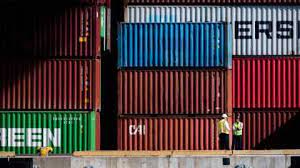
Production cuts of liquid that is lifeblood of haulage industry could damage supply chains in EU’s biggest economy. After suffering months of supply chain chaos, a dearth of drivers and surging fuel prices, Germany’s trucking industry is facing a new crisis: a chronic shortage of the liquid that keeps its vehicles on the road. AdBlue, a mixture of urea and deionized water, is the lifeblood of logistics. But stocks are drying up after SKW Piesteritz, a company in the east German town of Wittenberg, which is one of Germany’s biggest sources of the solution, halted production to cope with the soaring price of gas. There is going to be such an outcry in the population if supply chains break down and supermarkets empty out.
The German economy is heading for recession, burdened by its worst energy crisis since the second world war. Moscow’s decision to cut off gas supplies pushed prices to levels four times higher than a year ago — prompting some energy-intensive plants to halt operations even as the government held out the prospect of generous subsidies to bring down costs.
SKW Piesteritz became one of the most high-profile casualties of the surge in gas prices when it shut down completely in August. It later brought one of its two production lines back up to “minimum levels”, but the second remains offline. If they have kept producing, they would have been making losses of 100 million EUR every month.
The problems are affecting all industries that consume a lot of energy. Recent official data showed glass and ceramics production declined by 2.8% between July and August, chemicals by 3.1%, while coking plants and oil refineries saw output fall by 4.5%. Toilet paper manufacturer Hakle filed for insolvency in September citing the increase in energy and commodity prices. Nor is the situation expected to resolve quickly, despite the recent fall in gas prices from record highs over the summer. The IMF expects the German economy to shrink next year by 0.3%— the worst performance of any large economy bar Russia. Markus Steilemann, head of chemicals lobby group VCI, recently warned that Germany risked turning from an “industrial country” to an “industrial museum”.
The IMF’s latest World Economic Outlook paints a turbulent picture
The Fund kept its 2022 global growth forecast unchanged from its update in July at 3.2% but further lowered its estimate for 2023 by 20bps to 2.7%, led by Europe. The IMF sees global inflation peaking in 3Q22 with a downward trajectory led by advanced economies in 2023. The report emphasizes the downside risks to the outlook and mounting challenges that the cost-of-living crisis, war in Ukraine, and slowdown in Chinese growth pose to the global economy and financial stability.
While the global economic backdrop is undoubtedly difficult, the emerging market/developed market growth differential remains set to improve in 2023 to 2.6%, from 1.3% this year, as the slowdown is anticipated to stem mostly from developed markets. The report supports our view that the Fed and global central banks must remain vigilant in the fight against inflation while growth continues to stall, keeping the risk of market volatility elevated in the near-term. Economies which have adopted more conservative monetary and fiscal policies, particularly early-on, should fare better. This includes rate hikes, limited FX intervention in aim to preserve FX reserves and targeted social fiscal measures.
Stay up to date
More Newsletter to Check



SUBSCRIBE TO NEWSLETTER
Subscribe to download our daily economics and business roundup


×
![]()