
A relatively quiet late summer week in global markets. The July FOMC minutes released mid-week offered a balanced tone.


A relatively quiet late summer week in global markets. The July FOMC minutes released mid-week offered a balanced tone.
On one hand, several Fed policy makers expect that economic activity in the second half of the year will slow down noticeably as aggregate demand in the U.S. economy responds to tightening of financial conditions. On the other hand, the FOMC remained of the view that inflation continues to be “unacceptably high” and inflationary pressures are “broad based”.
In that context, some committee members appeared to support the view that once the Fed policy rate reached a “sufficiently restrictive” level, it would need to be kept there for “some time” to ensure the desired impact on inflation.
Amid a “balanced Fed” view, DXY extended gains into the week’s end; equities attempted to rally, but the S&P 500 failed to break 4,300 and finished the week closer to the 4,200 level, around 1.3% lower on the week. As attention now turns to the Jackson Hole symposium to be held August 25-27, the strength of the U.S. labor market will be the key focus for anticipating the Fed’s likely trajectory. The FOMC had hinted at expected employment growth slowdown, but the July employment report came in very strong with nonfarm payrolls rising more than double consensus expectations and the unemployment rate falling to 3.46%.
As such, in addition to Jackson Hole, the other main events that global markets will be watching ahead of the next FOMC on September 21 to determine if the Fed is likely to hike 50 or 75 bps, will be the August jobs report on September 2 and the August CPI data on September 13. Meanwhile, the July monthly economic data in China this week surprised on the downside in terms of manufacturing, retail sales, and investment. This was likely the reason behind PBoC’s decision to cut the MLF policy rate by 10bps to 2.75%. Elsewhere In EM, the Central Bank of the Republic of Turkey (CBRT) shocked markets with a 100bps policy rate cut to 13%, despite inflation running at close to 80% YoY.
Turkey shocks markets with a 100bps policy rate cut.
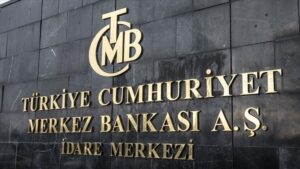
After being on pause since December 2021, the Central Bank of the Republic of Turkey (CBRT) resumed easing policy this week, surprising markets with a 100bps rate cut to 13%.
The CBRT’s decision came as a surprise to market participants who overwhelmingly expected policy to remain on hold, in the context of official CPI inflation running at around 80% YoY and ex-post real interest rates of close to a staggering -70%. Despite rampant inflation and completely unanchored inflation expectations, orthodox rate hikes in Turkey are seen by investors as an absolute last resort due to stringent political constraints. In fact, the authorities opted to deliver a rate cut this week, likely encouraged by the recent increase in FX reserves and perceived less hawkish tone by the global systemic central banks. From our perspective, CBRT’s policy decision-making remains heavily clouded by political constraints and is deeply misguided.
We think the authorities’ decision to further loosen already extremely easy monetary policy will likely only exacerbate existing macroeconomic imbalances and make the economy even more fragile ahead of a challenging fourth quarter. Instead, authorities could have used temporary relief factors such as robust tourism revenues during the peak summer season and other recent ad hoc FX inflows into the economy to re-build buffers. Against this backdrop, we expect pressure on the embattled TRY to gradually increase as we move toward year-end, and balance of payments dynamics start to weaken more noticeably.
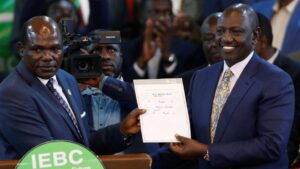
Kenya faces elevated political uncertainty amid likely legal dispute over presidential election results.
The President of Kenya’s Independent Electoral and Boundaries Commission (IEBC) declared on Monday that Deputy President William Ruto has won the August 9 presidential elections with 50.5% of the vote against 48.9% for opposition leader and former Prime Minister Raila Odinga.
However, four out of the seven IEBC members did not endorse the announced outcome, pointing to the “opaque nature” of the election results. Not surprisingly, losing candidate Odinga rejected the results, saying that they “must be quashed by a court of law”.
Assuming the Odinga camp files an official legal challenge in the coming days, Kenya’s Supreme Court will have 14 days from the date of filing to opine on the validity of the results announced this week. If the court rejects the results, new elections will have to take place within 60 days. As such, markets are looking at prolonged near-term political uncertainty, while risks of social unrest have also increased. A protracted legal battle over the disputed election results would inevitably introduce policy paralysis in an economy already struggling with significant domestic and global headwinds as well as sizable twin deficits (budget and external). These imbalances would require a significant and timely macroeconomic adjustment under the next administration.
Vital FX liquidity injections by the IMF under Kenya’s existing program that runs until May 2024 also hinge on resolving the political uncertainty and forming a new administration committed to IMF cooperation in due course. From a market point of view, President-elect (according to the official results) Ruto would be the preferred option, given he has firmly rejected the notion that Kenya needs to renegotiate its external debt obligations his opponent Odinga appeared to be in favor of. However, Kenya’s next president and his administration will inherit fragile social and economic environments, which will make credit-positive economic policy adjustments challenging to devise and implement, in our view.
Ghana Central Bank hikes rates in aim to stabilize cedi.

The Bank of Ghana (BOG) held an emergency meeting this week on the back of renewed FX pressure and unrelenting inflation.
The BOG hiked the policy rate by 300bps, exceeding market expectations by 100bps, to 22%, announced a phased hike in the reserve requirement ratio from 12% to 15%, and intend to purchase voluntary export repatriation from the oil sector.
We see the action as constructive and necessary in the context of FX depreciation and challenged domestic financing conditions. However, the impact will likely be moderate in nature as sentiment and inflation dynamics remain highly linked to the fiscal outcome as well as IMF program negotiations. We expect talks to continue in the coming months with greater clarity on program timing and elements after the IMF Fall meetings and fiscal performance in 2H.

Egypt’s President Abdel Fattah El-Sisi appoints new Central Bank Governor and reshuffles cabinet.
Hassan Abdalla, former CEO of Arab African International Bank, was appointed as the new Central Bank Governor, following Tarek Amer’s resignation and appointment as Presidential Advisor.
This followed a cabinet reshuffle which included new ministers at the Ministries of Irrigation, Public Enterprises, Industry, and Tourism. The Bank of Egypt left its policy rate unchanged at this week’s meeting.
We see the personnel changes as potentially indicative of intentions to evolve policy to align with elements of the next IMF program, which remains in negotiation. While decision-making is highly concentrated, the technocratic appointments at the above ministries could open the path for incremental reform and investment in the associated sectors. On the monetary front, the focus will be on Abdalla’s willingness for greater EGP flexibility, which has reportedly been a sticking point for the Fund and a challenge to execute domestically. Despite this week’s uneventful Central Bank meeting, we expect further rate and FX adjustments at the coming meetings.
Stay up to date
More Newsletter to Check


SUBSCRIBE TO NEWSLETTER
Subscribe to download our daily economics and business roundup


×
![]()