
The debt market’s transactions tended to collectively rise for the second week, with the average rate of return on short-term government debt instruments “treasury bills”

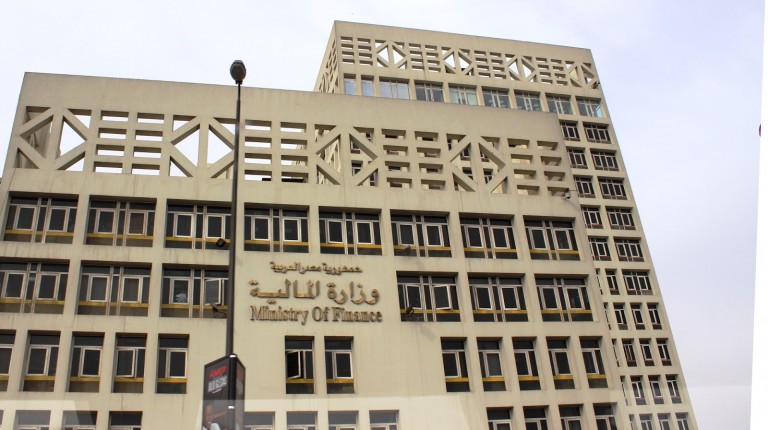
For our top talks today, first, the debt market’s transactions tended to collectively rise for the second week, with the average rate of return on short-term government debt instruments “treasury bills” with the exception of treasury bills for a period of 182 days. The rise in the indices of short-term debt instruments coincides with the increasing demand of investors, to slightly increase the coverage from 2.61 times to 2.65 times last week. The average return on government debt instruments continued to rise for the fourth consecutive week during the last central bank auction, bringing the “IR money” index to its highest level since last August. The Ministry of Finance increased its sales of treasury bills by 64,76% in last week’s settlements by approving offers worth 57.668 billion EGP, an increase of 22.66 billion over the announced value of bids of 35 billion. (CBE & Ministry of Finance)
- Second, the global inflation wave continues to creep towards the local market, which will reflect positively on sectors, and negatively on others.
The past months witnessed record increases in food prices around the world, which were outweighed by the rise in the prices of natural gas and oil. These increases resonated locally, as the prices of food and building materials rose, and the government recently issued a decision to increase gas prices for the cement, petrochemical, and iron and steel industries, by nearly 28%.
- We believe food companies will face strong pressures on the working capital cycle, and profit margins will push them to gradually increase the prices of their products, at rates ranging between 6 and 9% next year, in addition to another increase before the end of this year, as a result of sharp increases in the prices of raw materials.
On the other hand, fertilizer companies will benefit as a result of the increased demand for their products in light of the increase in grain prices, and the decrease in the supply of them, as a result of global weather conditions. The outlook for the real estate sector varies in light of the increases in building materials prices, as some see it as a haven in the face of inflationary pressures, while others believe that necessary spending will be the best option.
- Equally important, the tax Authority revealed that it will start the second phase of the electronic invoice system early next January for 2,700 companies with the tax commissions of joint stock companies and investment.
The application will oblige 1,700 companies from the tax mission of joint stock companies and 1000 companies from the investment mission to issue electronic invoices for the goods and services they sell. Noting that this stage comes after the completion of the first stage, which included the application of the electronic invoice to about 3000 companies in the center of major financiers, which was gradually achieved through 3 stage. (Al-Mal)
- Turning to our top talk abroad, China's imports of crude oil in October fell to their lowest levels since September 2018, as major state-owned refiners refrained from buying due to high prices, while independent refiners were constrained by limited import quotas.
Official data showed that China, the world's largest importer of crude oil, received 37.8 million tons of oil last month, which is equivalent to 8.9 million barrels per day. This figure is lower than 9.99 million barrels per day in September and 10.02 million barrels per day in the same period last year. Elsewhere, China's economic planning agency said the country raised its daily coal production to a new year-on-year high of 11.88 million tons after concerted efforts to ease supply shortages as winter approaches, and that production may rise further. (Reuters)
- And for our EGX & companies talks, an alliance of a group of entrepreneurs established “Noqod Holding Company”, with the aim of investing in the field of non-banking financial services, as well as financial technology solutions “Fintech”.
“Noqod Fintech” currently negotiating with MasterCard International to seize the right to manufacture and issue about 5,000 payroll cards and ATMs with a business volume of about 20 million EGP in the first year. The second entity affiliated with “Noqod Holding” will be the “Shop Fi Egypt” company for information technology, which has a capital of 4 million EGP, which was pumped to provide the necessary infrastructure for consumer finance and financial services companies, unlike the rest of the entities operating in the market. This company records a volume of operations of approximately 25 million EGP in the first year by contracting with 30 clients. (Arab Finance)
- In the same fashion, Swvl plans to invest around 25 million USD in 2022, part of which will be allocated for its engineering team in Egypt. The rest of the investment will go towards its marketing plan. It is noteworthy that the investment comes as part of a longer-term global expansion plan to invest up to 300 million USD over the next three years.
Currently, the company is working on updates to the drivers’ app that will allow drivers to receive payments right before trips begin, as well as pay for gas online. The company is also in talks with banks to provide new vehicle loans to Swvl drivers. (Hapi Journal)
- Likewise, lighthouse Education, a state-backed education investment platform, has reached a first close of 560 million EGP, beating its initial fundraising target.
Backed by the Sovereign Fund of Egypt, the fund will channel investment into K12 private schools and originally targeted a 500 million EGP first close. According to the statement, Al Rajhi Investment Holding Company (Rajhi-Invest) has become the latest limited partner in the fund with a 75 million EGP commitment. It is worth noting that the platform aims to acquire majority stakes in at least two of four shortlisted K12 private schools before the end of 2021, and was conducting early due diligence over the summer. (Arab Finance)
- Also, Raya Contact Center (RACC) has acquired an 85% stake in Gulf Customer Experience (Gulf CX) in a fully self-financed transaction.
The company aims at refinancing the transaction through a loan, noting that Raya is currently in talks with local and international institutions over the terms and conditions of the loan. The potential loan will be partially used to develop the infrastructure of the company and boost its efficiency, pointing out that the financial position of the company would support its abilities in obtaining bank loans. (Al-Mal)
- By the same token, Simplex Industrial Solutions and Software, specialized in manufacturing computer numerical control (CNC) machines, plans to establish a new factory for the production of CNC machines used in drilling work on metal and wood surfaces.
The company is currently preparing studies for the inauguration of the new factory in the 10th of Ramadan area which will increase the production capacity of Simplex by up to 100%. Also, the company is negotiating with a number of banks to obtain credit facilities estimated at about 40 million EGP for the new factory, which will be the largest of its kind in the Middle East. (Arab Finance)
- Furthermore, Bonnya Company for Fiber Optic Cables, one of the companies of the “Bunya” group, and Banque Misr signed a financing contract worth 481 million EGP.
The financing aims to establish the largest fiber-optic cable factory in Egypt and Africa to cover the demand for fiber-optic cable products in Egypt, the Middle East and Africa, in addition to providing high-quality cables due to their production in cooperation with one of the largest companies operating in the field of optical cables in the world, “Corning” company. (Al-Mal)
- Moreover, LMD Real Estate Development Company is considering increasing the value of the loan it obtained from a banking consortium, to reach 3 billion EGP, to continue construction operations at its One Ninety project in New Cairo.
The company targets 6 billion EGP of contractual sales in the project during the current year, which will rise next year to 8 billion EGP, and plans to start delivering the administrative units during 2023 in light of contracting with more than one party to seize buildings in the project, including the Arab African Bank and the Egyptian Bank Gulf, and one of the oil companies and another insurance, other than the Libya Investment Company. (Al-Mal)
- In addition, the Egyptian company Aresco has completed the supply of 15 “dump” equipment for giant trucks “DUMBER”, for the Sukari Gold Mines Company in Egypt. It is worth noting that Al-Sukari Gold Mining Company recently signed a new agreement to support and develop the heavy mining equipment industry in Egypt.
Under the agreement, for the first time, dumpers for giant trucks were manufactured locally instead of importing them from abroad, in cooperation with the Egyptian company Aresco. It is expected that the supply of another 30 “dumpers” will be completed, starting from this month until next February, bringing the total supplied equipment to 45. It is worth noting that these dump trucks achieve savings of approximately 1.5 million USD annually in terms of the quantities of fuel used compared to older models. (Al-Mal)
- And finally, Seidel International intends to supply bottling lines for 3 Egyptian companies involved in bottling water and oils, with a total value of 10 million EUR. The company revealed that it will supply filling lines worth 10 million EUR to “Global Water Solutions” and “Al Noor Water” companies, along with an unnamed local company.
Seidel International is looking to provide technical support to Bareeq Advanced Industries and help it improve and increase its production processes, within the framework of the global entity's interest in waste recycling activities and environmentally friendly industries. (Al-Mal)
Stay up to date
More Newsletter to Check



SUBSCRIBE TO NEWSLETTER
Subscribe to download our daily economics and business roundup


×
![]()