
Kenya topped the list of African countries importing Egyptian cement during the first five months of this year

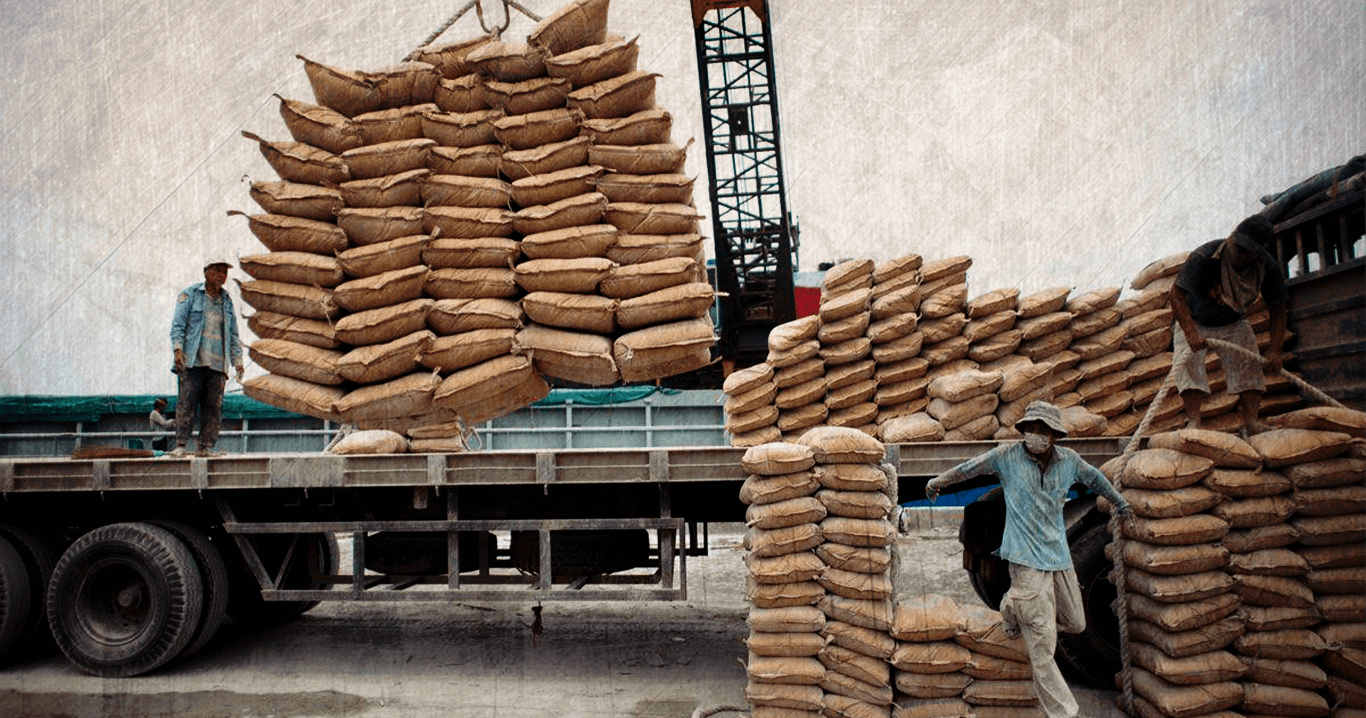
For our top talks today, Kenya topped the list of African countries importing Egyptian cement during the first five months of this year, an increase of 117% amounted to about 346 million EGP compared to the same period last year. In a related context, in terms of the marble and granite product, Sudan ranked first in the African countries importing the Egyptian marble and granite product during the first five months of this year, with an increase of 338% compared to the same period last year. We believe there is a chance for promising investment opportunities for local contracting and building materials companies, and the possibility of penetrating African markets and acquiring more business, coinciding with the African countries’ need for infrastructure construction or development.
- On the other hand, Egypt cement prices for the consumer continued to rise during the current week as mentioned and expected last Sunday, with some companies raising their prices by 20 pounds per ton, to record the price per ton from 980 to 1080 pounds, compared to 960 to 1060 pounds last Friday.
The cement companies raised the prices of their cement products this week with increases between 10-20 EGP per ton within two days. And it is expected to more increase gradually starting from today.
- Equally important, Egypt sustainable hydrogen economy, the Egyptian Natural Gas Holding Company (EGAS) and the Egyptian Petrochemicals Holding Company (ECHEM) signed a memorandum of understanding (MoU) with Toyota to study the possibility of producing the low carbon fuel ingredient blue ammonia.
Under the deal, a study will be conducted to explore the economic feasibility and best opportunities available in the petroleum sector to implement projects to capture and store carbon dioxide for producing blue ammonia using the latest Japanese techniques. We believe that blue ammonia might offer a quicker and cheaper route to a hydrogen economy noting that blue ammonia should play an important role, whether it’s a role as a transition or it’s a role as part of the long-term energy mix.
- In addition, Alexandria Oil & Soap, one of the companies affiliated with the Ministry of Supply, aims to aims to break into African markets and increase the presence of its products there during the next stage, especially oils, detergents, and soap product.
Noting that the company agreed to export oils and detergents to South Sudan, and the quantities targeted for supply are currently being discussed, in addition to the fact that it was agreed with the state of Burundi to export 200 tons of safflower oil during the coming period.
- Moving to our companies and M&As talks, first, Matouk Bassiouny and Hennawy (MBH) announced that Agthia Group has completed the acquisition transaction of a 75.02% stake at a value of 2 billion EGP in Egypt’s Ismailia Agricultural and Industrial Investment.
In April, the board of directors of the leading Abu Dhabi-based food and beverage company Agthia approved to acquire a majority stake in Egypt-based Ismailia Agricultural and Industrial Investment.
- Furthermore, regarding yesterday’s SODIC news that a consortium of UAE’s Aldar Ventures and sovereign wealth fund ADQ has submitted a mandatory tender offer for 90% SODIC.
The available options for the consortium include the approval of the MTO, holding onto their stake in SODIC and maintaining development plan in partnership with Aldar, or raising Act Financial’ stake in SODIC to remain as the largest shareholder in the company. The offering price is slightly higher than the initial price that ranged between EGP 18 and 19 per share. It is worth noting that Act Financial, Concrete Plus, and Hassan Allam Properties hold a combined stake of 17.16% in SODIC.
- And for our investments talks, Khalda Petroleum Co. (KPC) made four petroleum discoveries during fiscal year (FY) 2020/2021 with total reserves of about 21 million barrels of oil equivalent.
The company's total investments reached 594 million USD, while the average daily output included 615 million cubic feet of gas. Also, it is worth noting that Khaleda and Qarun Petroleum aim to increase the volume of investments in their concessions in Egypt by about 360 million USD this year, bringing their total investments to more than 1 billion USD. It is worth mentioning that the petroleum sector made major achievements in exploration, drilling, and development fields last year despite the challenges posed by the pandemic.
- By the same token, United Company for Trading & Distribution (UCTD) signed an agreement with Bayer’s Consumer Health Division to import and distribute over-the-counter (OTC) products in the Egyptian market.
The new deal marks a new strategic alliance with promising prospects and high benefits for consumers. Both medical manufacturers will provide a multitude of benefits to the market and the Egyptian market simultaneously.
- Turing to our EGX talks, Egyptian Chemical Industries (Kima) announced that subscription to its issued capital raise was covered by 73.39%.
The company is raising its capital by 2 billion EGP to 6.46 billion EGP from 4.46 billion EGP through the issuance of 400 million shares. The subscription, conducted over two phases, covered 293.59 million shares with a rate of 73.39%. Moreover, Wadi Consulting reduced its stake in United Company for Housing and Development to 2.2% from 3.08%. The transaction involved the sale of 2.9 million shares for 17.18 million EGP, averaging 5.9 EGP apiece. During the first half (H1) of 2021, United Company for Housing and Development registered net profits of 65.73 million EGP, down from 70.23 million EGP in H1-20. The sales fell to 92.93 million EGP in the January-June period from 120.78 million EGP in the year-ago period.
- And finally, since the 4th wave of COVID-19 is coming, so selfcare quarantine symptoms are back! The Egyptian Gulf Company for the Reclamation of Desert Lands announced an investment of 50 million EGP in establishing a factory to produce 22 “cosmatic” natural medical products from high-quality pure jojoba oil in the local markets.
The company aims to put Egypt on the map of the largest producing and manufacturing countries of jojoba oil in the world, stressing that the company has an ambitious plan to conquer global markets with Egyptian jojoba oil, whose efficiency has been proven globally with its unique qualities.
Stay up to date
More Newsletter to Check


SUBSCRIBE TO NEWSLETTER
Subscribe to download our daily economics and business roundup


×
![]()