Trump's first China visit in his second term (May 12–15) landed warmer than expected. The mood was cordial, the talks ran twice as long as scheduled, and both sides left with something to show for it. But let's be clear: this was not a reset. The fundamental competition between the two powers in technology, trade, and geopolitics remains firmly intact. What Beijing and Washington agreed on — implicitly and explicitly — was that managed stability is preferable to open confrontation, at least for now.
Three Things That Surprised Markets
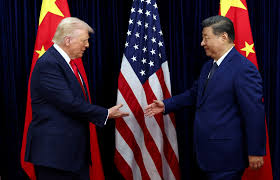
1. Trump struck a calmer and more controlled tone throughout the visit.
No provocative posts, no off-script remarks, no last-minute demands. Trump called Xi a "friend" and a "great leader," describing him as "all business, no games." Xi reciprocated with his own headline: "China and the United States both stand to gain from cooperation and lose from confrontation." The diplomatic warmth was real — but it should not be mistaken for a structural shift. Both leaders know exactly where the fault lines are. They chose, deliberately, not to stand on them this week.
2. Nvidia chips may be heading to China — and that changes things.
Jensen Huang's presence at the summit was not ceremonial. Reports indicate that around ten major Chinese firms — including Alibaba, ByteDance, Tencent, JD.com, Lenovo, and Foxconn — may be approved to purchase Nvidia H200 chips. If confirmed, this represents a quiet but consequential shift in U.S. export control policy. For years, cutting China off from advanced semiconductors has been the centerpiece of Washington's technology rivalry strategy. The fact that this may now be selectively unwinding suggests the U.S. is quietly concluding that a full technology blockade carries too high an economic cost — for American companies as much as Chinese ones. Markets moved instantly: Nvidia jumped 4.4% in a single session, overtaking silver to reach a $5.52 tn market cap. No official confirmation has been issued yet, but the signal from Huang's presence alone was enough.
3. China's purchase commitments were large but largely priced in.
LNG, oil, soybeans, agricultural goods, and up to 200 Boeing aircraft were all signalled. These are big numbers on paper — but markets had been expecting them. Boeing fell around 4% on the news, a textbook buy-the-rumour, sell- the-news reaction. The deeper point is that both economies remain structurally dependent on each other: China needs
U.S. technology and food supply; America needs Chinese manufacturing and critical minerals. The purchase commitments are less a gesture of goodwill and more an acknowledgment of that mutual dependency.
On Iran & Hormuz: The Most Concrete Outputs
This is where the summit delivered its most specific and consequential results. Both sides published a named list of commitments — rare in itself for a U.S.-China meeting:
- The Strait of Hormuz must remain open — agreed in writing by both sides
- China explicitly opposes militarizing the Strait or charging tolls for passage
- China agreed to buy more American oil specifically to reduce its own Hormuz exposure
- Both sides agreed Iran cannot be permitted to acquire nuclear weapons
- S. companies were granted expanded access to Chinese markets
- China committed to increasing direct investment into the S. and cracking down harder on fentanyl precursor flows
The catch — and it is a significant one — is that none of these commitments come with quantitative targets, specific timelines, or enforcement mechanisms. They are statements of intent, not binding obligations. Trump summarized the Iran file himself as "to be continued." That phrase carries more weight than it sounds: the war is not over, the ceasefire remains fragile, and the Hormuz closure continues to distort global energy markets. What Beijing and Washington have done is agree on principles. Turning those principles into coordinated action is an entirely different challenge.
Taiwan: The Issue Both Sides Chose Not to Touch
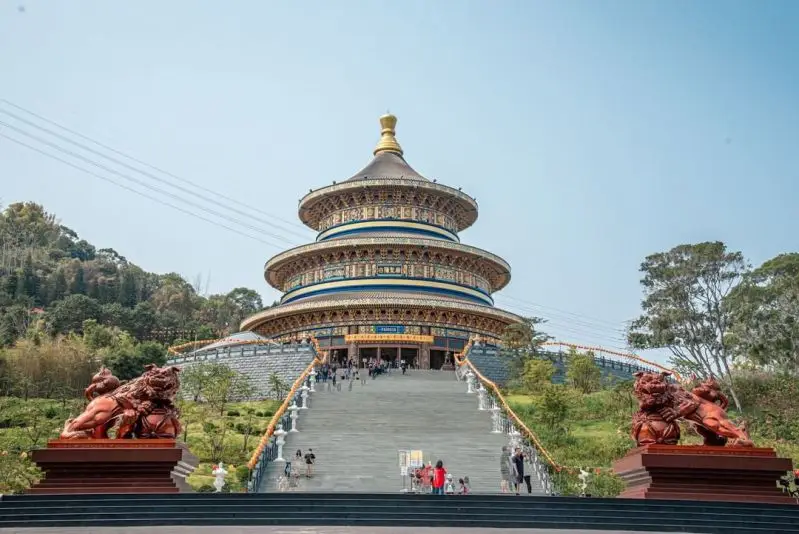
Taiwan was the most telling part of the summit — not for what was said, but for what was carefully avoided.
When a reporter asked Trump directly about Taiwan at the Temple of Heaven, he responded with nothing but praise for his hosts. No position, no commitment, no signal of any kind. The non-answer was deliberate. Both sides had made a calculated decision before the summit even began: pushing on Taiwan would detonate everything else on the table — the Iran coordination, the technology opening, the trade truce. So they set it aside.
But setting it aside is not the same as resolving it. Xi made that clear, describing Taiwan as "the most important issue in China-U.S. relations" and warning that mishandling it could lead to "collision or conflict." Beijing's position is unchanged and unambiguous — the island is an integral part of Chinese territory. Taipei firmly rejects that claim. Washington continues to maintain deliberate ambiguity over how it would respond to any military move across the Strait — a posture that satisfies no one fully but has kept the peace for decades.
None of that changed in Beijing. What the summit revealed is that Taiwan is now being actively managed as a deferral — kicked down the road in exchange for short-term progress on Iran and trade. That is a reasonable trade-off in the near term. But deferrals on Taiwan have a track record of expiring at the worst possible moment, and the underlying tensions — military build-up, semiconductor supply chains, identity politics on both sides — have not diminished. The next geopolitical shock, wherever it comes from, could easily bring Taiwan back to the center of the conversation faster than either side would like.
What Comes Next
• Xi invited to Washington: September 24
• APEC in Shenzhen: November
• Trade truce expiry: later this year
Both sides have formally framed the next three years around a "constructive China–U.S. relationship of strategic stability" — which is diplomatic language for managed coexistence. Cooperation comes first, competition is measured, and differences are kept manageable. That framing is workable as long as both sides follow through. The test will come on three fronts: whether trade negotiations produce substance before the truce expires, whether the technology policy shift on semiconductors gets formally confirmed or quietly reversed, and whether U.S.-China coordination on Iran holds up as the ceasefire continues to be tested.
Bottom Line
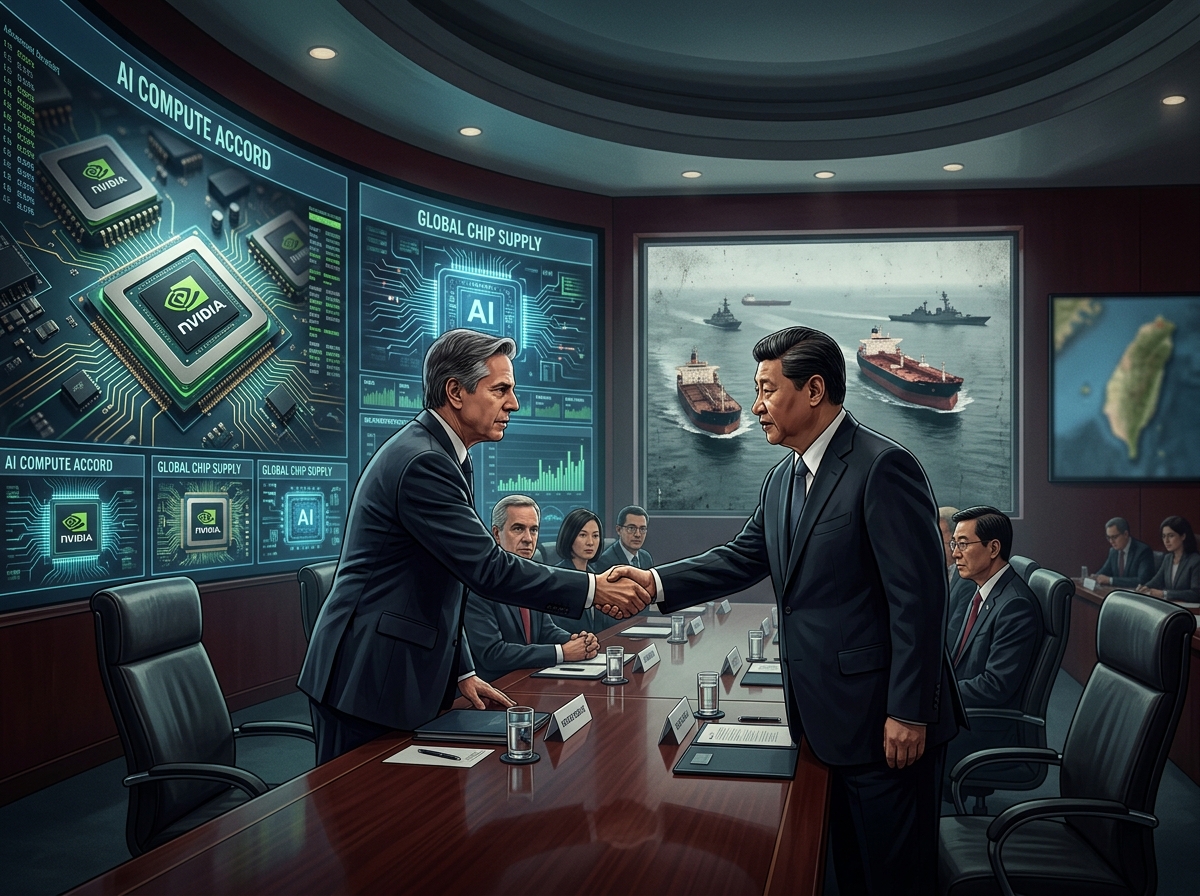
The summit delivered more than the low expectations heading in. The Nvidia semiconductor signal is the single most market-relevant development to watch closely. The Hormuz commitments are meaningful on paper but need follow-through to matter in practice. Taiwan was consciously parked — not resolved. And the broader relationship is in a better place than it was six months ago, but the structural competition between the two powers has not gone anywhere. Managed coexistence is the new baseline. How long it holds depends entirely on what happens next.


