
Saudi Arabia piles pressure on UAE to shift COP28 focus away from oil and gas


Saudi Arabia piles pressure on UAE to shift COP28 focus away from oil and gas
Sultan Al Jaber, president of the COP28 summit, is holding a special meeting of ministers in a bid to get a deal to reduce the use of all fossil fuels for the first time. Al Jaber told reporters on Sunday that now the “time has come for us to shift gears” in climate negotiations to deliver a timely and ambitious outcome for the two-week talks, which are due to end Dec. 12. An agreement to call for a fossil fuel phase out or phase down has been a key demand of many countries at COP28 including the US and EU. Last week, Saudi Arabian Energy Minister Prince Abdulaziz bin Salman said the kingdom won’t agree to a text that calls for the phase down of fossil fuels. The text must be agreed unanimously.
A Gulf official said the Saudis were not happy with the way the UAE was handling the discussions in Dubai. Saudi Arabia’s minister of energy Prince Abdulaziz bin Salman, half brother of Crown Prince Mohammed bin Salman, missed his scheduled UN plenary session on Saturday after being waylaid in negotiations, a person briefed on the matter said. The Saudi-dominated Opec oil cartel has also complained that the talks are seeking to exert “undue and disproportionate pressure against fossil fuels”, prompting a backlash from European ministers. In a letter to Opec nations Haitham Al Ghais, the Kuwaiti oil executive serving as the cartel’s secretary-general, asked them to “reject any test or formula that targets energy, ie fossil fuels, rather than emissions”. It was first reported by Reuters.
The cartel has become much more aggressive in opposing any threat to oil and gas production in the past year. It has attacked the International Energy Agency on multiple occasions for its opposition to new fossil fuel projects. Opec has accused the IEA of destabilising energy markets and setting the world on course for a future energy crisis. The IEA says that oil, gas and coal demand are all set to peak before the end of this decade, but more aggressive government action will be required to see demand decline substantially enough to address climate change. Opec argues oil demand will keep expanding due to population and economic growth, forecasting it will be about 15 % higher by 2045. The question of the future of fossil fuels has become the defining issue of COP28, fuelling geopolitical tensions as the talks enter their final four days.
Jay Powell under pressure to set out plan for US interest rate cuts
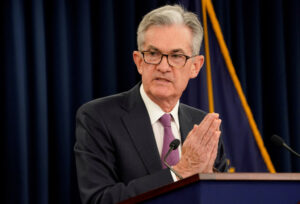
Federal Reserve chair faces communication challenge as investors think cooling economy means tightening is over. Federal Reserve chair Jay Powell faces a tough balancing act this week to maintain flexibility in the US central bank’s policy plans in the face of intense pressure to reveal when and by how much it intends to cut interest rates next year. As the Federal Open Market Committee prepares for its final two-day gathering of 2023 on Tuesday, Powell confronts an increasingly mixed economic picture. While the labour market is resilient and consumer spending is solid, there are signs of slower growth and, in turn, lower inflation. Against this backdrop, the Federal Reserve is set to hold interest rates for their third policy meeting in a row and keep the federal funds rate at a 22-year high of 5.25-5.5 %.
But as officials extend a pause in rate increases that has been in place since July, they are not ready to say interest rates have reached a level “sufficiently restrictive” to get inflation down to their 2 % target. Nor are they ready to publicly discuss in greater detail the circumstances under which they would lower borrowing costs next year beyond improved price pressures. The challenge for Powell this week is financial markets are not buying his warnings that additional monetary tightening is still on the table. Investors believe the world’s largest economy is already slowing enough to obviate the need for further rate rises. Moreover, they are convinced that incoming data will force the Fed to cut interest rates sooner than it expects. This thinking has led financial conditions to loosen in recent weeks, raising concerns that some of the Fed’s work in trying to damp demand is being jeopardised.

Argentina's new libertarian leader softens his Economic radicalism
Javier Milei is pledging rapid reforms to halt Argentina’s decline as he takes the reins of a country in a deep economic crisis three weeks after winning the presidency with an insurgent anti-establishment campaign. Javier Milei became the world’s first avowedly libertarian head of state on Sunday. The self-described “anarcho-capitalist” will take charge of an economy in crisis. Annual inflation is currently 143%. There are more than 15 exchange rates and a morass of price, capital, import, and export controls. The actual fiscal deficit—obscured by government accounting trickery—could be as high as 10% of GDP.
Mr Milei has promised immediate shock reforms. His planned “omnibus law” may include deregulating the mining and energy sectors as well as privatising some state companies or transferring ownership to their employees. He will probably seek to slim the state, by simplifying the tax system and trimming the number of ministries. But those reforms require parliamentary assent. Mr Milei’s coalition holds only a tenth of seats in the Senate and 15% of seats in the lower house.
Argentina’s economy is in its most fragile state for two decades, with annual inflation running above 140 %. The central bank has exhausted its foreign exchange reserves, leaving businesses unable to buy the dollars to settle some $60bn worth of debt with foreign suppliers, and the government is at risk of going into arrears on its 43 billion USD programme with the IMF, which Milei will need to renegotiate. Interest payments are spiralling on a pile of more than 20 billion USD in short-term liabilities issued by the central bank to local financial institutions to mop up an excess of pesos in circulation.
Seeking to lower expectations of a quick improvement, the president-elect has warned of a period of “stagflation” as his “fiscal reordering” hits economic activity and Argentina feels the impact of expansive money-printing by the Peronists. Economists say Milei is all but certain to quickly devalue the peso. The government-set official exchange rate values the Argentine currency at just over 400 pesos to the dollar, even as black market traders charge almost 1,000 pesos per greenback. Milei’s interior minister, Guillermo Francos, last week said 650 pesos to the dollar would be a “reasonable” rate.
UBS hit with 400 million USD of Credit Suisse-linked property costs
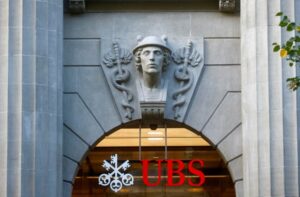
UBS has been hit with 400 million USD of real estate costs tied to its takeover of Credit Suisse, including breaking leases on offices occupied by its defunct rival. UBS has begun transferring thousands of Credit Suisse staff to its own buildings and removing the fallen bank’s logos from its UK headquarters in Canary Wharf and New York head office in Madison Avenue. The Swiss lender has taken a 200 million USD expense on the Credit Suisse leases for 2022 and another for 2023, according to a filing to US Securities and Exchange Commission published on Friday. A person with knowledge of the costs said they were not only tied to terminating contracts early, but also for refurbishing offices.
UBS’s takeover of Credit Suisse — which was agreed in March, but completed in June — is the most significant bank merger since the global financial crisis. So far, 13,000 jobs have already been cut from the combined group, though thousands more are expected to go in the coming years. Sergio Ermotti, UBS’s chief executive, recently said he expected 2024 to be the hardest and most costly year in the integration, which is projected to take three years. Last month, the bank reported its first quarterly loss in almost six years as it was hit with 2.2 billion USD of expenses tied to the deal.
UBS began removing Credit Suisse’s brand in New York in August, replacing signs at the collapsed bank’s US headquarters. A month later, UBS informed staff in Credit Suisse’s London office at One Cabot Square that employees would begin to move into UBS’s main office near Liverpool Street and that all transfers would be completed by the end of 2024. In order to make room for the incoming Credit Suisse staff at 5 Broadgate, UBS broke an agreement it had with Grant Thornton to sublet two floors to the accounting firm. Credit Suisse sold One Cabot Square to the Qatar Investment Authority in 2012 but took a long-term lease on it to 2034. The building underwent an expensive revamp in 2019 just before Covid-19 hit, with executive floors spruced up. Credit Suisse was one of the first major tenants of the Canary Wharf estate. The Docklands financial district was the brainchild of Michael von Clemm, chair of Credit Suisse First Boston.
Stay up to date
More Newsletter to Check


SUBSCRIBE TO NEWSLETTER
Subscribe to download our daily economics and business roundup


×
![]()