
Global Inflation Concerns Loom

Global Inflation Concerns Loom
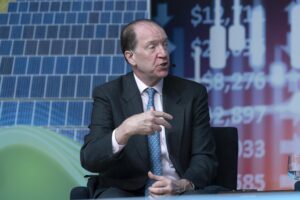
Economists Foresee Prolonged High Interest Rates. World economies are set to face high inflation in the upcoming year, as indicated by a Reuters poll involving over 200 economists. A significant 75% of them expressed concerns that inflation could be higher than anticipated, hinting at extended periods of high interest rates. Although many anticipated central banks, including the U.S. Federal Reserve, to begin reducing rates soon, current trends suggest a delay, with rate cuts more probable in the second half of 2024. This represents a considerable shift from earlier expectations. The latest Reuters survey also highlights growth downgrades and inflation upgrades for the majority of the 48 global economies surveyed. Additionally, while most economists anticipate a rate cut by the Federal Reserve by mid-year, recent polls show decreased confidence in this outlook. Finally, the Reserve Banks of New Zealand, Australia, Indonesia, and India, as well as the Bank of Japan, are revising their monetary policies, indicating the global scope of these inflationary concerns.
Israeli-Gaza Conflict Concerns
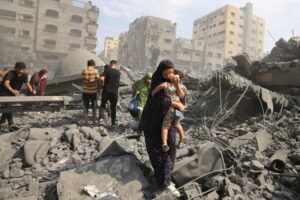
Potential Ripple Effects on Global Economy Discussed at FII Forum. Prominent figures in the banking sector convened at the Future Investment Initiative forum in Saudi Arabia, where they voiced significant concerns regarding the potential global economic repercussions of the Israeli conflict in Gaza. The event, often referred to as "Davos in the Desert," served as a platform to discuss the challenges the ongoing conflict presents, particularly in light of Saudi Arabia's strategic efforts to diversify its economic portfolio beyond its traditional oil stronghold.World Bank President, Ajay Banga, emphasized the profound implications of the war, suggesting it could have far-reaching impacts on global economic development. He characterized the current situation as being at a pivotal and potentially dangerous crossroads. Echoing this sentiment, BlackRock CEO Larry Fink highlighted the broader geopolitical ramifications, cautioning that if such conflicts remain unresolved, the world could witness a surge in global terrorism. This increase, Fink warned, could lead to heightened societal fear, diminished hope, and subsequent contractions in global economies.Furthermore, Saudi Arabia's stance on the conflict became clearer when the nation's crown prince publicly condemned the attacks targeting civilians in Gaza, labeling them as heinous crimes. In a related diplomatic context, US President Joe Biden provided insights, suggesting a link between Hamas' initial attack on Israel and broader attempts to normalize diplomatic ties between Israel and Saudi Arabia—a move he had been actively supporting.
Japan's Economic Ranking Slides, Germany Rises
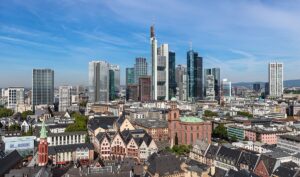
IMF Forecasts Further Changes. According to the International Monetary Fund (IMF) projections, Japan's nominal gross domestic product (GDP) will fall from its third-place global position, being surpassed by Germany this year. Despite Japan's sustained status as the world's third-largest economy for over a decade, the decline of the yen and other factors have influenced this shift. While Japan had earlier given up its second position to China in 2010, further projections suggest Japan might fall to the fifth place between 2026 and 2028, with India expected to become the third-largest economy by 2027. The IMF's recent World Economic Outlook highlighted India as a significant growth engine for the global economy, while also downgrading China's growth forecast due to challenges in its real estate sector. Notably, the recent geopolitical tensions, including conflicts in Ukraine and the Israel-Hamas war, have further implications on the world's economic landscape.
Amidist High Economic Pressure

China Experiences Sharp Decline in Foreign Direct Investment. China is witnessing a significant drop in foreign direct investment (FDI), increasing the strain on its government and local administrations already grappling with an economic slowdown. According to the Financial Times, which used data from China's commerce ministry compiled by Wind, FDI plummeted 34% year on year in September to Rmb72.8bn ($10bn), marking the largest decline since monthly reporting began in 2014.Post-pandemic restrictions lifting at the start of the year saw an initial surge of 15% in FDI in January compared to the previous year, but this was followed by a sequence of double-digit percentage decreases each month from May onward. Despite this downturn, the country's year-to-date inflows under commerce ministry data are just 8% below last year's record. Contrasting with China's previous FDI boom during the pandemic, even when it was largely isolated from the rest of the world, Brad Setser of the Council on Foreign Relations highlighted that foreign corporations appear to be pulling out their profits from China rapidly rather than reinvesting.Several factors are contributing to this trend: deteriorating diplomatic ties with the U.S., Western calls for supply chain "de-risking", and higher U.S. interest rates which attract U.S. companies to repatriate working capital from China. Interestingly, while FDI in manufacturing has waned, there is a shift towards sectors like finance, IT, and scientific research. Amidst these FDI challenges, Chinese President Xi Jinping recently expressed intentions to lift constraints on foreign investment in its manufacturing sector, emphasizing that China's well-being is intertwined with global prosperity.
Amid Economic Headwinds
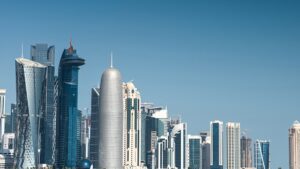
MENA Oil Exporters Strive for Diversification. Oil exporters in the MENA region are proactively working towards diversifying their economies to better navigate the inherent booms and busts of the oil market. The World Bank has highlighted the committed efforts of these nations, with the Gulf states, especially the UAE, making significant progress in their diversification pursuits. The six-member GCC, which comprises heavyweights like Saudi Arabia and the UAE, is not just focused on minimizing their dependence on hydrocarbon revenues. They are launching initiatives to grow non-oil sectors, introduce comprehensive societal reforms, and specifically, to boost women's participation in the workforce. Despite these efforts, there are concerns regarding the regional economic growth which is projected to decelerate this year. Geopolitical tensions, particularly the Israel-Gaza conflict, pose additional uncertainties. The World Bank's Roberta Gatti has stressed the value of adopting stable budgeting practices and diversification as a shield against such external shocks. She specifically highlights the significant steps taken by countries like Saudi Arabia in transforming their economies, not just by focusing on their oil reserves but by leveraging and enhancing their human capital. This holistic approach to diversification and sustainable planning could be pivotal for the region's future economic stability.
Stay up to date
More Newsletter to Check


SUBSCRIBE TO NEWSLETTER
Subscribe to download our daily economics and business roundup


×
![]()