
Amid inflation battle: Fed raises interest rate to 22-year high

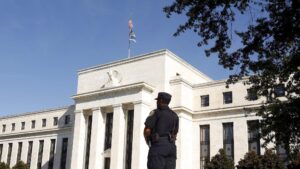
Amid inflation battle: Fed raises interest rate to 22-year high
The US Federal Reserve raised interest rates to a 22-year high on Wednesday in response to surging inflation. The quarter-percentage point increase brought the rates from 5.25% to 5.5%, following a pause in the rate-rising cycle last month.
Despite 12 consecutive months of declining inflation, currently at an annual rate of 3% compared to over 9% in June of the previous year, the Fed aims to cool the economy and control prices by gradually raising rates from near zero.
The US economy remains resilient despite the Fed's aggressive approach, with strong hiring and a near-record-low unemployment rate. Fed chair Jerome Powell stated that future rate adjustments would depend on careful assessments of economic data ahead of the next meeting in September.
However, some officials within the Fed are concerned that recent declines in inflation may only be temporary. Fed governor Christopher Waller warned that the full impact of rate increases might not yet be apparent, raising the possibility of unforeseen consequences in the future. The rising rates have already affected mortgage and car loan prices, making credit more challenging to obtain for Americans. (Bloomberg)
Anticipation builds: Bank of England's interest-rate decision and escalating volatility in UK markets
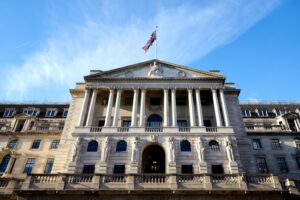
Investors are bracing themselves for the Bank of England's upcoming interest-rate decision, which is expected to be a close call. UK bond markets are experiencing heightened volatility as big banks like Goldman Sachs, HSBC, Barclays, and UBS predict a significant 0.50% rate hike on Thursday. In contrast, various indicators and analyst polls suggest a more conservative 0.25% rate increase.
This scenario stands in contrast to the recent quarter-point rate hikes by the US Federal Reserve and the European Central Bank. The Bank of England officials face challenges as they strive to strike a balance between the necessity for tighter policies to combat inflation and the risk of stalling economic growth due to uncertainty surrounding the appropriate extent of tightening.
Volatility in UK rates is on the rise, and the pound has strengthened over 6% this year, reflecting the market's anticipation of an impending rate hike by the Bank of England.
As the decision date approaches, market participants are closely watching to see how the Bank of England addresses the inflationary pressures and navigates its policy course to support the UK's economic stability. (Bloomberg)

Amidst climate concern: Banks vote to limit accounting of emissions in bond and stock sales
Banks developing global carbon emission standards for underwriting have voted to exclude most of these emissions from their footprint, attributing only 33% to their capital markets. Environmental advocates push for full responsibility, as with loans.
Accounting of emissions will impact banks' carbon-neutral targets, with many aiming for net-zero emissions by 2050. Partnership for Carbon Accounting Financials (PCAF) has the final say on adopting the 33% accounting share for capital markets, facing delays due to disagreements.
The working group includes Morgan Stanley, Barclays, Bank of America, Citigroup, HSBC, BNP Paribas, NatWest, and Standard Chartered. Barclays and Standard Chartered express support for PCAF's work.
Uncertainty remains on whether banks will combine capital market and lending-related emissions into a single target. The Science Based Targets initiative is also developing net-zero standards, further influencing banks' approaches. (Reuters)
With global energy challenges: Africa on the verge of emerging as a major player in energy markets

Africa emerges as a potential solution for Europe's energy challenges, with significant gas reserves and green energy potential. International energy firms are eyeing Africa for liquefied natural gas (LNG) projects, and new technologies allow renewable energy exports.
Africa holds 13% of global gas reserves and 7% of the world's oil. LNG projects are being revived in Tanzania and Mozambique, attracting investment and boosting Africa's importance in energy markets.
The continent could add 90 billion cubic meters in annual LNG capacity by 2030, contributing 8.5% of global gas production. Additionally, Africa's potential to produce green hydrogen makes it attractive for exporting renewable energy.
To realize its energy potential, Africa must overcome challenges such as speed and competition from other gas-producing nations. Africa's reasonable cost-competitive oil and gas production allows it to remain competitive even as energy demands and prices change in the global market. (The Economist)

With the global temperature mounting: Tourist economy of Greece under threat as wildfires rage on
Wildfires have devastated thousands of hectares of forest on Greek islands, leading to the evacuation of over 30,000 tourists and locals from Corfu, Evia, and Rhodes. With temperatures surpassing 40°C and a week-long blaze, Rhodes experienced chaos, with some flights canceled until August. On Corfu and Evia, holiday-makers fled luxury villas along the coast.
Natural-disaster experts, attributed the disaster to an unprecedented heatwave and very strong winds. To aid local forces, several EU countries and Turkey sent firefighters and water-dropping aircraft.
Tragically, on July 25th, an old Greek air-force firefighting plane crashed in Evia, emphasizing the immense risks faced by firefighting teams. As the annual northerly winds, known as the meltemi, are expected to strengthen, little respite lies ahead.
The situation remains critical, with extensive damage on the Greek islands. International assistance has been vital, but the wildfires continue to pose a formidable threat. Authorities are preparing for further challenges due to the potential intensification of the meltemi winds. (The Economist)
Stay up to date
More Newsletter to Check



SUBSCRIBE TO NEWSLETTER
Subscribe to download our daily economics and business roundup


×
![]()