
Balance of payments in Egypt shows a surplus of $281.9 million over nine months

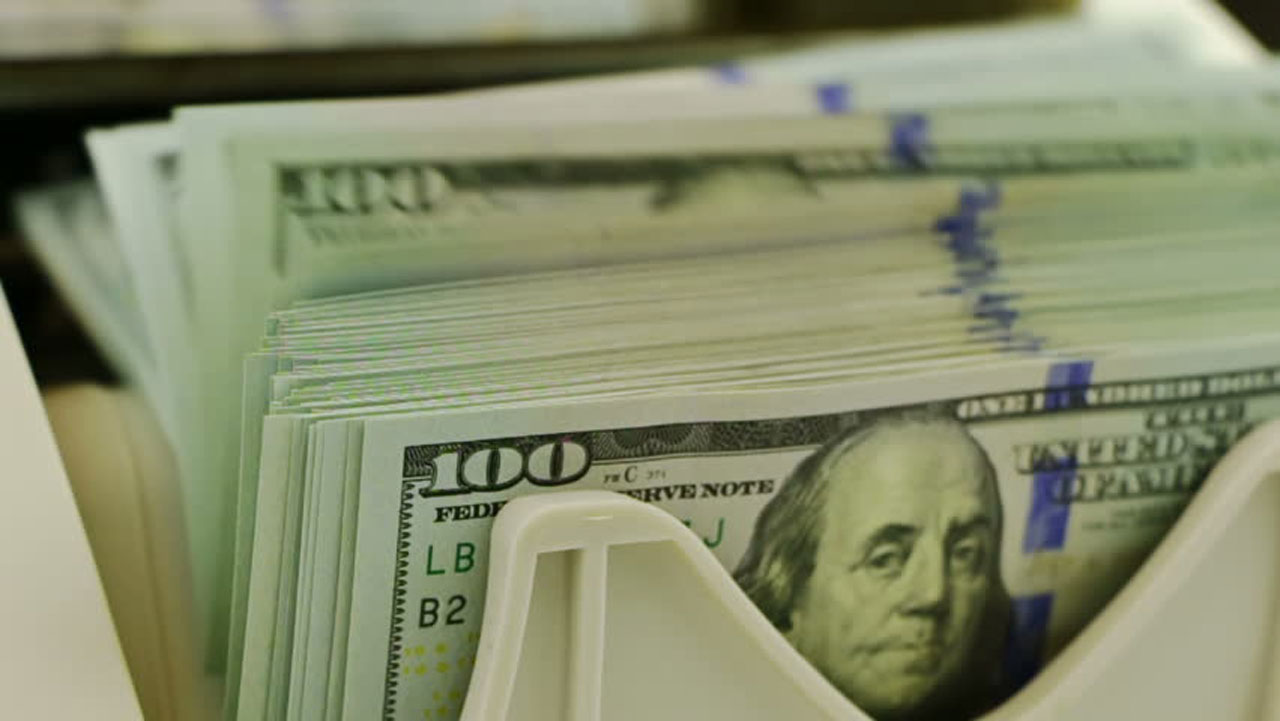
Balance of payments in Egypt shows a surplus of $281.9 million over nine months. Egypt’s balance of payments (BoP) reported an overall surplus of $281.9 million in the initial nine months of fiscal year 2022/2023, the Central Bank of Egypt (CBE) announced. The current account deficit significantly narrowed down by 61.2% to $5.3 billion during this period compared to the previous fiscal year, primarily due to a 29.8% decrease in the trade deficit. Inflow into the capital and financial account reached $8.1 billion, and foreign direct investments rose to $7.9 billion. However, portfolio investments in Egypt experienced a net outflow of $3.4 billion during the nine-month period. (Arab Finance)
- IMF revises down Egypt's FY 2023/24 GDP growth prediction to 4.1%.
The International Monetary Fund (IMF) has reduced its growth forecast for Egypt's GDP to 4.1% for the 2023/2024 fiscal year, down from the prior estimate of 5%, according to their World Economic Outlook report released on July 25th. The IMF held its estimate for Egypt's economic growth at 3.7% for the previous fiscal year, 2022/2023. The IMF's global economic growth forecast stands at 3% for both 2023 and 2024. The IMF emphasizes the importance of sustained disinflation and financial stability for most economies. (Arab Finance)
- Al-Ahli bank allows deposits in all currencies following customer identification protocols.
The National Bank of Egypt (NBE) affirms its customers' freedom to deposit in multiple currencies, providing they comply with 'Know Your Customer' identification protocols. This announcement aims to tackle any illicit activities and ensure adherence to existing controls. Earlier, the NBE unveiled two 3-year certificates in US dollars, offering returns of 7% and 9% respectively. The 'Al-Ahly Plus' certificate offers an annual return rate of 7%, with quarterly returns in the same currency. Clients may also borrow up to 50% of its value in Egyptian pounds for investment, capped at 10 million pounds at a 2.25% return. (Hapi Journal)
- Egypt clears goods valued at $131B over the course of 21 months.
Egypt's Minister of Finance, Mohamed Maait, reported that imported goods worth $131 billion have been released from ports and customs outlets within 21 months till June. Despite this, goods valued at $3.5 billion are yet to receive customs clearance. Since its launch in October 2021, over 1.2 million registration requests have been filed in the advance cargo information (ACI) system. Emphasis is given to the swift customs release of essential commodities, medical supplies, petroleum products, and fuel. Al-Shahat Ghattouri, Head of the Egyptian Customs Authority, stated the country is incorporating digitalization and AI based on the latest global standards. (Arab Finance)
- Egypt witnesses 80% hotel occupancy rate in the year's first half.
Egypt's hotel occupancy averaged 80% during H1 2023, a rise from the previous year's 65% for the same period. Hurghada hotels had the highest occupancy rates at nearly 100% in April, followed by Cairo at 80-85%. Tourist stays typically lasted 7-10 nights, with average spending at $100 per night. Over 75% of hotel guests were Europeans. The country's operational hotel capacity is around 220,000 rooms, with the Red Sea and South Sinai contributing about 130,000. With 7 million tourists in H1, Egypt is nearing its goal of 15 million annual visitors, aiming to increase this to 18 million next year. (Asharq)
- Fawry begins discussions with Saudi payments for possible expansion in Saudi Arabia.
Fawry, a prominent player in banking technology and electronic payment, has initiated preliminary discussions with Saudi Payments, a subsidiary of the Saudi Central Bank. The aim is to secure a license and certification to extend its services into the Saudi market, according to a company statement from July 26th. This move aligns with Fawry's expansion plan in the Gulf Cooperation Council (GCC) region. The talks are anticipated to wrap up by year's end, to be followed by a final evaluation. Fawry's CEO, Ashraf Sabry, stated that this move could potentially unlock value for the Saudi market and consumers. (Arab Finance)
- Business sector minister discusses building two solar power plants with an Egyptian-French consortium.
The Public Business Sector Minister of Egypt, Dr. Mahmoud Esmat, met with representatives from Orascom Construction and French firm ENGIE to explore potential collaboration in renewable energy, specifically solar power generation. They discussed the development of two solar power plants. The first is meant to serve the aluminium complex in Nagaa Hammadi, while the second is planned for a new aluminium production project in Safaga region. These initiatives are being coordinated with the Ministry of Electricity and Renewable Energy. The meeting signifies an ongoing effort to increase the use of renewable energy sources in Egypt's industrial sector. (Hapi Journal)
- Egypt and Serbia in talks to establish a free trade agreement.
Egypt and Serbia are in discussions to establish a free trade agreement aimed at boosting trade and mutual investments, as per the Egyptian Ministry of Trade and Industry. The proposed agreement follows increased trade between the nations, which grew to $113.59 million over the past year, up from $79.74 million in 2021. Key traded items include fertilizers, fruits, plastics, machinery, and electrical appliances. Serbian Minister of Internal and Foreign Trade, Tomislav Momirovic, expressed eagerness to fortify economic ties with Egypt, citing increased official visits between the two nations as a testament to their growing bilateral relations. (Economy Plus)
- TSFE inks memorandum of understanding with India's indorama for exploring investment prospects in Egypt.
The Sovereign Fund of Egypt (TSFE) has signed a memorandum of understanding with Indorama Corporation to explore various investment opportunities in Egypt, particularly in mining, fertilizers, phosphate extraction, medical fibers, and other sectors. They are also considering possible participation in a range of investment areas, consistent with Egypt's State Ownership Policy Document and the government's drive to foster private sector partnerships. During a meeting with Indorama's chairman, Prime Minister Mostafa Madbouly confirmed government support for the company's expansion in Egypt, emphasizing the commitment to encourage existing Indian investments and attract new ones. (Arab Finance)
- Kuwait's budget records a surplus for the first time in nine years due to boosted oil revenues.
Kuwait has recorded its first actual fiscal surplus in nine years, valued at $20.9 billion, for the fiscal year 2022/23, driven by a significant rise in oil revenues, according to the Kuwaiti Ministry of Finance. Oil revenues saw a 64.7% annual increase, totalling $87 billion, while non-oil revenues fell by 12.8% to $6.8 billion. Oil accounted for 92.7% of total revenues. The average oil price per barrel was $97.1, a 21.4% hike compared to the previous fiscal year. Despite oil market volatility, Kuwait's strong financial standing, substantial reserves, and financial stability shield it from short-term impacts and help navigate challenges, noted Deputy Prime Minister and Acting Oil Minister, Dr. Saad Al-Barrak. (Economy Plus)
Stay up to date
More Newsletter to Check



SUBSCRIBE TO NEWSLETTER
Subscribe to download our daily economics and business roundup


×
![]()