
As economic challenges persist: Fractures surface in the US labor market: is trouble brewing?


As economic challenges persist: Fractures surface in the US labor market: is trouble brewing?
In June, the US labor market experienced a significant slowdown in growth, with employers adding the smallest number of payrolls since the end of 2020. This downward trend in hiring has raised concerns about the overall health of the labor market.
The hiring patterns in the US labor market are becoming increasingly concentrated in a few sectors. This lack of diversification in job creation could limit opportunities across different industries, potentially leading to imbalances and challenges in the overall labor market.
The underemployment rate, a measure that goes beyond the headline unemployment rate, has reached its highest level in nearly a year. More Americans are reporting part-time employment due to economic reasons, indicating a slowdown in the overall labor market conditions.
Black Americans are facing disproportionate challenges in the labor market. The jobless rate for this demographic surged to its highest level in almost a year in June, and they accounted for a significant portion of the increase in unemployed Americans. Black workers tend to be overrepresented in low-wage sectors, making them more vulnerable to job losses during periods of economic uncertainty.
In response to the changing market conditions
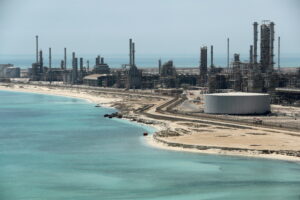
Saudi Arabia commits to major oil production cuts. In a surprising move, Saudi Arabia has announced a significant cut to its oil output for July, adding to the broader OPEC+ agreement aimed at boosting global oil prices. The country's energy ministry revealed that production would decrease from 10 million barrels per day (bpd) in May to 9 million bpd in July, marking the largest reduction in years.
OPEC+, consisting of OPEC member nations and allied countries like Russia, holds substantial influence over global crude supply, with around 40% under its control. The unexpected decision to reduce supply in April briefly drove international benchmark Brent crude prices up by 9 USD. However, concerns about global economic weakness and its impact on demand have since weighed on prices. Brent crude ended the week at 76 USD.
With ample spare capacity and storage, Saudi Arabia is the only OPEC+ member capable of adjusting output levels easily. Their ability to respond swiftly to market conditions was evident during the initial stages of the pandemic, when they implemented record output cuts. Now, OPEC+ has extended those cuts until the end of 2024 as part of a comprehensive deal on output policy.
This decision sends a clear signal that OPEC+ is determined to support prices and discourage speculators. By defending a price floor, the group aims to thwart any attempts to manipulate the market. Analysts predict a strong market response when trading reopens on Monday, as the OPEC+ agreement demonstrates a united front in their efforts to stabilize and elevate oil prices (Reuters)
Amidst economic uncertainty
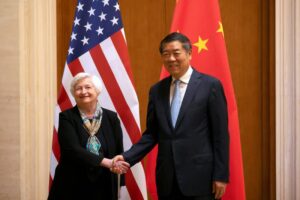
Yellen's trip to China Sets US-China relations on a more stable path. US Treasury Secretary Janet Yellen concluded a high-stakes trip to China, aiming to reassure officials that the US does not intend to impede its largest economic rival. Yellen struck a positive yet pragmatic tone during her visit, emphasizing the benefits of trade with China and clarifying that "diversifying" supply chains should not be equated with decoupling.
While in Beijing, Yellen navigated the delicate task of expressing concerns about Chinese economic policies while advocating for increased cooperation and engagement, particularly on global issues like climate change and debt distress in developing countries. The visit provided an opportunity for the US delegation to gain insights into the Chinese team's economic perspectives and witness the interactions of the country's new leaders.
Yellen's trip served as the first significant test of her policy approach outlined in April, which seeks to safeguard US national security without impeding China's economic progress. The visit aimed to revive engagement between the two largest economies, as trade tensions and trade war repercussions have strained relations and led to restrictions on critical technology exports. (Bloomberg)
With inflation concerns mounting

Bank of England Governor rejects calls for higher inflation target. Bank of England (BOE) Governor Andrew Bailey has dismissed the need for an inflation target higher than the current 2%, warning that such a change could undermine the bank's credibility and disrupt market expectations. Speaking at a conference in Aix-en-Provence, France, Bailey emphasized the BOE's commitment to the 2% target, stating that flexibility in timing should not be misconstrued as a shift away from pursuing that goal.
The BOE is grappling with persistently high inflation, with consumer price gains reaching 8.7%, four times the central bank's mandate and the highest among major economies. While acknowledging the severity of the situation in the UK, Bailey affirmed policymakers' determination to bring inflation back to the target level, noting the possibility of extending the horizon from the usual two years to three years if needed.
Despite calls for a higher inflation target of 3% to ease pressure on central banks and prevent a recession, Bailey and other central bank chiefs cautioned against such a move. Bailey expressed concerns that announcing a higher target would lead to immediate demands for higher interest rates from lenders, potentially eroding central banks' credibility.
The debate on the inflation target took place during a panel discussion with other central bank governors and economists. François Villeroy de Galhau, Governor of the Bank of France, echoed Bailey's sentiments, warning that raising the target risked undermining central banks' credibility and could result in higher interest rates demanded by lenders. (Bloomberg)
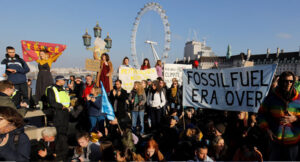
London's crumbling fate: Climate change blamed for the city's downfall
Britain's extreme weather, characterized by prolonged droughts and wet winters, is causing significant damage to London's historic buildings. The shifting of the porous rock beneath the southeast region, including the capital, has resulted in cracks and tilting in these centuries-old structures. The consequent insurance payout is the highest in almost 20 years.
The unique nature of the London clay, prevalent in the affected areas, makes it prone to swelling and shrinking, leading to further cracks and damage. Geological experts warn that future temperature extremes will exacerbate the situation, posing a greater risk to the stability of the buildings and infrastructure.
London's historic buildings, some dating back to the 1800s and surviving World War II bombings, are particularly vulnerable to the effects of extreme weather. Heat advisories for the upcoming summer highlight the ongoing vulnerability of these structures, emphasizing the urgent need to address the risks they face.
Insurers are bracing for a significant payout of around 219 million GBP for subsidence claims in 2022, with many claims attributed to the record-breaking high temperatures of the previous year. The risk is highest for structures built on shrinkable clay, making them more susceptible to subsidence. Property loss assessors anticipate an increase in claims as dry weather persists, indicating the continued challenges posed by extreme weather to London's historic buildings. (The Business Times)
Stay up to date
More Newsletter to Check



SUBSCRIBE TO NEWSLETTER
Subscribe to download our daily economics and business roundup


×
![]()